 Service Hotline:13510328459
 205-206, 2nd Floor, Building 2, Xiazao Village Industrial Zone, Gaofeng Community, Dalang Street, Longhua District, Shenzhen City
 493432861@qq.com





Healthcare facilities require specialized interior solutions that support hygiene, privacy, and operational efficiency. Among these solutions, hospital curtains play a critical role in patient care environments. They provide privacy for patients, help maintain infection control standards, and contribute to the overall organization of hospital wards.
For hospitals, clinics, nursing homes, and rehabilitation centers, selecting a professional hospital curtains manufacturer is essential for ensuring durable, hygienic, and compliant products. Curtains used in healthcare settings must meet strict standards for fire resistance, antimicrobial protection, and ease of maintenance.
Manufacturers like ECONLEY TECHNOLOGY provide complete curtain systems for medical projects worldwide, including curtains, curtain tracks, and installation solutions designed specifically for healthcare environments.
This article explores the different types of hospital curtains, curtain tracks, materials, and procurement considerations for healthcare construction projects.
Disposable Hospital Curtains
Disposable hospital curtains are increasingly popular in healthcare environments because they help reduce the risk of cross-contamination and infection.
Unlike reusable curtains, disposable curtains are designed for single-use or short-term use before replacement.
Benefits of Disposable Hospital Curtains
Improved Infection Control
Disposable curtains reduce the spread of bacteria and viruses by eliminating the need for laundering contaminated fabrics.
Cost-Effective Maintenance
Hospitals can save money on washing, transportation, and labor costs associated with traditional curtain cleaning.
Fast Replacement
Disposable curtains are lightweight and easy to install, allowing staff to replace them quickly when needed.
Hygienic Materials
Many disposable hospital curtains are made from medical-grade polypropylene or nonwoven fabrics that resist microbial growth.
Applications
Disposable hospital curtains are commonly used in:
Isolation wards
Emergency rooms
Intensive care units
Temporary medical facilities
Field hospitals
Healthcare institutions often combine disposable curtains with durable hospital curtain tracks for efficient installation and replacement.
Hospital Curtain Track
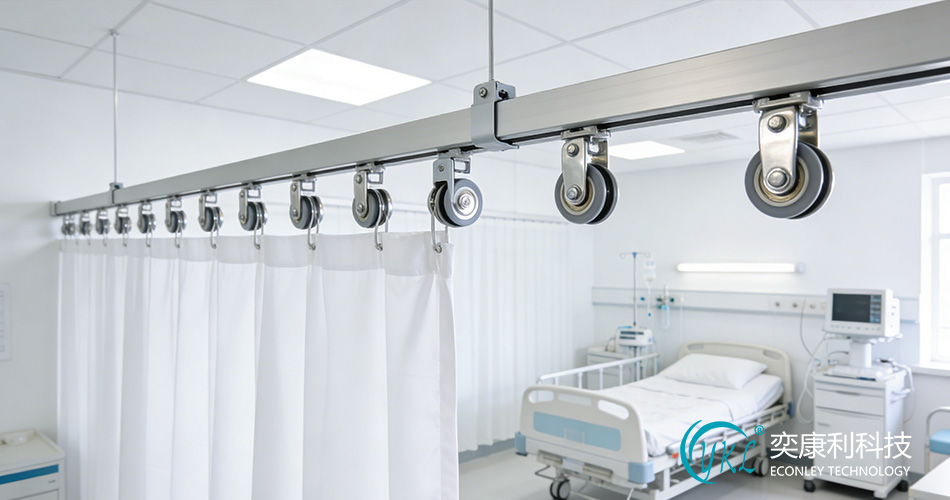
A hospital curtain track system is essential for supporting bedside curtains and creating flexible patient spaces within medical facilities.
Curtain tracks allow hospital staff to easily open, close, or reposition curtains around beds.
Types of Hospital Curtain Track Systems
Healthcare facilities typically use several types of curtain tracks:
1. Ceiling-Mounted Curtain Tracks
These tracks are installed directly on the ceiling and allow curtains to move smoothly around patient beds.
2. Cubicle Curtain Tracks
Cubicle tracks create enclosed spaces around individual beds for privacy.
3. Flexible Curtain Tracks
Flexible systems can be curved or shaped to fit irregular layouts.
Advantages of Professional Curtain Track Systems
Smooth curtain movement
Durable aluminum or stainless steel construction
Easy installation and maintenance
Compatibility with different curtain types
Manufacturers like ECONLEY TECHNOLOGY provide complete hospital curtains and tracks systems designed for long-term use in healthcare environments.
Antimicrobial Curtain for Hospital
Infection control is one of the most important priorities in healthcare environments. Antimicrobial curtain for hospital applications helps reduce the spread of harmful bacteria.
How Antimicrobial Curtains Work
These curtains are treated with antimicrobial coatings that inhibit the growth of microorganisms on the fabric surface.
Common antimicrobial technologies include:
Silver-ion coatings
Antibacterial chemical treatments
Medical-grade fabric treatments
Advantages
Antimicrobial curtains provide several benefits:
Reduced risk of healthcare-associated infections (HAIs)
Improved patient safety
Longer curtain lifespan
Reduced cleaning frequency
Hospitals often combine antimicrobial curtains with disposable systems for maximum infection control.
Bedside Curtains
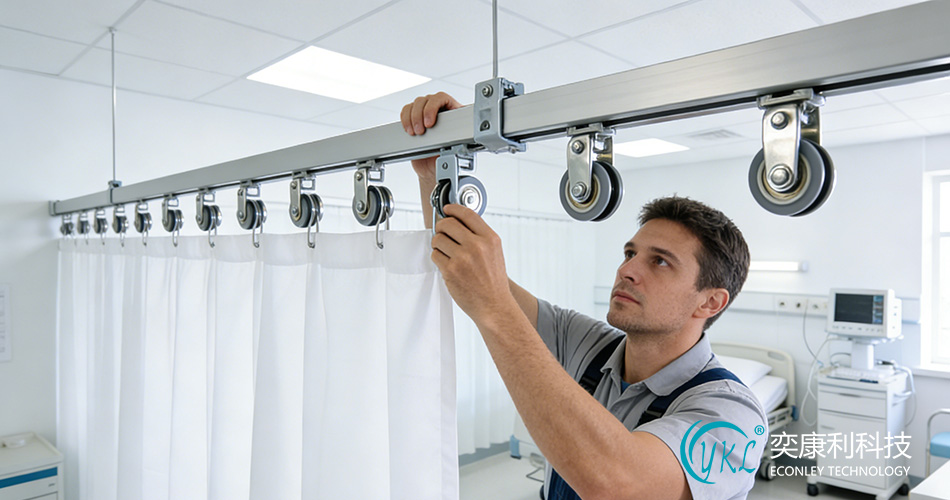
Bedside curtains are one of the most common types of hospital curtains. They provide privacy for patients during examinations, treatments, and rest.
Key Features of Bedside Curtains
High-quality bedside curtains typically include:
Flame-retardant materials
Antimicrobial treatment
Easy sliding compatibility with curtain tracks
Durable stitching and reinforced edges
Hospital Curtains with Mesh
Many bedside curtains include mesh panels at the top.
These mesh sections provide:
Improved air circulation
Reduced airflow obstruction for HVAC systems
Better light distribution in hospital wards
Hospitals prefer hospital curtains with mesh because they help maintain proper ventilation while preserving patient privacy.
Curtains for Healthcare Facilities
Although curtains are used in many industries, hospital curtains must meet much higher standards.
Healthcare curtain fabrics must typically comply with:
Fire resistance standards
Infection control requirements
Antimicrobial treatment specifications
Durability for frequent use
Curtains used in hospitals are typically manufactured using materials such as:
Polyester medical fabrics
Nonwoven polypropylene
Vinyl-coated fabrics
These materials are selected for their durability, easy cleaning, and antimicrobial properties.
Blackout Curtains
Blackout curtains are used in hospitals to control lighting and improve patient comfort.
These curtains block external light and help create a restful environment for patients.
Applications of Blackout Curtains in Healthcare
Blackout curtains are commonly used in:
Intensive care units
Patient recovery rooms
Sleep study centers
Medical imaging rooms
Benefits
Blackout curtains provide several advantages:
Improved patient sleep quality
Reduced glare from external lighting
Enhanced privacy
Better control of room lighting conditions
When combined with hospital track drapery systems, blackout curtains provide flexible light control in medical facilities.
Hospital Curtains and Tracks
A complete hospital curtains and tracks system includes several components that work together.
Components of a Curtain System
Curtain fabric panels
Curtain track rails
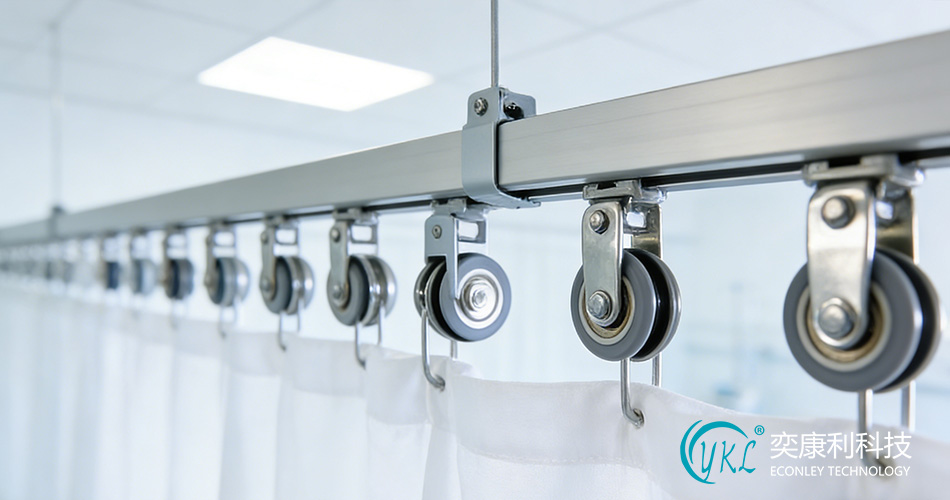
Curtain hooks and rollers
Mounting brackets
Track connectors and end caps
This integrated system ensures smooth operation and reliable durability.
Manufacturers such as ECONLEY TECHNOLOGY provide full solutions for healthcare projects, including curtain manufacturing and track installation support.
Hospital Curtain Tracks
High-quality hospital curtain tracks are essential for efficient curtain operation.
Materials Used in Curtain Tracks
Common materials include:
Aluminum alloy
Stainless steel
Powder-coated steel
These materials provide corrosion resistance and long-term durability in hospital environments.
Design Features
Professional curtain tracks often include:
Smooth roller systems
Flexible bending capability
Ceiling or wall mounting options
Easy maintenance access
Hospitals prefer modular curtain track systems because they can be easily expanded or modified during renovations.
Hospital Track Drapery
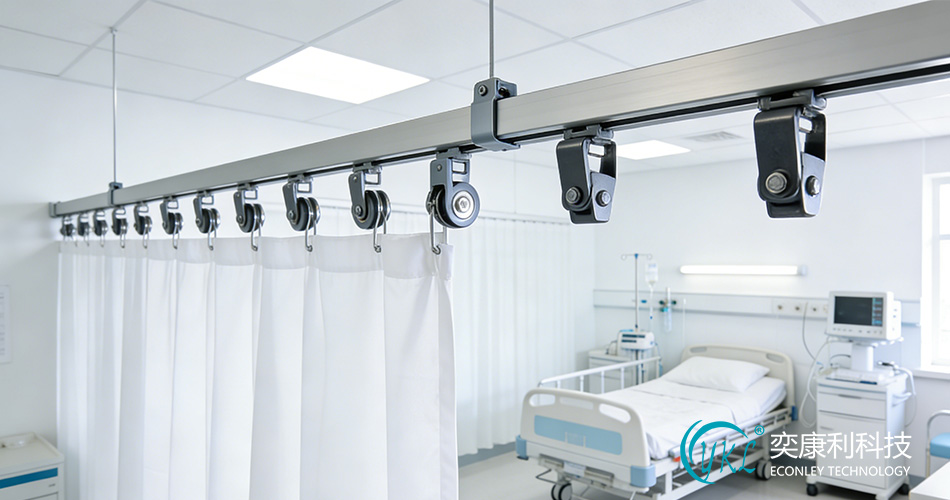
Hospital track drapery refers to curtains designed specifically for track systems installed in healthcare environments.
These drapery systems are widely used to create flexible patient spaces in hospitals.
Advantages of Track Drapery Systems
Track drapery provides several benefits:
Easy curtain movement
Flexible room division
Efficient patient privacy management
Simple curtain replacement
This system is particularly useful in emergency wards and multi-bed hospital rooms.
Why Choose ECONLEY TECHNOLOGY
Selecting the right hospital curtain manufacturer is critical for healthcare construction projects.
ECONLEY TECHNOLOGY provides professional curtain solutions for hospitals, clinics, nursing homes, and medical centers worldwide.
Key Advantages
1. Professional Manufacturing
ECONLEY specializes in healthcare curtain systems including disposable curtains, antimicrobial fabrics, and curtain track systems.
2. High-Quality Materials
Curtains are produced using durable, medical-grade fabrics designed for long-term use.
3. Complete Solutions
The company provides both hospital curtains and tracks, simplifying procurement for healthcare projects.
4. Customization Options
Curtains can be customized in size, color, and design to match hospital interiors.
5. Global Project Experience
ECONLEY products are used in healthcare facilities around the world.
These advantages make ECONLEY a trusted partner for medical construction contractors, hospital equipment distributors, and healthcare facility developers.
FAQ
How often should hospital curtains be changed?
Hospital curtains should typically be replaced every 3 to 6 months, depending on hospital hygiene policies and patient turnover. Curtains in isolation wards or high-risk areas may require more frequent replacement. Disposable curtains can be replaced quickly to maintain hygiene standards.
What are hospital curtains made of?
Hospital curtains are usually made from polyester medical fabrics, nonwoven polypropylene, or antimicrobial-treated textiles. These materials are durable, easy to clean, and resistant to bacterial growth.
Manufacturers like ECONLEY TECHNOLOGY produce curtains using medical-grade materials that meet international healthcare safety standards.
Why are hospital curtains blue?
Many hospital curtains are blue because the color is calming and helps create a relaxing environment for patients. Blue tones are also practical because they help conceal stains and maintain a clean appearance in medical settings.
Related content
Hospital Curtain Maintenance Guide: Cleaning Standards & Safety | Econley
Custom Corridor Handrail Solutions for Hospitals and Commercial Buildings
Hospital Curtain Tracks | Aluminum Ceiling Track Systems | Econley
Hospital Curtains: A Guide to Antibacterial & Fire-Retardant Standards
Sourcing Hospital Corridor Handrails: Wholesale Solutions for Medical Projects
Best Hospital Curtain Tracks 2026 | Durable Ceiling Track Systems | Econley
Wholesale Hospital Bathroom Curtains | Waterproof & Fire-Retardant | Econley
Hospital Divider Curtains & Tracks | Durable Medical Fabrics | Econley
Hospital Handrails Manufacturer | ADA Compliant Corridor Safety | Econley
 Tel :13510328459
  Email :493432861@qq.com
  Phone :0755-82154850/25907050
  Add:205-206, 2nd Floor, Building 2, Xiazao Village Industrial Zone, Gaofeng Community, Dalang Street, Longhua District, Shenzhen City


