Service Hotline:13510328459
 205-206, 2nd Floor, Building 2, Xiazao Village Industrial Zone, Gaofeng Community, Dalang Street, Longhua District, Shenzhen City
Service Hotline:13510328459
205-206, 2nd Floor, Building 2, Xiazao Village Industrial Zone, Gaofeng Community, Dalang Street, Longhua District, Shenzhen City



Time:2026-03-09 Preview:
The global aging population is driving increased demand for safe, accessible healthcare environments. Nursing homes, assisted living facilities, and long-term care centers must prioritize patient safety, mobility assistance, and barrier-free design. One of the most critical components in these facilities is the accessibility handrail system, especially in corridors and living spaces where elderly residents require additional support.
High-quality hallway handrails reduce fall risks, improve independence for residents, and ensure compliance with international healthcare building standards. For project contractors, distributors, and healthcare facility planners, choosing the right nursing home accessibility rail manufacturer is essential for achieving both safety and durability.
In this article, we will explore the importance of corridor handrails for elderly care facilities, different material options, installation standards, and procurement considerations. We will also discuss how reliable manufacturers such as ECONLEY TECHNOLOGY provide professional handrail systems for global nursing home projects.
Falls are one of the most common causes of injury among elderly individuals in nursing homes. According to global healthcare safety reports, a large percentage of senior falls occur in hallways, bathrooms, and transitional spaces.
A properly designed Hallway Railing for elderly helps residents maintain balance while walking and supports rehabilitation movement.
Fall Prevention
Elderly residents often experience reduced muscle strength, impaired vision, and limited mobility. Corridor handrails offer continuous support during movement.
Encouraging Independent Mobility
When handrails are installed along hallways, seniors can move more confidently without constant assistance from caregivers.
Support During Rehabilitation
Handrails assist physical therapy and mobility training for recovering patients.
Emergency Safety Support
In emergencies such as evacuations or sudden dizziness, handrails provide immediate stability.
Regulatory Compliance
Healthcare facility design guidelines in many countries require handrails in long corridors to ensure accessibility.
A professional Hallway Railing for elderly should include:
Ergonomic grip diameter
Continuous railing along corridors
Smooth and anti-bacterial surfaces
Impact-resistant structure
Rounded edges to prevent injury
Modern nursing homes are now integrating multi-functional handrail systems that combine support, wall protection, and aesthetic design.
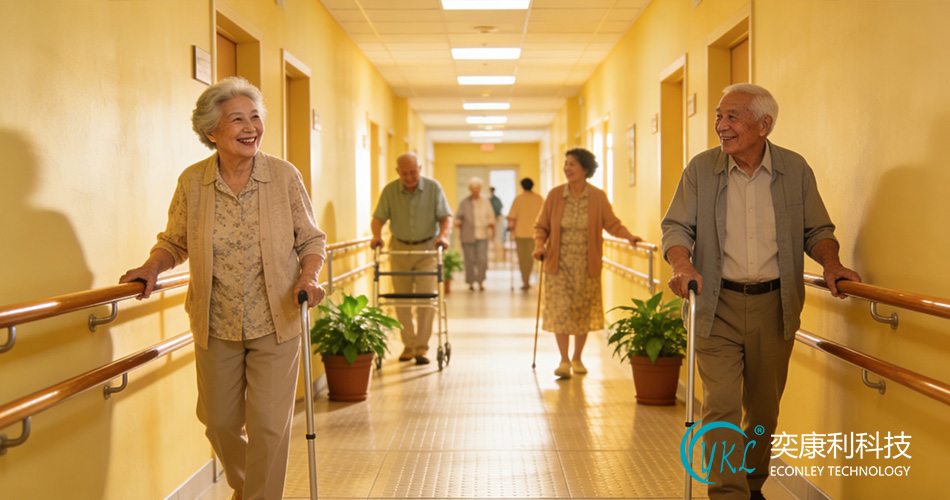
Among various material options, Wooden hallway railing for elderly remains a popular choice for care homes that prioritize comfort and warm interior aesthetics.
Comfortable Grip
Wood provides a warmer tactile experience compared to metal rails.
Natural Interior Design
Nursing homes aim to create a homelike environment rather than a clinical atmosphere. Wooden rails contribute to a softer visual appearance.
Noise Reduction
Wood absorbs impact sound better than metal, making hallways quieter.
Durable and Long-Lasting
High-quality hardwood handrails can withstand years of use when properly treated.
Custom Finishes
Wooden rails can be stained or coated to match the interior design of the facility.
Although wood provides aesthetic benefits, it must still meet healthcare safety standards. High-quality wooden handrails should include:
Anti-bacterial coatings
Rounded ergonomic profiles
Reinforced mounting brackets
Fire-resistant finishes
Many manufacturers combine wood finishes with aluminum structural cores to improve durability and impact resistance.
Modern nursing homes are moving beyond basic handrails and incorporating innovative corridor safety systems that improve both function and design.
Below are some popular Nursing home corridor handrail ideas used in healthcare architecture.
Installing two levels of handrails allows both elderly residents and wheelchair users to use the corridor safely.
Typical configuration:
Upper rail: support for walking adults
Lower rail: accessibility support
Corridor handrails can also act as wall protection systems to prevent damage caused by wheelchairs, medical carts, or hospital beds.
Some modern facilities integrate LED lighting inside handrails to improve corridor visibility at night.
Benefits include:
Better navigation for elderly residents
Reduced fall risks
Enhanced architectural design
Healthcare environments require strict hygiene standards. Anti-microbial coatings prevent bacterial growth on frequently touched surfaces.
Impact-resistant PVC or vinyl covers protect walls and increase product lifespan.
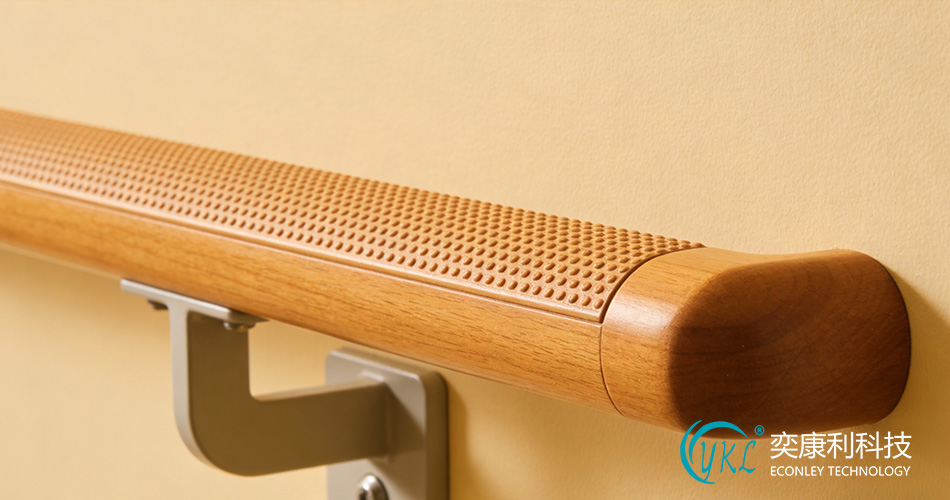
China has become a major global supplier of healthcare facility infrastructure products. Many international buyers source China Nursing Home Various Handrails due to competitive pricing, advanced manufacturing technology, and customization capabilities.
Professional manufacturers provide a wide range of handrail systems, including:
PVC hospital handrails
Wooden decorative handrails
Aluminum core handrails
Anti-collision wall guard handrails
Barrier-free accessibility rails
Cost Efficiency
Large-scale manufacturing significantly reduces production costs.
Customization Options
Buyers can customize colors, materials, sizes, and finishes.
Global Export Experience
Experienced suppliers understand international building standards.
Large Production Capacity
Suitable for large healthcare construction projects.
Integrated Product Solutions
Many manufacturers provide full hospital wall protection systems including:
Handrails
Wall guards
Corner guards
Curtain tracks
When selecting Wooden hallway railing for elderly, several technical factors should be considered.
The optimal handrail diameter for elderly users is typically 35–50 mm to ensure a comfortable grip.
For elderly accessibility, the recommended handrail height is usually:
850 mm – 900 mm from the floor
Some facilities install dual-level handrails for improved accessibility.
High-quality handrails should support at least 100–150 kg of applied force without deformation.
The surface must be smooth to prevent splinters, scratches, or skin irritation.
International healthcare construction guidelines define standards for corridor handrails.
Common Standards Include:
ADA Accessibility Guidelines (United States)
ISO healthcare facility safety requirements
European accessibility standards
Key requirements often include:
Continuous rail along the corridor
Rounded ends to avoid snagging clothing
Minimum clearance from the wall
Strong anchoring brackets
Proper compliance ensures both resident safety and regulatory approval.
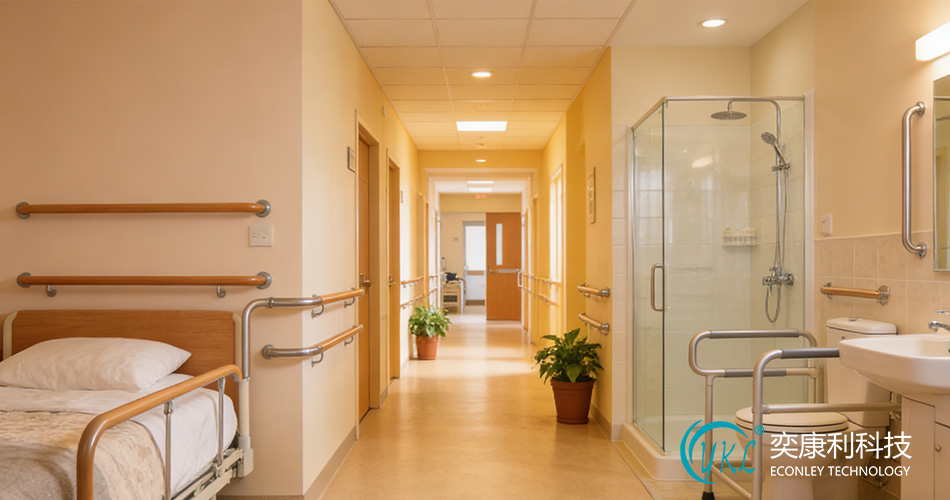
Barrier-free design is a fundamental concept in elderly care architecture. A China Nursing Home Barrier-Free Safety Handrail is specifically designed to help seniors navigate facilities safely without obstacles.
Continuous support along walking paths
Ergonomic grip surfaces
Rounded edges for injury prevention
Impact-resistant covers
Anti-bacterial materials
These handrails are typically installed in:
Corridors
Staircases
Bathrooms
Patient rooms
Rehabilitation areas
Professional suppliers often provide complete accessibility solutions rather than standalone products.
For healthcare contractors and project buyers, China Nursing Home Specialized Handrail Procurement requires careful supplier evaluation.
Manufacturing Experience
Suppliers with extensive healthcare industry experience understand medical facility requirements.
Material Quality
Reliable manufacturers use high-quality materials such as:
Aluminum alloy
PVC crash-resistant panels
Anti-bacterial coatings
Fire-resistant materials
Product Certification
Check whether products comply with international standards.
Project Support
Professional manufacturers provide:
Technical drawings
Installation guidance
Custom solutions
Export Capability
Experienced exporters ensure smooth international logistics and documentation.
Companies such as ECONLEY TECHNOLOGY specialize in manufacturing healthcare safety handrail systems and providing OEM/ODM services for global healthcare construction projects.
When sourcing accessibility handrails for care homes, selecting a reliable manufacturer is crucial.
ECONLEY TECHNOLOGY offers professional solutions for nursing homes, hospitals, and rehabilitation centers worldwide.
1. Professional Manufacturing
ECONLEY focuses on healthcare safety products including:
Hospital handrails
Nursing home corridor rails
Wall guard systems
Bathroom grab bars
2. Durable Materials
Products are manufactured using high-quality materials designed for long-term use in demanding healthcare environments.
3. Custom Design Services
Manufacturers provide customized solutions to match project specifications and architectural requirements.
4. International Project Experience
ECONLEY products are exported to multiple countries and used in various healthcare facility projects.
5. One-Stop Healthcare Safety Solutions
Beyond handrails, the company also offers integrated wall protection systems for medical environments.
The recommended height of a handrail for elderly users is generally 850 mm to 900 mm from the floor. This height provides comfortable support for walking and balance. In many nursing homes, dual-level handrails are installed to accommodate residents of different heights and mobility conditions.
Manufacturers such as ECONLEY TECHNOLOGY design handrail systems according to international accessibility standards to ensure optimal safety and usability.
Most healthcare building guidelines recommend installing handrails between 34 and 38 inches (865–965 mm) from the finished floor.
This height ensures ergonomic support for most users and complies with accessibility regulations in many countries.
Professional suppliers provide detailed installation guidance to ensure proper placement during project construction.
In some assisted living facilities, traditional bed rails are restricted due to safety concerns such as:
Entrapment risks
Falls from climbing over rails
Reduced mobility for residents
Because of these risks, many care facilities prefer environmental safety solutions such as corridor handrails, bathroom grab bars, and barrier-free support systems.
Accessibility handrails help residents move safely without restricting their movement.
Instead of bed rails, modern nursing homes use several safer alternatives:
Corridor handrail systems
Bathroom grab bars
Low-height beds
Bedside support handles
Mobility assistance devices
Manufacturers like ECONLEY TECHNOLOGY provide a range of healthcare safety handrail systems designed to support elderly residents while maintaining freedom of movement.
Related content
Hospital Curtain Maintenance Guide: Cleaning Standards & Safety | Econley
Custom Corridor Handrail Solutions for Hospitals and Commercial Buildings
Hospital Curtain Tracks | Aluminum Ceiling Track Systems | Econley
Hospital Curtains: A Guide to Antibacterial & Fire-Retardant Standards
Sourcing Hospital Corridor Handrails: Wholesale Solutions for Medical Projects
Best Hospital Curtain Tracks 2026 | Durable Ceiling Track Systems | Econley
Wholesale Hospital Bathroom Curtains | Waterproof & Fire-Retardant | Econley
Hospital Divider Curtains & Tracks | Durable Medical Fabrics | Econley
Hospital Handrails Manufacturer | ADA Compliant Corridor Safety | Econley
 Tel :13510328459
 Email :493432861@qq.com
 Phone :0755-82154850/25907050
 Add:205-206, 2nd Floor, Building 2, Xiazao Village Industrial Zone, Gaofeng Community, Dalang Street, Longhua District, Shenzhen City

About

Products
Cases
News
Contact
 493432861@qq.com