Service Hotline:13510328459
 205-206, 2nd Floor, Building 2, Xiazao Village Industrial Zone, Gaofeng Community, Dalang Street, Longhua District, Shenzhen City
Service Hotline:13510328459
205-206, 2nd Floor, Building 2, Xiazao Village Industrial Zone, Gaofeng Community, Dalang Street, Longhua District, Shenzhen City



Time:2025-12-29 Preview:
Nursing homes accommodate a diverse group of elderly residents, among whom many have special needs such as cognitive impairments, severe physical disabilities, visual or hearing impairments. These groups face greater mobility challenges and higher safety risks in daily life, requiring targeted assistive facilities to safeguard their well-being. The Special Needs Grab Rail has emerged as a core inclusive care device, designed to meet the personalized safety needs of elderly people with special requirements through humanized and scenario-adaptive designs. Unlike ordinary grab rails that only provide basic support, the Special Needs Grab Rail integrates adaptive functions for different disabilities, ensuring every special needs resident can move independently and safely. As a professional provider of elderly care inclusive solutions, we integrate Special Needs Grab Rail with core barrier-free products such as anti-slip flooring, customized wheelchairs, and emergency call systems, delivering comprehensive safety protection for nursing homes. This article explores the core value, group-adaptive designs, scenario applications, and procurement criteria of Special Needs Grab Rail, offering practical guidance for nursing home management and procurement teams.
The primary value of Special Needs Grab Rail lies in addressing the unique safety pain points of elderly residents with special needs, reducing accident risks. Elderly people with special needs often have limited self-care abilities—for example, those with cognitive impairments may get lost or confused, while those with severe physical disabilities rely heavily on assistive devices. The Special Needs Grab Rail provides targeted support to help them complete daily activities such as walking, transferring, and using the bathroom, effectively preventing falls, collisions, and other safety incidents.
Another key value is safeguarding the dignity and mental health of special needs residents. Being able to use assistive devices independently reduces their sense of dependence and inferiority, helping them maintain a positive attitude toward life. For nursing homes, equipping with Special Needs Grab Rail reflects the facility’s inclusive care philosophy, enhances service professionalism, and helps attract families with special needs elderly members. Additionally, it reduces the workload of caregivers, optimizing the overall operational efficiency of the nursing home.
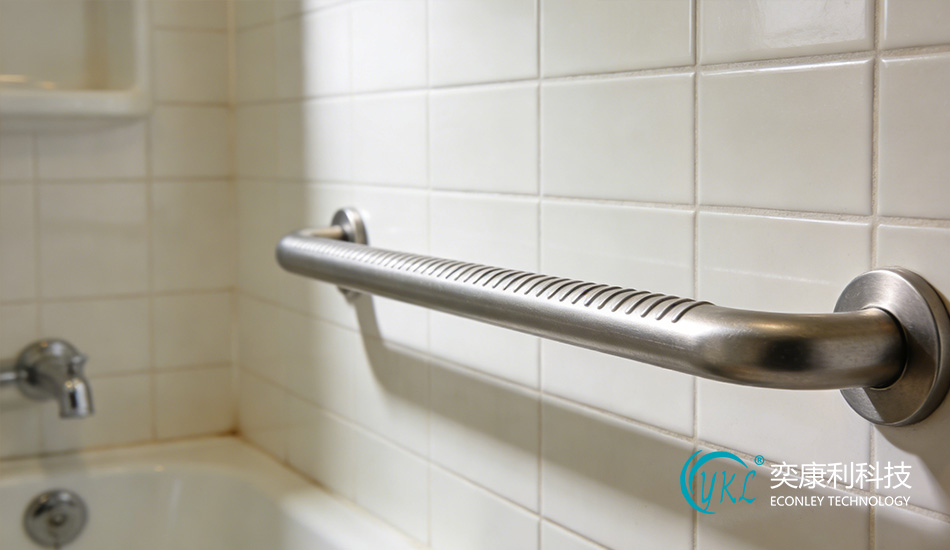
Special Needs Grab Rail features personalized adaptive designs for elderly residents with different types of special needs, achieving precise safety support. For elderly people with cognitive impairments (such as dementia), the grab rail adopts a simple and intuitive design: the installation route is straight and clear, avoiding complex turns; the surface is marked with large, easy-to-understand symbols (such as toilet, bedroom icons) to guide them to key areas. The color of the grab rail is selected to be soft and non-irritating, reducing sensory stimulation.
For elderly people with severe physical disabilities (such as hemiplegia, paraplegia), the Special Needs Grab Rail is designed with enhanced load-bearing capacity and ergonomic grip. Double-sided grab rails are installed in corridors and functional areas to accommodate the use of functional hands; the grip surface is designed with a non-slip texture and moderate thickness, reducing hand fatigue during long-term use. For elderly people with visual impairments, the grab rail uses high-contrast color matching (such as bright orange against light walls) and integrates tactile prompts (such as raised strips at intersections) to help them perceive their position through touch.
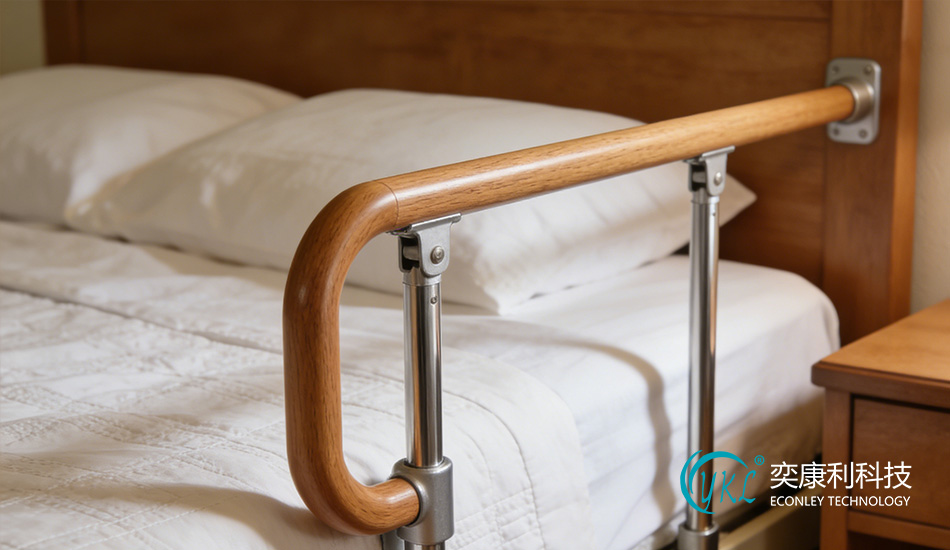
Special Needs Grab Rail has strict application norms to adapt to different functional zones in nursing homes, maximizing its practical value. In bedrooms, grab rails are installed beside beds and next to wardrobes for special needs residents. For those with limited mobility, the bed-side grab rail is designed with an adjustable angle to assist in getting up and lying down; the wardrobe-side grab rail helps them stabilize their body when taking clothes.
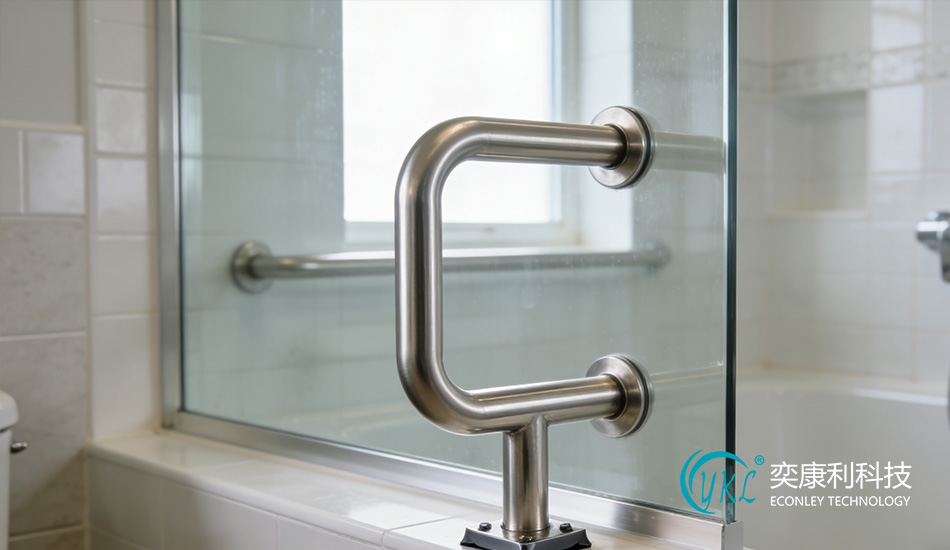
In bathrooms—a high-risk area for special needs residents—the Special Needs Grab Rail is installed around toilets, sinks, and shower areas. The toilet-side grab rail adopts a foldable design to save space and facilitate wheelchair access; the shower-side grab rail is equipped with anti-corrosion and moisture-proof functions, and multiple installation points are set to provide support at different angles. In corridors and activity rooms, continuous grab rails are installed, with obvious color segmentation at area boundaries to help cognitive impairment residents distinguish functional zones. In rehabilitation areas, the grab rail is combined with rehabilitation equipment, with adjustable height to match different rehabilitation stages.
Professional Special Needs Grab Rail strictly complies with international and national standards for special needs assistive devices, such as ISO 14122 (Barrier-Free Design for Buildings) and national "Code for Barrier-Free Design of Elderly Care Facilities". These standards specify requirements for the adaptive functions, load-bearing performance, and safety design of grab rails for special needs groups, ensuring product reliability.
In terms of humanized guarantee, the grab rail is made of non-toxic, odorless, and wear-resistant medical-grade materials, suitable for long-term use by the elderly with sensitive skin. The edges and corners are fully rounded to avoid scratches; the connection points are seamless to prevent dust accumulation and facilitate cleaning. Complete compliance documents are provided, including product safety certification, adaptive function test reports, and material environmental protection certificates, facilitating nursing home safety audits and inclusive facility certification.
When procuring Special Needs Grab Rail, nursing home teams should focus on three core criteria: adaptive matching, compliance certification, and supplier professionalism. Firstly, conduct a detailed survey of the types and proportions of special needs residents to select grab rails with corresponding adaptive functions—for example, choosing grab rails with tactile prompts for visual impairment residents and enhanced load-bearing grab rails for severe physical disability residents.
Secondly, verify that the product has complete compliance certifications and test reports, ensuring it meets international and national special needs assistive device standards. Finally, choose suppliers with rich experience in special needs elderly care projects, who can provide personalized matching plans, on-site installation guidance, and post-sales maintenance services. Professional suppliers can also offer training for caregivers on how to guide special needs residents to use the grab rails correctly.
Special Needs Grab Rail is a critical facility for building an inclusive elderly care environment, directly related to the safety and dignity of special needs elderly residents. By selecting targeted Special Needs Grab Rail solutions, nursing homes can enhance their inclusive care capabilities and create a safer, more respectful living environment. If you are a nursing home management or procurement team seeking high-quality Special Needs Grab Rail and integrated inclusive elderly care solutions, contact us today. We will provide personalized product recommendations, complete compliance documents, and professional technical support, helping you build a truly inclusive and humanized elderly care environment.
 Tel :13510328459
 Email :493432861@qq.com
 Phone :0755-82154850/25907050
 Add:205-206, 2nd Floor, Building 2, Xiazao Village Industrial Zone, Gaofeng Community, Dalang Street, Longhua District, Shenzhen City

About

Products
Cases
News
Contact
 493432861@qq.com