Service Hotline:13510328459
 205-206, 2nd Floor, Building 2, Xiazao Village Industrial Zone, Gaofeng Community, Dalang Street, Longhua District, Shenzhen City
Service Hotline:13510328459
205-206, 2nd Floor, Building 2, Xiazao Village Industrial Zone, Gaofeng Community, Dalang Street, Longhua District, Shenzhen City



Time:2025-12-29 Preview:
Nursing homes are dedicated to providing a safe and reassuring living environment for the elderly, most of whom suffer from limited mobility, reduced balance, or age-related physical declines. Handrails are critical safety infrastructure in elderly care facilities, and standardized Nursing Home Handrail Installation directly determines the effectiveness of fall prevention and the overall operational efficiency of the facility. Substandard installation may render high-quality handrails ineffective, increasing the risk of injuries and imposing additional workload on caregivers. Unlike general building handrail installation, Nursing Home Handrail Installation must fully consider the elderly’s physical characteristics, adapt to diverse functional zones, and coordinate with daily care operations. As a professional provider of elderly care facility solutions, we integrate standardized Nursing Home Handrail Installation with core elderly-friendly products such as anti-slip flooring, emergency call systems, and elderly-specific furniture, delivering comprehensive safety optimization for nursing homes. This article explores the core significance, scenario-specific norms, operational synergy strategies, and selection criteria of Nursing Home Handrail Installation, offering practical guidance for nursing home management and procurement teams.
The primary significance of standardized Nursing Home Handrail Installation lies in safeguarding the elderly’s personal safety. The elderly are prone to falls due to weakened lower limb strength and poor balance, and handrails provide stable support during walking, standing, and daily activities. Professional installation ensures handrails are firmly fixed, with appropriate height and spacing to match the elderly’s average physical dimensions, effectively reducing fall risks and related injury incidents.
Another key significance is optimizing nursing home operational efficiency. Well-installed handrails reduce the elderly’s reliance on caregivers for daily mobility assistance, allowing caregivers to focus on more critical care tasks such as medical care and emotional support. Additionally, standardized installation enhances the durability of handrails, reducing long-term maintenance and replacement costs. It also helps nursing homes meet relevant safety certification requirements, laying a solid foundation for standardized operations and brand building.
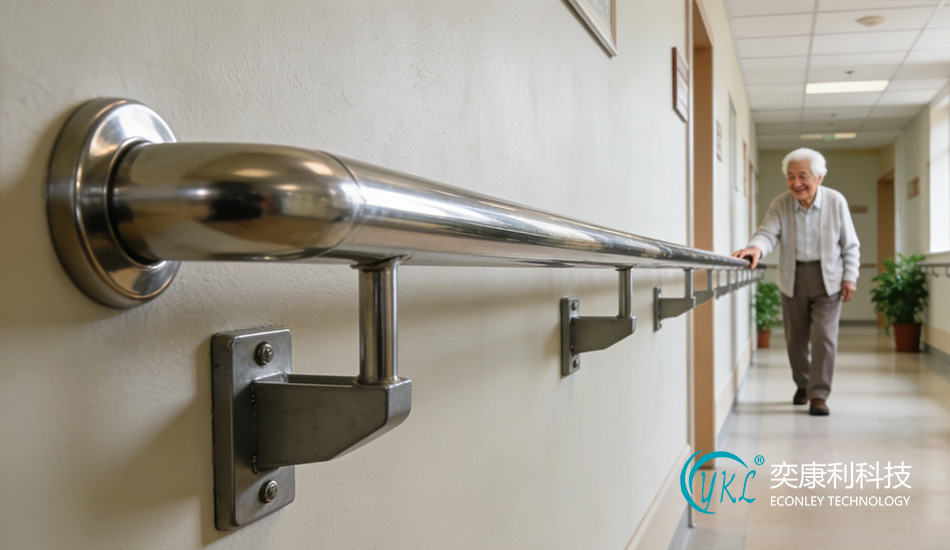
Nursing Home Handrail Installation requires targeted norms to adapt to the diverse functional zones of the facility. In bedrooms, handrails are installed beside beds at a height of 70-80cm, which is suitable for the elderly to grasp when getting up and lying down. The installation position avoids obstructing the opening of bed rails and the movement of caregivers, ensuring smooth daily care operations.
In bathrooms—a high-risk fall area—handrails are installed around toilets, sinks, and shower areas with corrosion-resistant and moisture-proof fasteners. The toilet-side handrails are designed with a curved structure to assist the elderly in sitting and standing, while shower-side handrails are installed at multiple angles to provide support during bathing. In corridors and activity rooms, continuous handrails are installed along walls, with a smooth surface and rounded edges to avoid scratches. For rehabilitation areas, handrails are installed with adjustable height options to match different rehabilitation stages of the elderly, supporting walking training and mobility recovery.
Professional Nursing Home Handrail Installation emphasizes synergy with daily care operations to minimize operational interference. During the installation planning stage, construction schedules are formulated based on the nursing home’s daily routines, such as arranging construction during non-rest hours (e.g., morning activities or afternoon naps) to avoid disturbing the elderly’s rest. Protective barriers are set up around construction areas to prevent the elderly from entering dangerous zones.
After installation, the handrail layout is coordinated with other care facilities. For example, handrails are connected to emergency call buttons in key areas, allowing the elderly to call for help immediately if they encounter difficulties while using the handrails. Installation teams also provide training for caregivers on how to guide the elderly to use handrails correctly and conduct daily inspections of handrail stability, ensuring the long-term synergy between handrails and care operations.
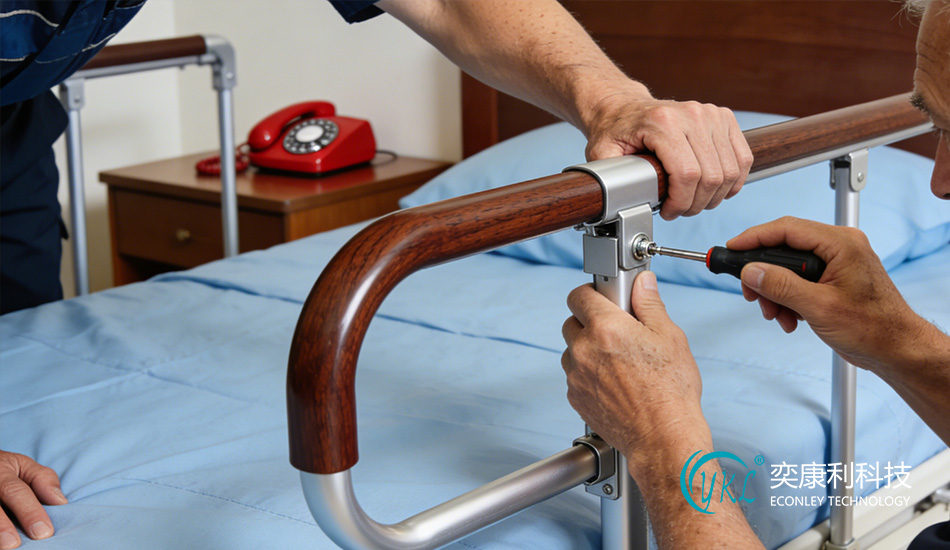
Standardized Nursing Home Handrail Installation relies on a rigorous quality control system to ensure safety and reliability. Before installation, professional teams conduct on-site surveys to assess wall structure, load-bearing capacity, and functional needs, formulating personalized installation plans. During installation, certified materials and professional tools are used, and real-time inspections are conducted on fastener tightness, handrail levelness, and structural stability.
After installation, comprehensive tests are performed, including load-bearing tests (with a minimum load-bearing capacity of 150kg) and stability tests. A detailed installation quality report is provided, including material certificates, construction records, and test results. Reputable installation services offer a 1-3 year warranty period, during which they conduct regular return visits and provide maintenance services for problems such as handrail loosening caused by installation defects.

When selecting Nursing Home Handrail Installation services, nursing home teams should focus on three core criteria: professional experience in elderly care scenarios, standardized construction processes, and comprehensive after-sales services. Firstly, verify that the installation team has rich experience in nursing home projects, with case studies proving their ability to adapt to the unique needs of the elderly.
Secondly, assess whether the team has a complete standardized construction process, including on-site assessment, plan formulation, standardized construction, and post-installation testing. Finally, confirm that the team provides comprehensive after-sales services, such as maintenance training for caregivers, regular return visits, and quick-response repair services. This ensures the long-term safety and effectiveness of the installed handrails.
Standardized Nursing Home Handrail Installation is a key link in building a safe and efficient elderly care environment, directly related to the elderly’s quality of life and the nursing home’s operational level. By choosing professional installation services that adapt to nursing home scenarios and coordinate with daily operations, nursing homes can maximize the safety value of handrails and enhance their core competitiveness. If you are a nursing home management or procurement team seeking reliable Nursing Home Handrail Installation services and integrated elderly care solutions, contact us today. We will provide personalized installation plans, strict quality control, and full-process technical support, helping you create a safer and more comfortable living environment for the elderly.
 Tel :13510328459
 Email :493432861@qq.com
 Phone :0755-82154850/25907050
 Add:205-206, 2nd Floor, Building 2, Xiazao Village Industrial Zone, Gaofeng Community, Dalang Street, Longhua District, Shenzhen City

About

Products
Cases
News
Contact
 493432861@qq.com