Service Hotline:13510328459
 205-206, 2nd Floor, Building 2, Xiazao Village Industrial Zone, Gaofeng Community, Dalang Street, Longhua District, Shenzhen City
Service Hotline:13510328459
205-206, 2nd Floor, Building 2, Xiazao Village Industrial Zone, Gaofeng Community, Dalang Street, Longhua District, Shenzhen City



Time:2025-12-25 Preview:
For wheelchair users, transferring between wheelchairs and beds, toilets, or chairs is a daily challenge that often requires assistance and carries a high risk of falls. The Wheelchair Wall Transfer Bar has emerged as a critical assistive device, designed to provide stable support during transfer processes and help users maintain independence. Unlike general handrails that only offer basic support, the Wheelchair Wall Transfer Bar is specifically engineered for the unique movement needs of wheelchair users, integrating ergonomic design and safety features. It is widely applicable in hospitals, nursing homes, and home care environments, becoming an indispensable facility for enhancing the mobility safety of disabled and elderly individuals. This article explores the core value, scenario-specific adaptation, design highlights, and procurement considerations of the Wheelchair Wall Transfer Bar, providing practical guidance for healthcare facilities, nursing home management teams, and home care providers.
The primary value of the Wheelchair Wall Transfer Bar lies in safeguarding the safety of wheelchair users during transfer and reducing their reliance on caregivers. Transferring without stable support often leads to balance loss, resulting in falls that cause injuries such as fractures or bruises. The Wheelchair Wall Transfer Bar provides a firm grip point, allowing users to leverage their upper body strength to complete transfers smoothly, effectively reducing fall risks.
Another key value is promoting user independence and dignity. Being able to complete transfers independently reduces feelings of helplessness and dependence, boosting the mental well-being of disabled and elderly individuals. For healthcare facilities and nursing homes, the installation of Wheelchair Wall Transfer Bar also improves operational efficiency by reducing the workload of caregivers, allowing them to focus on more critical care tasks. Additionally, it enhances the accessibility of care environments, aligning with the concept of inclusive care and meeting the diverse needs of users.
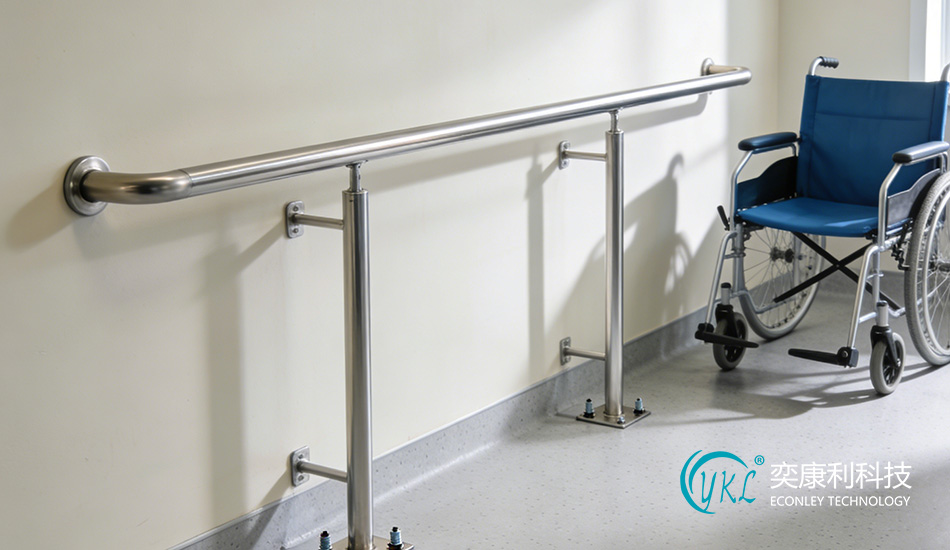
The Wheelchair Wall Transfer Bar is highly adaptable to various care scenarios, providing targeted support for different usage environments. In hospitals, where wheelchair users include post-operative patients and those with severe disabilities, the transfer bar is installed beside hospital beds, toilets, and rehabilitation areas. It is designed to withstand frequent use and easy disinfection, meeting the sterile requirements of medical environments. The installation position is optimized to align with standard hospital bed and wheelchair heights, facilitating quick and safe transfers for medical staff and patients.
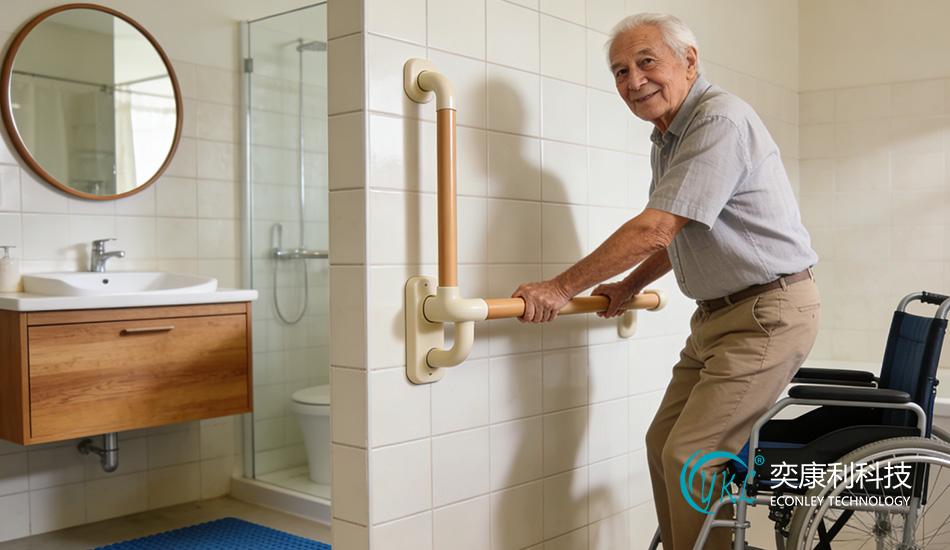
In nursing homes, which accommodate a large number of elderly wheelchair users, the transfer bar is installed in bedrooms, bathrooms, and dining areas. It features a user-friendly design that caters to the physical characteristics of the elderly, such as reduced grip strength and limited mobility. In home care environments, the Wheelchair Wall Transfer Bar is available in compact and easy-to-install models, suitable for small spaces such as home bathrooms and bedrooms. It can be installed without major structural modifications, making it convenient for families to improve the home care environment. These scenario-specific adaptations ensure that the Wheelchair Wall Transfer Bar maximizes its practical value in different settings.
High-quality Wheelchair Wall Transfer Bar integrates thoughtful humanized design details to enhance user experience and safety. In terms of grip design, it adopts an ergonomic curved surface with a non-slip texture, ensuring a firm grip even when hands are sweaty or slightly wet. The surface is treated with wear-resistant and corrosion-resistant materials, which can withstand frequent cleaning and disinfection, suitable for humid environments such as bathrooms.
In terms of installation and use, the transfer bar offers adjustable height options to accommodate different user heights and wheelchair models. The ends of the bar are designed with rounded edges and smooth end caps to avoid scratches on the user's skin or clothing. Some advanced models also feature foldable designs, which can be folded when not in use to save space and avoid obstructing traffic. These design details fully consider the actual needs and physical limitations of wheelchair users, enhancing the safety, comfort, and convenience of use.
Professional Wheelchair Wall Transfer Bar strictly complies with international and national assistive device safety standards, such as ISO 14122 (Barrier-Free Design for Buildings and Outdoor Facilities) and ADA (Americans with Disabilities Act) standards. These standards specify requirements for the load-bearing capacity, anti-slip performance, and structural stability of transfer bars, ensuring that products meet the safety needs of users.
In the production process, a strict quality control system is implemented. Raw materials are selected from medical-grade non-toxic and environmentally friendly materials, undergoing rigorous tests for structural strength and durability. Before delivery, each batch of Wheelchair Wall Transfer Bar undergoes simulated transfer tests and load-bearing tests to verify its stability and safety in real use scenarios. Complete quality certification documents and test reports are provided to customers, facilitating procurement audits and safety inspections for healthcare facilities and families.
When procuring Wheelchair Wall Transfer Bar, it is necessary to focus on three core factors: safety performance, scenario adaptability, and user-friendliness. Firstly, prioritize products with complete compliance certifications and reliable load-bearing performance to ensure they can provide stable support for users. For humid scenarios such as bathrooms, select products with strong anti-corrosion and moisture-proof capabilities.
Secondly, match the transfer bar design to the specific scenario needs—for example, choosing foldable models for home use to save space, or selecting large-load-bearing models for hospitals to withstand frequent use. Finally, choose suppliers who can provide professional installation guidance or on-site installation services, as the stability of the transfer bar is closely related to installation quality. Professional suppliers can also provide maintenance advice and after-sales support to ensure long-term safe use.
The Wheelchair Wall Transfer Bar is a vital assistive device for enhancing the mobility safety and independence of wheelchair users, with irreplaceable value in hospitals, nursing homes, and home care environments. Its humanized design and scenario-specific adaptation make it an ideal choice for inclusive care. If you are looking for high-quality Wheelchair Wall Transfer Bar to improve the care environment, contact us today. We will provide personalized product recommendations, complete compliance documents, and professional technical support, helping you create a safer, more accessible, and humanized care environment for wheelchair users.
 Tel :13510328459
 Email :493432861@qq.com
 Phone :0755-82154850/25907050
 Add:205-206, 2nd Floor, Building 2, Xiazao Village Industrial Zone, Gaofeng Community, Dalang Street, Longhua District, Shenzhen City

About

Products
Cases
News
Contact
 493432861@qq.com