Service Hotline:13510328459
 205-206, 2nd Floor, Building 2, Xiazao Village Industrial Zone, Gaofeng Community, Dalang Street, Longhua District, Shenzhen City
Service Hotline:13510328459
205-206, 2nd Floor, Building 2, Xiazao Village Industrial Zone, Gaofeng Community, Dalang Street, Longhua District, Shenzhen City



Time:2025-12-25 Preview:
Hospitals serve as critical care spaces for patients with diverse mobility needs, from post-operative recovery individuals to elderly and disabled patients. Handrails are indispensable safety infrastructure in medical facilities, and professional Hospital Handrail Installation directly determines their ability to provide reliable support and accessibility. Substandard installation can render even high-quality handrails ineffective, leading to fall risks, non-compliance with accessibility standards, and potential safety incidents. Unlike general building handrail installation, Hospital Handrail Installation must adhere to strict medical facility regulations, adapt to varied clinical scenarios, and prioritize the unique needs of vulnerable patient groups. As a professional provider of medical facility solutions, we integrate standardized Hospital Handrail Installation with core medical safety products such as anti-slip flooring, emergency call systems, and sterile wall panels, delivering comprehensive safety and accessibility optimization for hospitals. This article explores the core significance, scenario-specific standards, full-process management, and selection criteria of Hospital Handrail Installation, offering practical guidance for hospital logistics, procurement, and facility management teams.
The primary significance of professional Hospital Handrail Installation lies in safeguarding patient and staff safety. Patients in hospitals often have weakened mobility or reduced balance, relying heavily on handrails for support during walking, transferring between beds and wheelchairs, and using bathroom facilities. Improper installation—such as loose fasteners, incorrect height, or unstable anchoring—can cause handrails to shake or detach, directly endangering patients and increasing fall-related injuries.
Another key significance is ensuring compliance with medical accessibility and safety standards. International and local regulations, including ISO 14122 (Barrier-Free Design for Buildings) and national medical facility codes, have clear requirements for handrail installation height, spacing, and fixation methods. Professional Hospital Handrail Installation ensures full compliance with these standards, helping hospitals pass safety audits and meet the accessibility needs of all patients, including those with disabilities. Additionally, standardized installation enhances the durability of handrails, reducing long-term maintenance and replacement costs, and optimizing the overall operational efficiency of medical facilities.
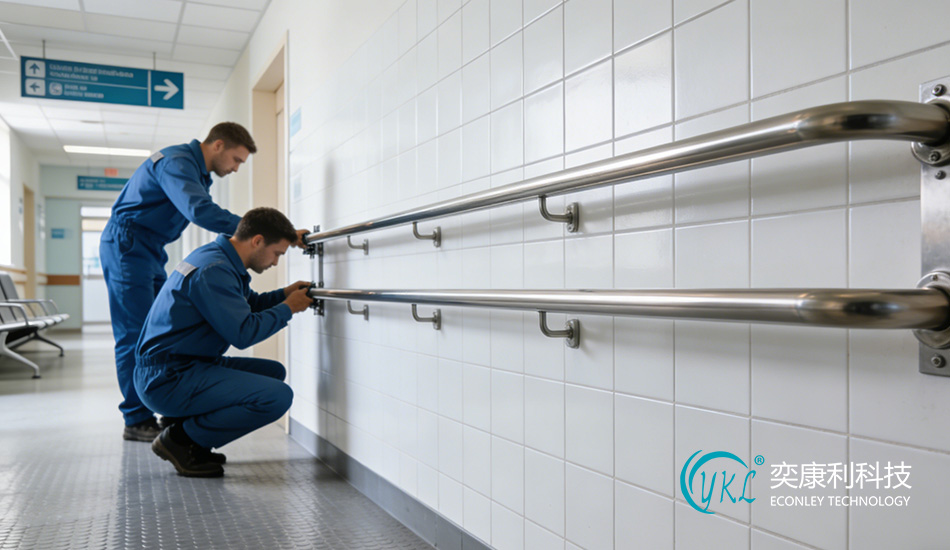
Hospital Handrail Installation requires targeted standards to adapt to the diverse functional zones of medical facilities. In general corridors and patient wards, installation focuses on accessibility and continuous support. Handrails are installed at a height suitable for both standing patients and wheelchair users, with continuous placement along walls to avoid sudden gaps at corners. Smooth transition designs are adopted at intersections to prevent scratches and ensure unobstructed movement.
In high-risk areas such as hospital bathrooms and toilets, installation emphasizes moisture resistance and load-bearing stability. Handrails around toilets, sinks, and shower areas are firmly anchored to load-bearing walls with corrosion-resistant fasteners, and the height is adjusted to facilitate patient transfer. Anti-slip gaskets are used between handrails and walls to prevent loosening caused by humid environments. In sterile areas such as operating room peripheries and intensive care units (ICUs), installation follows strict sterile operation protocols—using disinfected tools and materials, and ensuring seamless connections to avoid bacterial accumulation, while maintaining structural stability.
Effective Hospital Handrail Installation relies on rigorous full-process management to ensure quality and consistency. The first stage is on-site assessment and planning: professional teams conduct detailed surveys of the installation area, including wall structure, space dimensions, and functional positioning. They consult with medical staff to understand the specific needs of the area (e.g., pediatric wards may require adjusted height for small patients), and formulate personalized installation plans that align with safety and accessibility standards.
The second stage is standardized installation execution: teams use certified tools and fasteners to carry out construction in accordance with the plan. Real-time quality checks are performed during installation to ensure handrails are level, firmly fixed, and free of safety hazards. For old hospital renovations, protective measures are taken to avoid damaging existing infrastructure and minimize disruption to clinical operations. The third stage is post-installation acceptance and training: comprehensive tests are conducted, including load-bearing checks and structural stability inspections. Teams provide hospitals with detailed installation reports, maintenance guidelines, and train staff on daily inspection and upkeep methods.
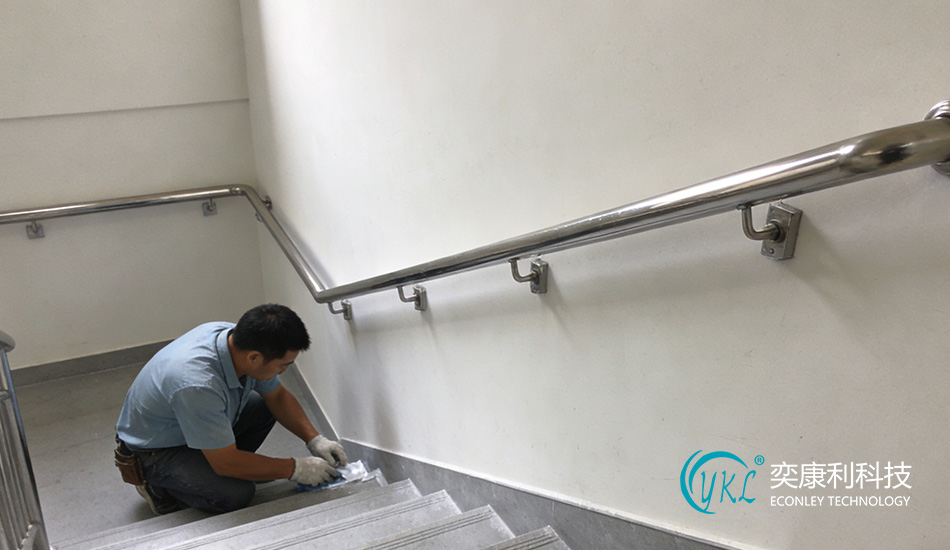
Professional Hospital Handrail Installation strictly adheres to international and national medical facility standards. Installation providers must hold relevant qualifications in medical facility construction and be proficient in regulations such as the Americans with Disabilities Act (ADA) standards for medical facilities and local medical building codes. Complete compliance documents are provided, including on-site assessment reports, standard compliance checklists, and post-installation test certificates, to facilitate hospital safety audits and certification processes.
In terms of quality assurance, reputable installation services offer long-term warranties. If handrail issues such as loosening or structural damage occur due to installation defects within the warranty period, teams provide timely on-site repairs free of charge. Regular return visits are also conducted to inspect handrail conditions and provide maintenance advice, ensuring long-term safe and reliable use.
When selecting Hospital Handrail Installation services, hospital teams should focus on three core criteria: professional qualifications, scenario experience, and service comprehensiveness. Firstly, verify that the installation provider has valid certifications in medical facility construction and a proven track record of compliance with medical safety standards.
Secondly, prioritize providers with rich experience in diverse hospital scenarios, such as general wards, intensive care units, and rehabilitation centers. Review case studies of similar medical facility projects to assess their ability to handle complex on-site challenges. Finally, evaluate the completeness of the service package, including on-site assessment, personalized planning, post-installation testing, and long-term after-sales support. A comprehensive service system ensures a smooth installation process and sustained safety performance.
Professional Hospital Handrail Installation is a foundational element in building a safe, accessible, and compliant medical environment. By prioritizing standardized installation that adapts to diverse clinical scenarios, hospitals can maximize the protective value of handrails, reduce safety risks, and improve the overall patient experience. If you are a hospital facility management or procurement team seeking reliable Hospital Handrail Installation services and integrated medical safety solutions, contact us today. We will provide personalized installation plans, strict compliance supervision, and full-process technical support, helping you build a safer and more accessible environment for patients and staff.
 Tel :13510328459
 Email :493432861@qq.com
 Phone :0755-82154850/25907050
 Add:205-206, 2nd Floor, Building 2, Xiazao Village Industrial Zone, Gaofeng Community, Dalang Street, Longhua District, Shenzhen City

About

Products
Cases
News
Contact
 493432861@qq.com