Service Hotline:13510328459
 205-206, 2nd Floor, Building 2, Xiazao Village Industrial Zone, Gaofeng Community, Dalang Street, Longhua District, Shenzhen City
Service Hotline:13510328459
205-206, 2nd Floor, Building 2, Xiazao Village Industrial Zone, Gaofeng Community, Dalang Street, Longhua District, Shenzhen City



Time:2025-12-09 Preview:
Hidden tracks have become a versatile and indispensable component in optimizing space functionality and safety for hospitals, nursing homes, and other healthcare and senior care facilities. Understanding Hidden Track Applications and Uses is crucial for procurement teams to unlock the full value of these products, as they are far more than just space-partitioning tools—they adapt to diverse scenario needs to enhance safety, privacy, and operational efficiency. As a professional supplier specializing in healthcare protection products, we integrate hidden tracks with our core business lines, including hospital handrails, nursing home handrails, hospital curtains/window screens, antibacterial resin panels, and custom antibacterial boards, to maximize their application value. This article delves into Hidden Track Applications and Uses, providing actionable insights for facility renovation and upgrading.
Hospitals feature diverse functional areas with distinct requirements, and Hidden Track Applications and Uses are tailored to match these professional needs. In intensive care units (ICUs) and isolation wards, the primary use of hidden tracks is to enable seamless privacy partitioning and silent space division. Embedded in ceilings, these tracks support heavy-duty, antibacterial medical curtains, allowing medical staff to quickly separate patient areas without generating noise that might disrupt vital sign monitoring or patient recovery. The concealed design also eliminates collision hazards for medical equipment and stretchers, ensuring smooth clinical workflows.
In general wards and outpatient consulting rooms, hidden tracks are used for flexible space adjustment. They can be customized into curved or L-shaped structures to fit irregular room layouts, realizing quick partitioning between beds or between diagnosis and waiting areas. This use not only protects patient privacy during consultations and treatments but also improves the utilization rate of limited ward space. Additionally, in operating rooms and sterile preparation areas, hidden tracks are used to hang flame-retardant and dust-proof curtains, maintaining the sterility of the environment by preventing dust accumulation and facilitating quick isolation when needed.
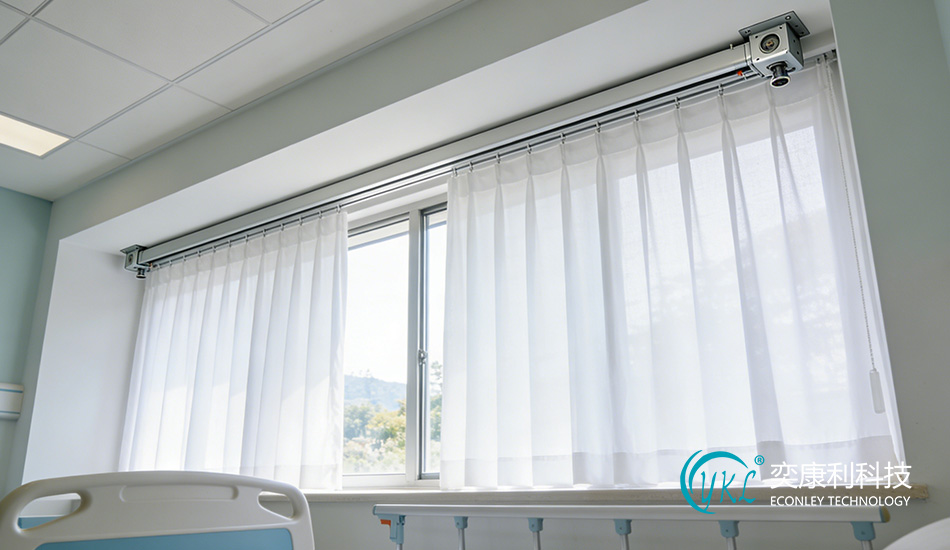
In nursing homes and senior care apartments, Hidden Track Applications and Uses focus on safety protection and personalized living needs of the elderly. In elderly bedrooms and assisted living suites, hidden tracks are primarily used for privacy protection and fall prevention. The concealed design avoids protruding structures that might cause the elderly to trip, while the smooth-sliding curtains allow them to create a private space at will. For elderly with mobility impairments, the tracks are paired with lightweight, easy-to-operate curtains, reducing the difficulty of daily use.
In public areas of senior care facilities, such as activity rooms and dining halls, hidden tracks are used for flexible space division. They can quickly split large spaces into small functional zones for activities like reading, handicrafts, or group meals, adapting to the diverse activity needs of the elderly. In rehabilitation areas, hidden tracks are used to hang protective curtains that separate different rehabilitation stations, ensuring the privacy of the elderly during rehabilitation training while preventing mutual interference between training activities.
Hidden tracks also exhibit excellent adaptability in special environments of healthcare and senior care facilities, expanding their range of uses. In humid areas such as hospital bathrooms, nursing home toilets, and rehabilitation pools, hidden tracks are made of corrosion-resistant materials, and their primary use is to hang waterproof and mildew-proof curtains. The concealed design prevents water from eroding the track structure, ensuring stable performance even in long-term humid environments.
In large-span spaces such as hospital auditoriums and nursing home multi-function halls, hidden tracks are used for large-area curtain hanging and space partitioning. These tracks feature enhanced load-bearing capacity to support heavy-duty curtains for sound insulation or light adjustment, realizing flexible conversion between large-scale activities and small-group gatherings. This use fully demonstrates the versatility of hidden tracks in adapting to different space scales and functional requirements.
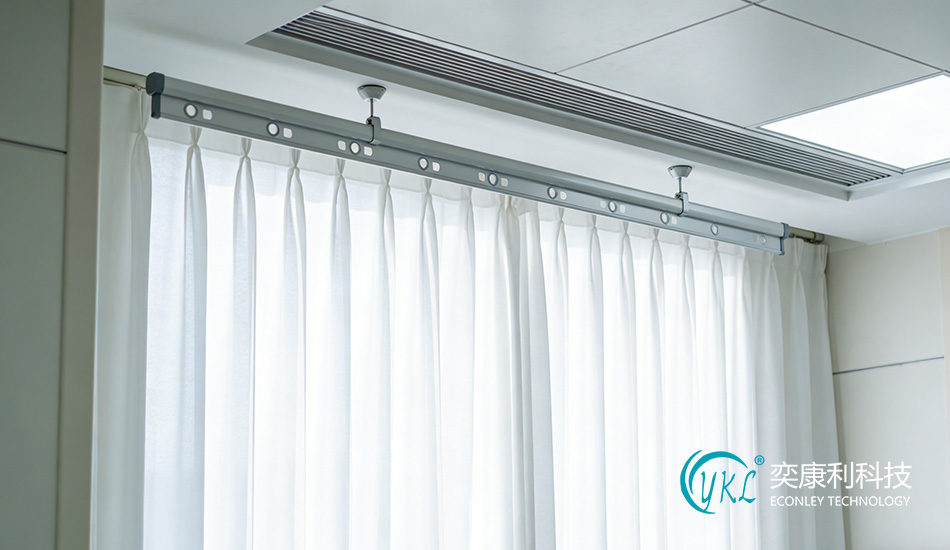
The value of Hidden Track Applications and Uses is further amplified through synergistic integration with our core healthcare products. In hospital corridors, hidden tracks installed on ceilings are perfectly matched with wall-mounted hospital handrails—while the tracks realize space partitioning, the handrails provide support for patients with limited mobility, forming a comprehensive safety protection system. In nursing home wards, hidden tracks are coordinated with antibacterial resin panels, where the dust-proof design of the tracks and the antibacterial performance of the panels work together to create a hygienic living environment for the elderly.
When paired with our hospital curtains/window screens, hidden tracks ensure smooth sliding and tight partitioning, maximizing the privacy protection effect. This synergistic application not only simplifies the procurement process by enabling one-stop sourcing but also ensures product compatibility, avoiding installation conflicts and improving the overall coordination of the facility environment.
If you are a procurement team of a hospital, nursing home, or other healthcare and senior care facility, and want to explore more Hidden Track Applications and Uses to meet your specific scenario needs, please contact us immediately. We will provide you with detailed application cases, personalized solution design, and high-quality hidden track products that integrate seamlessly with our supporting healthcare products. Let us help you fully leverage the diverse uses of hidden tracks to create a safer, more comfortable, and efficient care environment for patients and the elderly.
 Tel :13510328459
 Email :493432861@qq.com
 Phone :0755-82154850/25907050
 Add:205-206, 2nd Floor, Building 2, Xiazao Village Industrial Zone, Gaofeng Community, Dalang Street, Longhua District, Shenzhen City

About

Products
Cases
News
Contact
 493432861@qq.com