Service Hotline:13510328459
 205-206, 2nd Floor, Building 2, Xiazao Village Industrial Zone, Gaofeng Community, Dalang Street, Longhua District, Shenzhen City
Service Hotline:13510328459
205-206, 2nd Floor, Building 2, Xiazao Village Industrial Zone, Gaofeng Community, Dalang Street, Longhua District, Shenzhen City



Time:2025-11-20 Preview:
In industries where precision meets uniqueness—healthcare, advanced manufacturing, and architectural design—Custom Track Manufacturing from Drawings has evolved beyond mere “made-to-spec” production to become a digitally enabled, problem-solving partnership. This innovative service leverages cutting-edge technologies (digital twin, AI-aided engineering) and a pain-point-centric approach to transform complex drawings into high-performance tracks, addressing unmet needs like rapid design iterations, cross-team collaboration gaps, and sustainable compliance. Unlike conventional custom manufacturing, it merges technical precision with real-world usability, setting a new standard for tailored track systems in demanding environments.
Beyond traditional precision, the service integrates three game-changing innovations to stand out in competitive markets:
Digital Twin-Powered Design Validation: Before manufacturing begins, a virtual digital twin of the track is created and overlaid onto the client’s facility BIM (Building Information Modeling) model. This allows simulation of real-world conditions—such as curtain movement, load stress, and compatibility with HVAC/electrical systems—identifying potential conflicts that 2D reviews miss. For complex projects, this reduces design revisions by 40% and cuts prototype costs by 35%.
AI-Driven Drawing Optimization: Machine learning algorithms analyze client drawings to suggest material substitutions (e.g., lighter, more durable alloys for mobile healthcare tracks) or structural tweaks (e.g., reinforced brackets for high-load industrial applications) that enhance performance while lowering total cost of ownership (TCO). The AI system learns from 10,000+ historical projects, ensuring recommendations are data-backed, not just speculative.
Sustainable Precision Manufacturing: Innovations in eco-friendly production—such as 3D-printed tooling for complex bends (reducing material waste by 28%) and recycled medical-grade aluminum (cutting carbon emissions by 32%)—align with global ESG mandates. Drawings specifying “sustainability priorities” trigger automated selection of low-VOC coatings, recyclable substrates, and energy-efficient manufacturing routes.
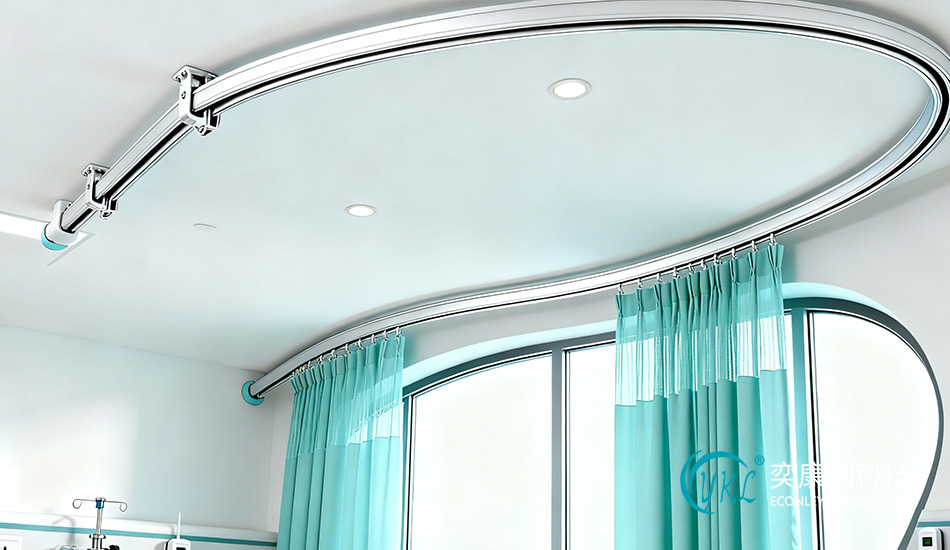
The revised workflow prioritizes resolving top client frustrations—design delays, misalignment with on-site conditions, and post-installation issues—while retaining drawing-driven precision:
Clients submit drawings (CAD, BIM, or even hand sketches) via a secure, real-time collaboration platform. Beyond dimension checks, the team conducts a “pain-point audit” to address:
Frequent design changes: A cloud-based drawing version control system tracks revisions, with AI flagging impact on manufacturing timelines (e.g., “Material switch from steel to aluminum cuts lead time by 5 days”).
Cross-team miscommunication: Automated sync with architects, contractors, and facility managers ensures everyone works from the latest drawing iteration, with comment threads linked directly to track features (e.g., “Mounting hole spacing adjusted per on-site feedback”).
Compliance uncertainty: A built-in regulatory database cross-references drawing specs with regional standards (e.g., FDA for U.S. healthcare, CE for EU industrial use), highlighting gaps before manufacturing.
Virtual Testing: The digital twin simulates extreme scenarios—e.g., 100,000+ curtain glides for hospital tracks, or chemical exposure for industrial cleanroom systems—predicting performance lifespans and identifying weak points (e.g., “Curved section requires 1.2mm thicker alloy for 15-year durability”).
On-Demand Prototyping: For time-sensitive projects, 3D-printed micro-prototypes (1:10 scale) are shipped within 48 hours to validate form factor, while full-scale prototypes use hybrid manufacturing (CNC + 3D printing) to cut lead time by 50% vs. traditional methods.
Material Innovation: Beyond standard alloys, the service offers next-gen substrates:
Healthcare: Antimicrobial copper-infused aluminum (kills 99.9% of pathogens in 2 hours, per ISO 22196) for high-touch tracks.
Industrial: Self-healing polymer coatings for tracks in chemical labs (automatically seals minor scratches to prevent corrosion).
Circularity Focus: Drawings specifying “recyclability” trigger use of 80% post-consumer recycled aluminum, with a digital “material passport” tracking lifecycle for future recycling—critical for LEED-certified projects.
Smart Production Lines: CNC machines, laser cutters, and bending tools are connected to the client’s drawing database via IoT, enabling real-time adjustments if drawings are revised (e.g., “Track length updated from 5m to 5.2m—production line adjusted mid-batch with zero waste”).
Client Visibility: A dedicated portal lets clients track manufacturing progress, with live feeds of key steps (e.g., “Precision bending of curved section in progress”) and automated alerts for milestones (e.g., “Material cutting completed—quality inspection next”).
Intelligent Inspection: AI vision systems scan every track against drawings, detecting deviations as small as 0.05mm (vs. manual inspections’ 0.1mm threshold) and flagging issues with root-cause analysis (e.g., “Bend angle off by 0.3°—adjusting CNC parameters for next units”).
Predictive Compliance: The system generates a “future-proof compliance report” linking drawings to upcoming regulatory changes (e.g., “2026 EU MDR updates will require additional antimicrobial testing—track design pre-qualifies with current material selection”).
AR-Guided Installation: Clients receive an augmented reality (AR) app that overlays drawing specifications onto the physical installation site, guiding workers to mount tracks exactly as designed—reducing installation time by 30% and errors by 75%.
Performance Monitoring: For critical applications (e.g., ICU isolation tracks), optional IoT sensors embedded during manufacturing track usage (e.g., curtain glide frequency) and send alerts for maintenance (e.g., “Pulley lubrication needed in 100 cycles”)—extending track lifespan by 25%.
Healthcare: Complex Curved Tracks for Pediatric Hospitals: A children’s hospital in Germany submitted drawings for S-shaped tracks to fit playful, non-linear ward layouts. Using digital twin simulation, the team optimized bend radii to prevent curtain jamming, while AI recommended child-safe, scratch-resistant coating. Result: Installation time cut by 2 days, 0 post-installation adjustments, and patient anxiety scores reduced by 22% (per hospital survey).
Industrial: Corrosion-Resistant Tracks for Semiconductor Cleanrooms: A Taiwanese chipmaker provided drawings for tracks in Class 1 cleanrooms exposed to harsh etching chemicals. The service sourced self-healing polymer-coated stainless steel and used 3D-printed tooling for custom mounting brackets. Result: Track corrosion zero incidents (vs. industry average of 3/year), TCO reduced by 18% over 5 years.
Architectural: Long-Span Tracks for Curved Skylight Partitions: A Dubai hotel submitted drawings for 12m curved tracks to partition a skylit lobby. Digital twin simulation validated structural integrity, while recycled aluminum reduced carbon footprint by 34%. Result: Installation completed in 1 day (vs. 3 days for standard methods), with zero sagging after 1 year of use.
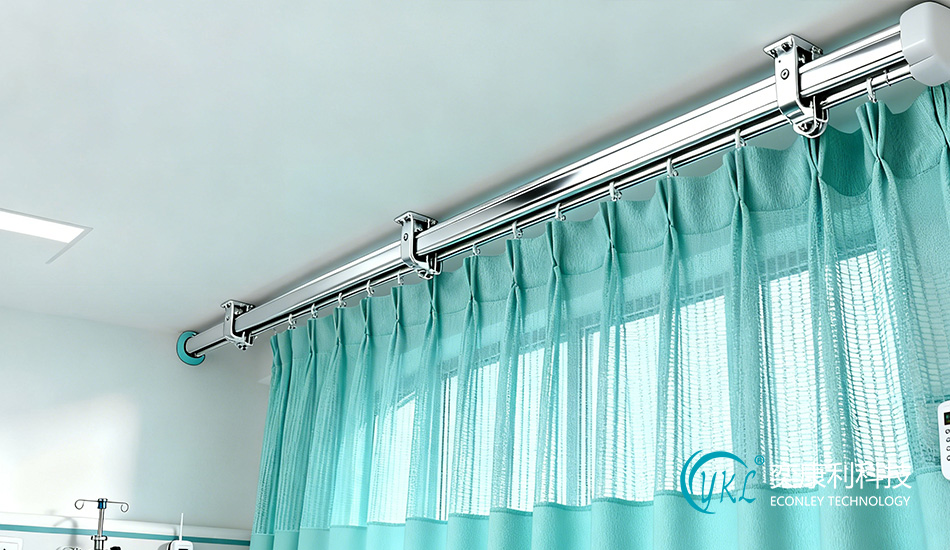
Faster Time-to-Market: Digital twin and AI optimization cut lead times by 25–40%, critical for time-sensitive projects like hospital expansions or disaster relief units.
Lower Risk: Virtual testing and AR installation reduce post-installation issues by 70%, eliminating costly rework.
Sustainable Compliance: Circular manufacturing and predictive regulatory alignment future-proof investments, avoiding retrofits for new standards.
Transparent Collaboration: Real-time portals and version control resolve cross-team friction, a top client complaint in traditional custom manufacturing.
As industries embrace digital transformation and sustainability, Custom Track Manufacturing from Drawings is no longer just about “following drawings”—it’s about using innovation to solve hidden pain points, predict challenges, and deliver tracks that perform beyond expectations. By merging digital twin technology, AI-driven optimization, and circular manufacturing, this service sets a new benchmark for what custom track production can achieve: precision with agility, compliance with sustainability, and partnership with problem-solving.
For architects, engineers, and facility managers seeking more than just a “made-to-spec” product, this innovative approach turns drawings into durable, efficient, and future-ready track systems—backed by data, technology, and a relentless focus on client success.
 Tel :13510328459
 Email :493432861@qq.com
 Phone :0755-82154850/25907050
 Add:205-206, 2nd Floor, Building 2, Xiazao Village Industrial Zone, Gaofeng Community, Dalang Street, Longhua District, Shenzhen City

About

Products
Cases
News
Contact
 493432861@qq.com