Service Hotline:13510328459
 205-206, 2nd Floor, Building 2, Xiazao Village Industrial Zone, Gaofeng Community, Dalang Street, Longhua District, Shenzhen City
Service Hotline:13510328459
205-206, 2nd Floor, Building 2, Xiazao Village Industrial Zone, Gaofeng Community, Dalang Street, Longhua District, Shenzhen City



Time:2025-11-20 Preview:
In industries where standard solutions fail to address unique spatial constraints, functional demands, or regulatory requirements—especially healthcare and high-precision industrial sectors—Non-Standard Track Custom Processing Service has become an indispensable solution. This specialized service transforms client-specific requirements (from conceptual sketches to technical specifications) into precision-engineered track systems, bypassing the limitations of off-the-shelf products. Whether for curved medical isolation wards, heavy-duty industrial 洁净室 (cleanrooms), or mobile healthcare units, the service delivers tailored processing that aligns with performance, compliance, and installation needs—making it a cornerstone for projects requiring non-conventional track solutions.
The service stands out for its ability to solve complex, non-standard challenges across sectors:
Flexible Adaptation to Unique Requirements: Unlike standard tracks limited by fixed sizes and configurations, custom processing caters to irregular shapes (complex curves, asymmetrical angles), extreme dimensions (ultra-long spans, miniaturized profiles), and specialized functional demands (radiation shielding, corrosion resistance, silent operation). It adapts to diverse installation environments, from low-ceiling clinics to high-humidity industrial spaces.
Precision Processing & Craftsmanship: Leveraging advanced manufacturing technologies, the service ensures tight tolerances and consistent quality for non-standard designs. Each track is processed to match exact client specifications, eliminating gaps, misalignments, or performance compromises common with modified standard products.
Cross-Sector Compatibility: While rooted in healthcare applications (complying with medical hygiene and safety standards), the service extends to industrial cleanrooms, laboratory facilities, and mobile medical units. It balances sector-specific requirements—such as antibacterial coatings for hospitals and load-bearing strength for industrial use—without sacrificing quality.
One-Stop Solution Efficiency: From requirement diagnosis and design optimization to material selection, processing, and post-delivery support, the service streamlines the entire customization journey. This reduces project lead times, minimizes coordination costs, and ensures seamless integration with overall project timelines.
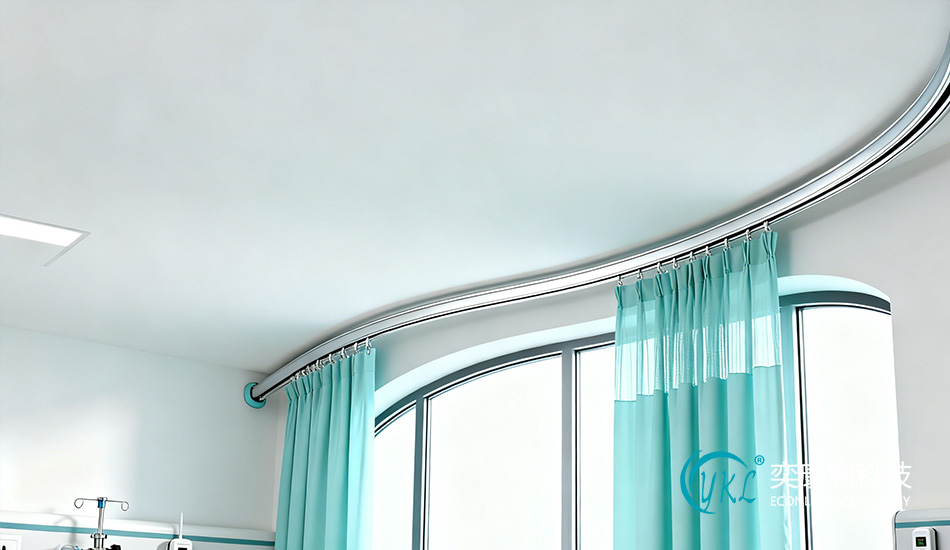
The service follows a structured, client-centric process to deliver reliable non-standard solutions:
Clients share needs through sketches, technical briefs, or on-site assessments—outlining spatial constraints, functional goals (e.g., infection control, noise reduction), environmental conditions (e.g., humidity, chemical exposure), and compliance standards. The processing team conducts a comprehensive analysis to:
Clarify non-negotiable parameters (e.g., load capacity, material compatibility).
Identify potential technical challenges (e.g., complex bending angles, material durability).
Align requirements with sector-specific regulations (medical: EN ISO 13485; industrial: ISO 9001).
Based on confirmed specifications, engineers develop optimized designs and processing plans:
3D modeling simulates track performance in real-world environments, refining shapes and structures to enhance feasibility.
Processing routes are tailored to material properties and design complexity—selecting from CNC bending, laser cutting, precision welding, or extrusion molding.
Client feedback is integrated to adjust designs, ensuring alignment with installation and functional expectations.
High-quality materials are chosen to match non-standard requirements:
Medical scenarios: Antimicrobial aluminum alloy, corrosion-resistant stainless steel, or lead-lined substrates for radiation shielding.
Industrial scenarios: High-strength carbon steel, moisture-proof engineering plastics, or lightweight titanium alloy for portability.
Pre-processing steps (material cutting, surface degreasing, rust prevention) are conducted to ensure processing precision and final product durability.
Advanced manufacturing technologies bring designs to life:
CNC bending and laser cutting achieve complex shapes (e.g., S-curves, multi-angle bends) with consistent accuracy.
Precision welding ensures structural integrity for ultra-long or heavy-duty tracks, while modular assembly supports reconfigurable designs.
Functional components (silent pulleys, antimicrobial coatings, motorized mechanisms) are integrated during processing—avoiding post-production modifications that risk performance.
Every non-standard track undergoes multi-layered testing:
Dimensional inspections validate alignment with design specifications, ensuring fit for target environments.
Performance testing (e.g., gliding smoothness, load-bearing stability, chemical resistance) confirms functional reliability.
Compliance verification ensures adherence to regulatory standards, with documentation for audits (e.g., antibacterial efficacy reports, fire safety certifications).
Finished tracks are packaged securely for damage-free transport. The service includes:
Detailed installation guides tailored to non-standard configurations.
On-site technical support to resolve installation challenges (e.g., fitting irregular spaces).
Post-installation performance checks and maintenance recommendations.
The service excels in addressing diverse non-standard needs through specialized capabilities:
Complex Shape Processing: Handles custom bends, curves, and asymmetrical designs—from tight-radius curves for compact medical cubicles to multi-segmented tracks for open industrial spaces. Advanced bending technologies ensure no material deformation or performance loss.
Specialized Material Processing: Adapts to unique material requirements, including thin-gauge aluminum for lightweight mobile tracks, thick-walled steel for heavy-duty use, and composite materials for dual functionality (e.g., antimicrobial + flame-retardant).
Functional Enhancement Processing: Integrates specialized features during manufacturing—antimicrobial surface treatment for medical tracks, noise-dampening structures for quiet environments, or dust-proof sealing for cleanrooms.
Environmental Adaptation Processing: Tailors tracks to extreme conditions—high-temperature resistance for industrial furnaces, corrosion resistance for chemical laboratories, or moisture-proofing for humid medical wards.
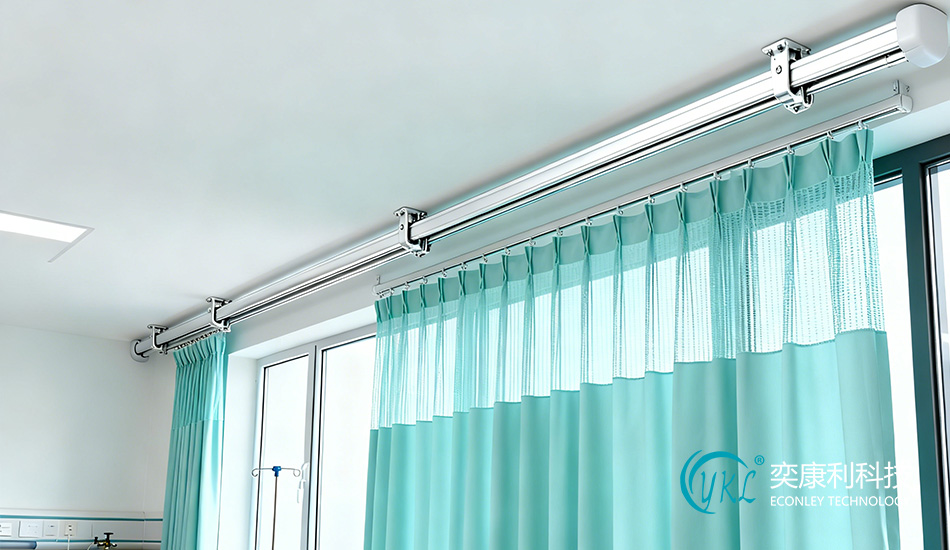
Non-Standard Track Custom Processing Service delivers value across diverse sectors:
Specialized Medical Facilities: Mobile Cabin Hospitals benefit from portable, foldable non-standard tracks; bio-safety laboratories use sealed, antimicrobial tracks to support sterile environments; pediatric clinics adopt rounded-edge, color-customized tracks for child safety and comfort.
Industrial Cleanrooms & Laboratories: High-precision manufacturing cleanrooms use dust-free, low-emission tracks for partitioning; chemical laboratories require corrosion-resistant tracks compatible with harsh reagents; pharmaceutical facilities leverage modular non-standard tracks for flexible production line reconfiguration.
Mobile Healthcare & Emergency Settings: Emergency response vehicles and field hospitals use lightweight, space-saving non-standard tracks that fit limited interiors; disaster relief medical units rely on durable, quick-install tracks to establish temporary isolation zones.
For project managers, architects, and facility operators, the service offers unmatched value:
Problem-Solving Versatility: Addresses unique challenges that standard tracks cannot—from irregular spaces to specialized functional needs—without compromising performance.
Quality Reliability: Precision processing and strict quality control ensure non-standard tracks meet the same durability and compliance standards as standard products, reducing long-term maintenance risks.
Cost-Effective Customization: Optimized design and processing minimize material waste and rework costs, delivering tailored solutions at competitive price points.
Technical Expertise Support: Engineering teams provide professional guidance throughout the process, offering design optimizations and material recommendations to enhance product performance.
As industries evolve toward more specialized, patient-centric, and efficient operations, Non-Standard Track Custom Processing Service remains a critical enabler of innovation. By transforming unique requirements into precision-engineered solutions, it bridges the gap between standard limitations and project needs—delivering tracks that don’t just fit spaces, but enhance the safety, efficiency, and functionality of healthcare and industrial environments worldwide.
Whether you’re designing a specialized medical facility, an industrial cleanroom, or an emergency response system, this service turns your non-standard vision into a reliable reality—backed by precision processing, compliance assurance, and end-to-end support.
 Tel :13510328459
 Email :493432861@qq.com
 Phone :0755-82154850/25907050
 Add:205-206, 2nd Floor, Building 2, Xiazao Village Industrial Zone, Gaofeng Community, Dalang Street, Longhua District, Shenzhen City

About

Products
Cases
News
Contact
 493432861@qq.com