Service Hotline:13510328459
 205-206, 2nd Floor, Building 2, Xiazao Village Industrial Zone, Gaofeng Community, Dalang Street, Longhua District, Shenzhen City
Service Hotline:13510328459
205-206, 2nd Floor, Building 2, Xiazao Village Industrial Zone, Gaofeng Community, Dalang Street, Longhua District, Shenzhen City



Time:2025-09-26 Preview:
When it comes to designing a building, every detail matters, including the handrails in the corridors. Handrails are not just a safety feature, but they can also add a touch of elegance and style to your interior. Custom corridor handrails are becoming increasingly popular for their ability to combine functionality with aesthetics. In this article, we will explore the benefits of custom railing systems, the various design options available, and how you can implement a custom handrail design in your space.
Custom railing systems offer a unique blend of safety, style, and adaptability. They are designed to fit the specific needs of your space, ensuring both functionality and visual appeal.
Safety is the primary function of any handrail. Custom corridor handrails are designed to meet safety regulations, providing secure support for people as they navigate through a building. These handrails can be tailored to specific height and strength requirements, accommodating the needs of all users, including children and individuals with disabilities.
In addition to safety, custom handrails can significantly enhance the look of your corridors. Whether you prefer a sleek, modern design or a more classic appearance, custom handrails offer a wide range of design options to complement any architectural style. By choosing materials, finishes, and designs that reflect your personal
taste or brand identity, you can create a cohesive and inviting environment.
Custom railing systems are highly versatile. They can be adapted to fit any space, whether it’s a narrow hallway in a home or a wide corridor in a commercial building. The adaptability of custom designs ensures that the handrails will fit perfectly, regardless of the layout or structural challenges of the space.
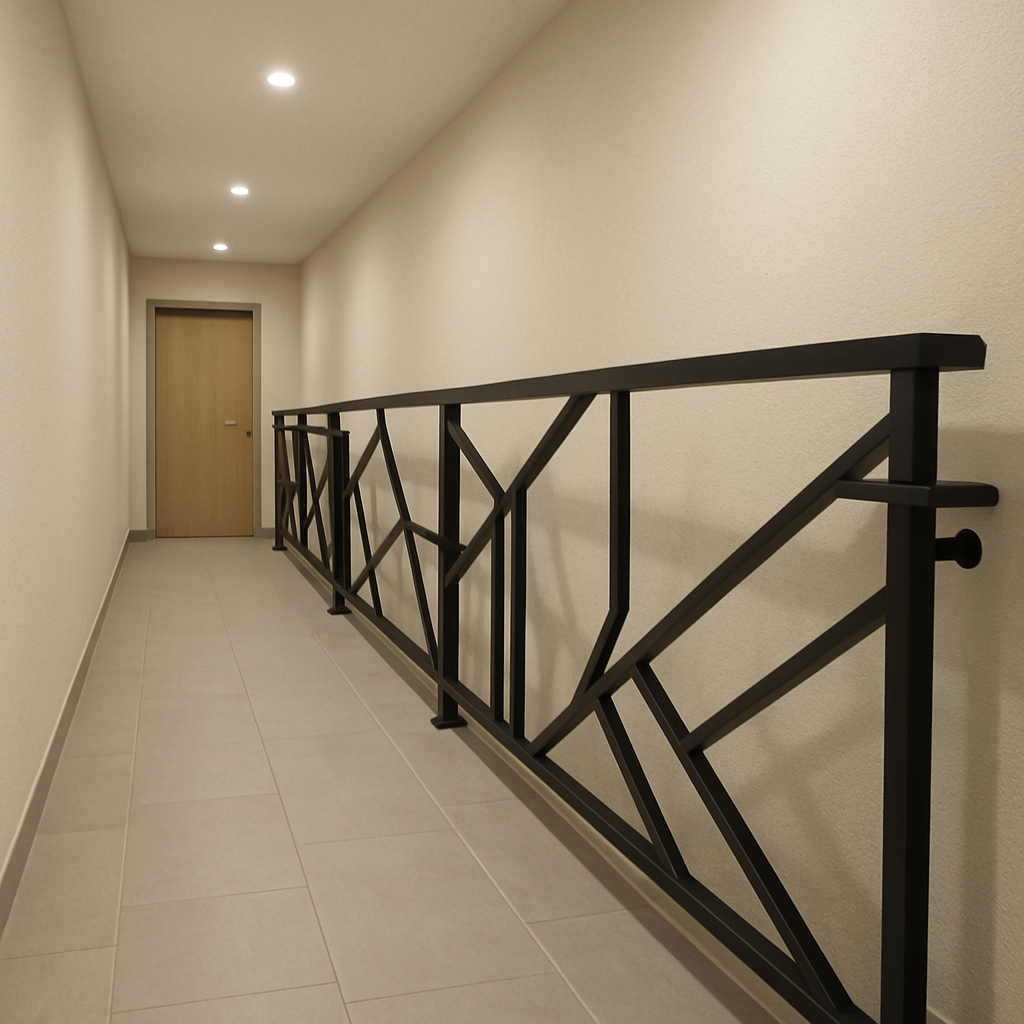
When it comes to custom handrail design, the possibilities are virtually endless. Here are some popular options to consider:
The material you choose for your handrail can significantly impact the overall look and feel of your space. Common materials include:
Wood: Offers a warm, traditional look and can be stained or painted to match any decor.
Metal: Provides a sleek, modern appearance and is available in various finishes such as stainless steel, brass, or powder-coated colors.
Glass: Adds a contemporary and open feel to the space, often used with metal or wood accents for added support.
The style of your handrail should reflect the overall design of your space. Here are a few styles to consider:
Minimalist: Clean lines and simple designs that focus on functionality with a touch of elegance.
Ornate: Features intricate designs and decorative elements for a more luxurious and traditional look.
Industrial: Utilizes raw materials and a rugged design for a modern, edgy feel.
Incorporating custom features into your handrail design can further enhance its functionality and aesthetic appeal. Consider options such as:
Integrated Lighting: Adds safety and ambiance to corridors by incorporating LED lights into the handrail.
Ergonomic Grips: Designed for comfort and ease of use, especially beneficial in high-traffic areas.
Color Accents: Use color to highlight specific areas or to match your brand colors.
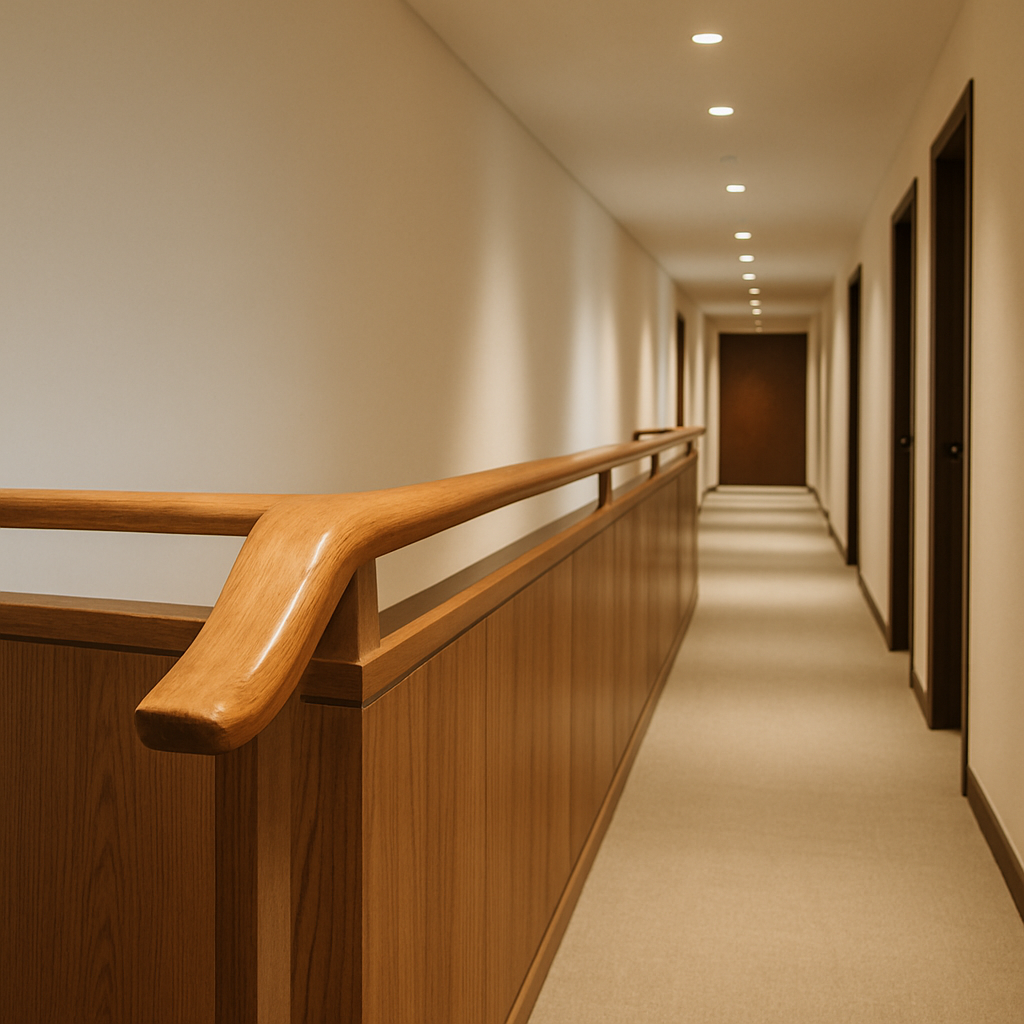
Implementing a custom handrail design involves several key steps to ensure a successful installation that meets both your aesthetic and functional requirements.
The first step in implementing a custom corridor handrail is planning and design. Work with a professional designer or architect to determine the best design for your space. Consider factors such as the building’s architecture, the intended use of the space, and any specific safety requirements.
Choose materials that not only match your design vision but also meet your durability and maintenance needs. Consider the environment in which the handrail will be installed, as some materials may be better suited for high-traffic or outdoor areas.
Proper installation is crucial to the safety and longevity of your handrail. Work with experienced installers who understand the specific requirements of custom handrails. They will ensure that the handrail is securely attached and meets all necessary safety codes.
Regular maintenance will keep your custom handrails looking and functioning their best. Depending on the materials used, this may involve cleaning, polishing, or repainting. Establish a maintenance schedule to address any wear and tear promptly.
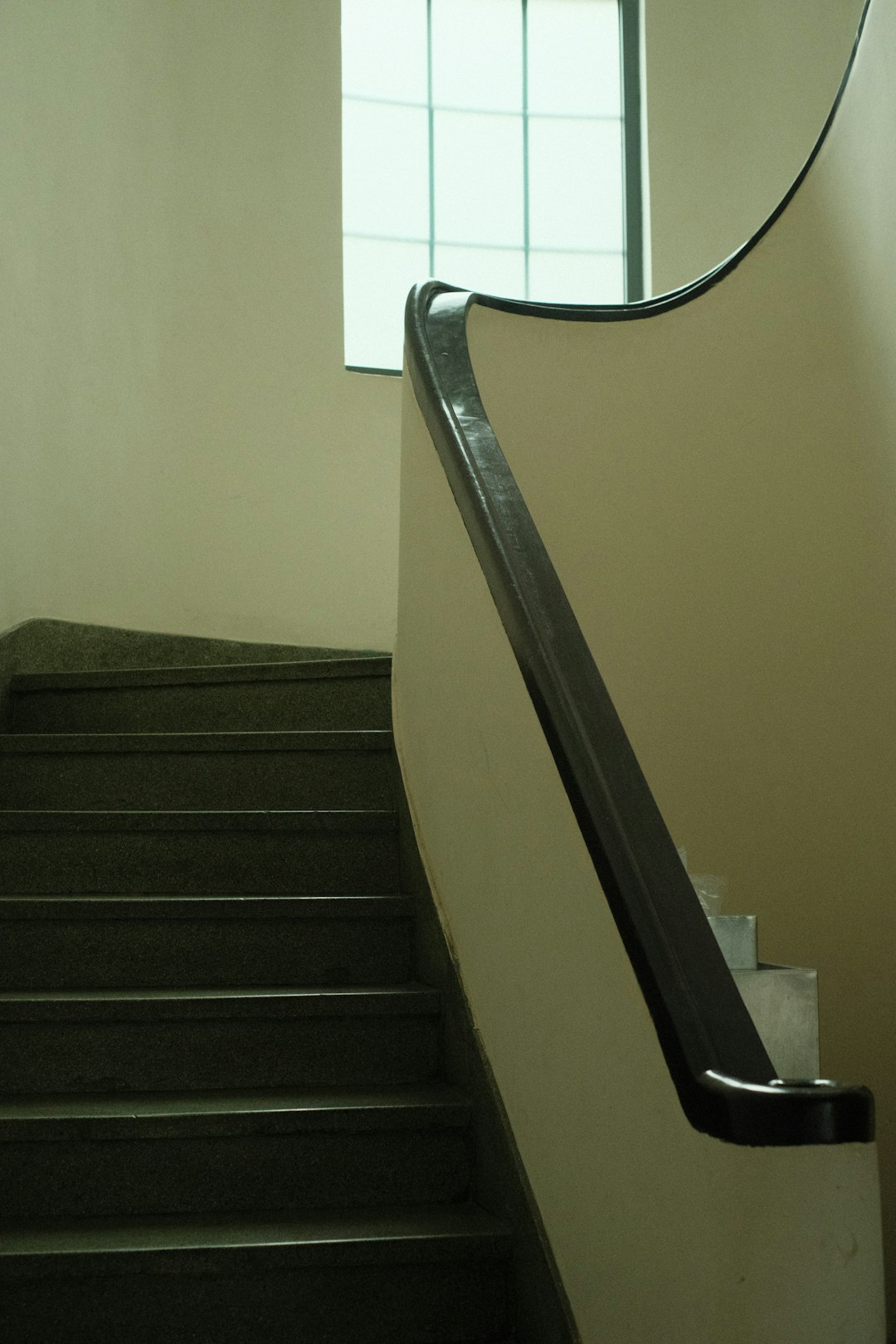
Custom corridor handrails are an excellent investment for any building, offering enhanced safety, aesthetic appeal, and adaptability. By carefully selecting materials, design styles, and custom features, you can create a handrail system that perfectly complements your space and meets your specific needs. Whether you’re designing a new building or updating an existing one, consider the benefits of custom railing systems to elevate the functionality and style of your corridors.
 Tel :13510328459
 Email :493432861@qq.com
 Phone :0755-82154850/25907050
 Add:205-206, 2nd Floor, Building 2, Xiazao Village Industrial Zone, Gaofeng Community, Dalang Street, Longhua District, Shenzhen City

About

Products
Cases
News
Contact
 493432861@qq.com