Service Hotline:13510328459
 205-206, 2nd Floor, Building 2, Xiazao Village Industrial Zone, Gaofeng Community, Dalang Street, Longhua District, Shenzhen City
Service Hotline:13510328459
205-206, 2nd Floor, Building 2, Xiazao Village Industrial Zone, Gaofeng Community, Dalang Street, Longhua District, Shenzhen City



Time:2026-03-18 Preview:
In the high-stakes environment of healthcare facilities, every interior element must serve a dual purpose: patient comfort and absolute safety. Among the most critical yet often overlooked components are Fire-Retardant Hospital Curtains and Tracks. These systems are not merely decorative partitions; they are engineered safety barriers that must meet rigorous international standards, such as NFPA 701 certification, to ensure they do not contribute to the spread of fire.
For hospital administrators, architects, and global wholesalers, sourcing the right privacy solutions requires a deep understanding of material science, hardware durability, and compliance. This guide explores the essential aspects of modern medical partitioning systems and why choosing the right manufacturer is a long-term investment in patient care.
When we discuss hospital curtains and tracks, we are referring to a sophisticated, integrated system designed for the flexible and rapid configuration of medical spaces. In high-pressure environments like the Emergency Room (ER), Intensive Care Unit (ICU), or standard nursing wards, these systems do more than divide a room; they provide the essential visual and acoustic privacy required for sensitive clinical examinations and uninterrupted patient recovery. By creating a shielded environment, they help reduce patient anxiety and maintain the dignity of care.
In the modern healthcare landscape, curtains act as a critical frontline barrier. Beyond simple privacy, high-quality fabrics are now engineered with specialized antimicrobial coatings. In a post-pandemic world, the ability of a textile to actively resist pathogens such as MRSA, E. coli, and other Healthcare-Associated Infections (HAIs) is a non-negotiable priority for procurement officers. These materials are designed to withstand rigorous chemical cleaning and frequent industrial laundering without losing their protective properties, ensuring a sterile environment for both patients and staff.
The "track" component is the backbone of the system, typically constructed from high-grade extruded aluminum alloy. This material choice is vital for structural integrity. Healthcare facilities require hardware that can endure constant, heavy-duty use—including the frequent pulling, tugging, and rapid adjustments common during medical emergencies. Precision engineering ensures the system remains nearly silent and fluid, preventing mechanical jams that could hinder staff movement. By utilizing corrosion-resistant finishes, these tracks offer a long-term, low-maintenance solution that integrates seamlessly into modern medical ceilings.
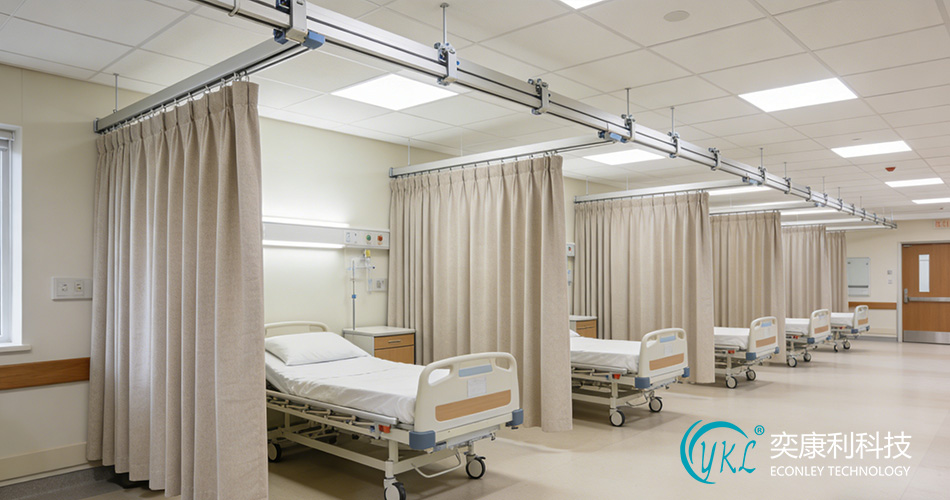
Choosing the right hospital privacy curtains and tracks is a critical decision that involves far more than just matching a color palette to a ward’s interior design. It requires a sophisticated balance of advanced textile engineering and mechanical precision to ensure long-term functionality. In a clinical setting, every second counts, and the equipment must perform flawlessly under pressure while adhering to strict healthcare regulations.
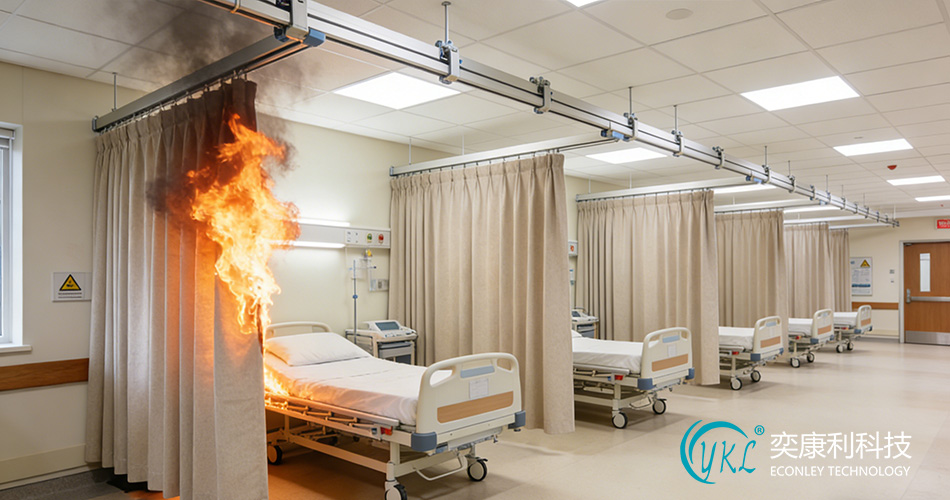
In the realm of medical textiles, safety is the ultimate benchmark, and the NFPA 701 certification remains the global gold standard. Unlike "topically treated" fabrics, where fire-retardant chemicals are merely sprayed onto the surface and can eventually wash out or degrade over time, Econley’s premium curtains are crafted from Inherently Fire Resistant (IFR) yarns. This means the flame-retardant properties are integrated directly into the molecular structure of the polymer fiber. Consequently, the fabric provides life-saving protection for its entire operational lifespan, regardless of how many high-temperature industrial wash cycles it undergoes.
Beyond standard privacy, certain medical environments—such as sleep study centers, ophthalmology clinics, or specialized recovery suites—require total light management. For these areas, fire-resistant blackout curtains are an essential infrastructure component. These high-density fabrics are engineered to block up to 99% of external light, facilitating a controlled environment for diagnostic testing and deep patient rest, all while maintaining the same rigorous fire-safety and antimicrobial standards as standard mesh-top curtains.
To maximize floor space and patient flow, the track hardware must offer versatile architectural flexibility. At Econley, we provide three primary configurations to suit any ward layout:
U-Shape Tracks: Specifically engineered to wrap around individual bed bays, providing a 360-degree private enclosure for the patient.
L-Shape Tracks: The perfect solution for corner configurations or shared semi-private rooms where space-saving is a priority.
Straight Tracks: Primarily utilized for simple room dividers, changing areas, or separating clinical zones within a larger outpatient department.
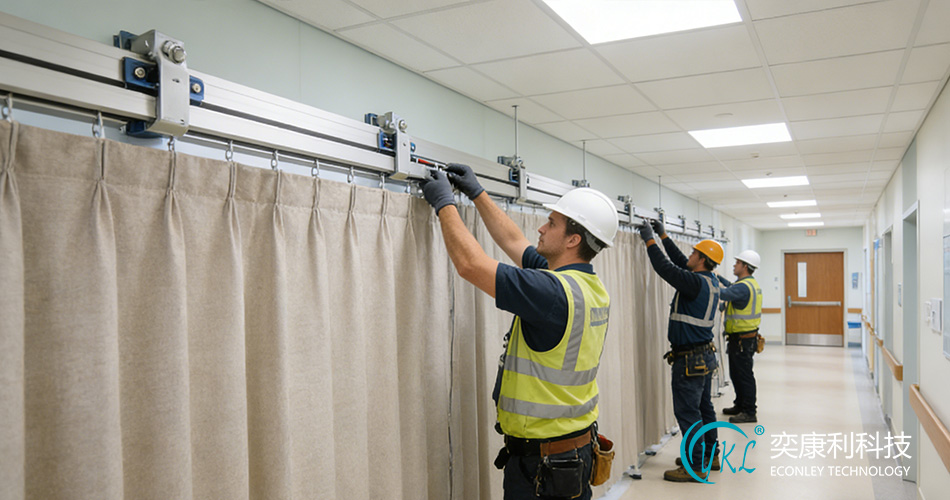
The seamless functionality of any professional privacy system depends almost entirely on the mechanical quality of the hospital curtain track rollers. While the fabric provides the visual barrier, the rollers serve as the engine of the entire partition. In a high-stakes medical environment, hardware failure is more than an inconvenience—it is a disruption to clinical workflow. If rollers catch, jam, or squeak during operation, it not only creates an auditory disturbance that can hinder patient rest and neurological recovery but also causes significant frustration for medical staff who require rapid, one-handed access to patients during emergencies.
To maintain a high-performance environment, several technical features must be present in the roller design:
Acoustic Management and Noise Reduction: Utilizing high-quality ABS or specialized nylon wheels, these rollers are engineered for near-silent operation. This is a vital component of "Quiet Hospitals" initiatives, as reducing ambient noise levels has been clinically proven to lower patient heart rates and improve sleep quality.
High Load-Bearing Capacity: Modern hospital privacy curtains and tracks often support heavy-duty, multi-layered, or blackout flame-retardant fabrics. Premium rollers must be able to support this significant weight without deforming over time or losing their spherical integrity, ensuring the curtain doesn't "drag" after months of use.
Tangle-Free and Anti-Jam Design: Advanced roller housings are designed with swivel hooks and enclosed bearings to prevent curtain hooks from tangling or overlapping. This ensures a consistent, smooth glide every time the curtain is deployed, regardless of the angle of the pull.
At Econley, our rollers are precision-molded to withstand the extreme rigors of high-traffic commercial environments. By focusing on low-friction materials and reinforced axles, we significantly reduce the "total cost of ownership" by minimizing the need for frequent maintenance, lubrication, or hardware replacement in busy wards.
For large-scale commercial healthcare developments, the hospital curtains and tracks cost represents a significant portion of the total FF&E (Furniture, Fixtures, and Equipment) budget. When managing a project with hundreds of patient beds, even a small variation in unit price can lead to massive budgetary shifts. For wholesalers and procurement specialists, understanding the technical variables that drive these costs is essential for providing competitive, accurate quotes to hospital boards and construction firms.
Several critical engineering and material choices dictate the final price point:
Material Grade and Extrusion Quality: Not all aluminum is created equal. 6063-T5 aluminum tracks carry a higher initial cost than thinner, lower-grade alternatives. However, this premium material offers more than double the operational lifespan, resisting the bending or "sagging" that occurs with cheaper metals. Investing in high-grade extrusion ensures the track remains perfectly aligned for years of heavy use.
Advanced Fabric Technology: The integration of Antimicrobial and Inherently Fire Resistant (IFR) fabrics involves a higher upfront investment compared to standard polyester. However, these "smart" textiles significantly lower the replacement frequency. Because the protection is molecularly bonded, it doesn't wash out, meaning the facility avoids the recurring costs of re-treating or replacing degraded curtains every few years.
Precision Customization and Pre-Fabrication: While ordering pre-bent tracks for specific U-shape or L-shape architectural layouts increases the initial purchase price, it is a massive cost-saver in the long run. Factory-precision bending eliminates the need for manual, on-site adjustments, which can save thousands of dollars in specialized labor costs and prevent expensive installation errors.
By sourcing directly from an established OEM/ODM factory like Econley, international buyers can strategically optimize their procurement budgets. This direct-to-manufacturer approach eliminates the "distributor markup" often found in local markets, allowing you to secure tier-one medical hardware while maintaining strict control over both quality standards and project timelines.
As we move through 2026, the global hospital curtains and tracks price is experiencing a period of strategic shift, heavily influenced by the fluctuating costs of raw aluminum and a surging international demand for sustainable, recyclable medical textiles. For procurement officers and global wholesalers, staying ahead of these market trends is essential for maintaining healthy project margins. The industry is moving away from "disposable" mindsets toward high-durability, eco-friendly systems that offer a lower total cost of ownership over a ten-year cycle.
Current market data suggests that while raw material volatility persists, tiered pricing for bulk orders remains the most effective way for distributors to hedge against inflation. Below is a strategic breakdown of current wholesale benchmarks:
| Product Type | Estimated Wholesale Price (USD) | Best For |
| Standard Aluminum Track | $9.00 - $14.00 per meter | General Wards & Outpatient Clinics |
| IFR Privacy Curtain (Mesh Top) | $18.00 - $45.00 per panel | ICU, Emergency Rooms & High-Risk Zones |
| Heavy-Duty Track Rollers | $0.60 - $1.80 per piece | High-use Facilities & Trauma Centers |
Note: These figures serve as a baseline. Final pricing is subject to significant volume discounts, specific antimicrobial finish requirements, and custom architectural bending needs.
By partnering with a direct manufacturer like Econley, wholesalers can bypass regional supply chain markups. Our 2026 pricing strategy focuses on "Value Engineering," ensuring that even as global logistics costs fluctuate, our partners receive the most competitive rates for NFPA 701 compliant hardware and textiles.
As a specialized, direct-to-market manufacturer, Econley Technology provides an exceptionally robust and resilient supply chain tailored for international partners. We operate on the foundational philosophy that our long-term success is intrinsically tied to the market competitiveness and profitability of our global distributors. In an era of shifting trade dynamics, having a partner that controls the entire production cycle—from aluminum extrusion to textile weaving—is a decisive advantage.
To empower our wholesalers, we offer a multi-tiered support system designed to capture high-value commercial contracts:
Comprehensive OEM & ODM Capabilities: We don't just supply off-the-shelf products; we act as your private R&D department. Whether you require custom-branded packaging, proprietary color-matching for a specific hospital chain, or unique track dimensions, our engineering team can adapt our production lines to meet your exact branding and technical specifications.
Rigorous Multi-Phase Testing: Quality is our primary export. Every batch of hospital curtains and tracks undergoes stringent quality control protocols. From SGS certifications for flame retardancy to ISO 9001 and ISO 14001 compliance for manufacturing excellence, we provide the documentation you need to pass strict government and healthcare audits.
Unified One-Stop Medical Solutions: We simplify your procurement by offering a complete interior safety ecosystem. Beyond privacy curtains, our catalog includes heavy-duty anti-collision handrails, corner guards, and ergonomic barrier-free grab bars, allowing you to consolidate shipments and offer a holistic solution to your clients.
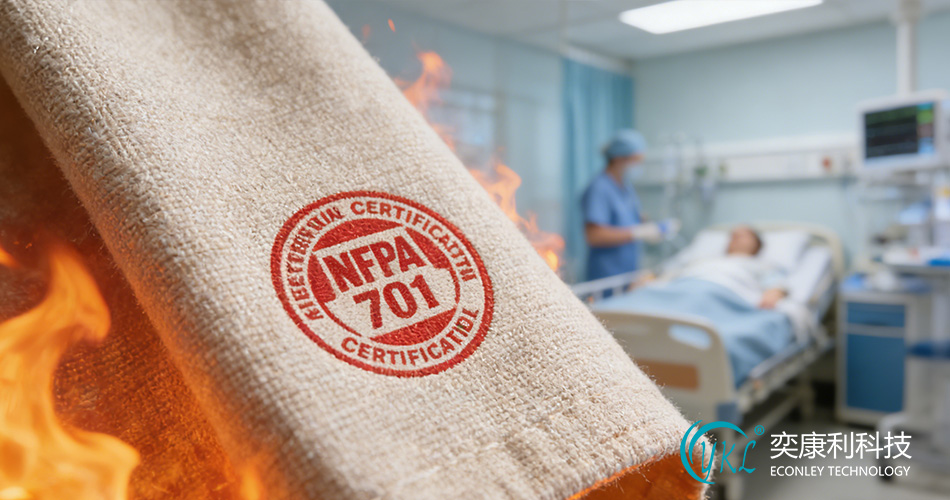
Q1: What is the importance of NFPA 701 for hospital curtains?
A: NFPA 701 is a North American standard for the flame testing of textiles. In many countries, it is a legal requirement for healthcare facilities. Econley's curtains meet these standards, ensuring that the fabric will self-extinguish within seconds if exposed to a flame, preventing a major fire disaster.
Q2: Can Econley provide custom bends for hospital tracks?
A: Yes. We use professional CNC bending equipment to provide U-shaped, L-shaped, and custom-angled tracks based on your architectural drawings. This ensures a perfect fit for any ward layout.
Q3: How do I maintain and clean hospital privacy curtains?
A: Our curtains are designed for industrial laundering. They maintain their flame-retardant and antimicrobial properties even after dozens of high-temperature washes, making them a cost-effective choice for hospitals.
Q4: Do you offer samples for large-scale commercial projects?
A: We certainly do. We encourage wholesalers and contractors to request a sample kit, which includes track sections, various hospital curtain track rollers, and fabric swatches, so you can verify our quality firsthand.
Q5: Is Econley open to private label (OEM) manufacturing?
A: Yes, we are a major OEM partner for many international medical supply brands. We can customize packaging, labels, and even the aluminum extrusion profile to match your brand identity.
 Tel :13510328459
 Email :493432861@qq.com
 Phone :0755-82154850/25907050
 Add:205-206, 2nd Floor, Building 2, Xiazao Village Industrial Zone, Gaofeng Community, Dalang Street, Longhua District, Shenzhen City

About

Products
Cases
News
Contact
 493432861@qq.com