Service Hotline:13510328459
 205-206, 2nd Floor, Building 2, Xiazao Village Industrial Zone, Gaofeng Community, Dalang Street, Longhua District, Shenzhen City
Service Hotline:13510328459
205-206, 2nd Floor, Building 2, Xiazao Village Industrial Zone, Gaofeng Community, Dalang Street, Longhua District, Shenzhen City



Time:2026-03-11 Preview:
Healthcare facilities, rehabilitation centers, and nursing homes must be designed with accessibility and patient safety in mind. For individuals with limited mobility, transferring from a wheelchair to a bed, toilet, or shower can be difficult without proper support equipment. One of the most effective safety solutions used in hospitals and elderly care environments is the wheelchair wall transfer bar system.
Transfer bars, transfer poles, and barrier-free handrails help patients move safely while reducing strain on caregivers. For contractors, healthcare architects, and medical equipment distributors, sourcing high-quality transfer bars from reliable manufacturers is essential for ensuring safety compliance and long-term durability.
In this guide, we explore different types of transfer poles, disabled person handrails, and nursing home safety rail systems used in modern healthcare facilities. We also discuss how professional manufacturers like ECONLEY TECHNOLOGY provide specialized accessibility equipment for medical projects worldwide.
One of the most popular mobility support systems used in hospitals and rehabilitation environments is the transfer pole floor to ceiling.
This type of pole is installed vertically between the floor and ceiling, creating a stable support structure that patients can hold while transferring from one position to another.
A transfer pole uses a tension-mounted or fixed mounting mechanism that secures the pole between the floor and ceiling. Some models include rotating handles that allow users to adjust their grip as they move.
These poles are commonly used in:
Patient bedrooms
Rehabilitation facilities
Nursing homes
Assisted living apartments
Accessible bathrooms
Floor-to-ceiling transfer poles offer several important benefits:
1. Increased Stability
The vertical pole provides continuous support during transfers between wheelchairs, beds, or chairs.
2. Reduced Caregiver Strain
Patients can support part of their own body weight, reducing the physical burden on caregivers.
3. Space Efficiency
Unlike large transfer equipment, vertical poles require minimal floor space.
4. Adjustable Height
Many transfer poles can be adjusted to fit different ceiling heights.
Healthcare contractors often install transfer poles in:
Hospital patient rooms
Rehabilitation centers
Nursing home bedrooms
Accessible residential housing
Manufacturers like ECONLEY TECHNOLOGY produce durable transfer poles designed specifically for healthcare environments.
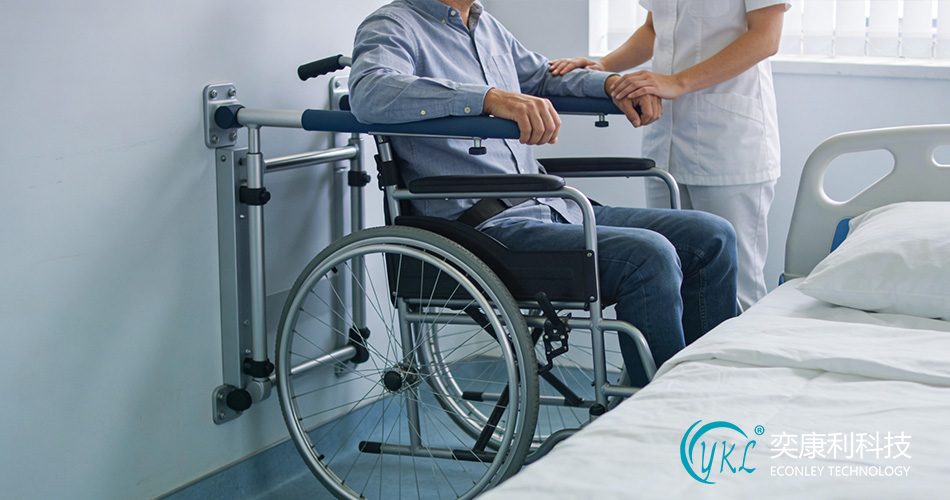
Another widely used mobility aid is the transfer pole with handle. These poles include rotating or adjustable handles that allow patients to maintain a secure grip during transfers.
Transfer poles with handles typically include:
Adjustable vertical pole structure
Rotating or pivoting handle grips
Anti-slip surface coatings
High load-bearing capacity
Durable aluminum or steel construction
The rotating handle design allows patients to move their body gradually while maintaining a stable grip.
This design is particularly useful for:
Wheelchair users
Post-surgery patients
Individuals recovering from injuries
Elderly residents in care homes
Professional medical transfer poles must meet strict safety requirements:
High load capacity
Anti-slip surfaces
Smooth ergonomic grips
Secure mounting systems
ECONLEY TECHNOLOGY designs transfer poles that meet international healthcare safety standards and are suitable for both hospital and residential accessibility projects.
Elderly individuals often experience reduced balance, muscle weakness, and mobility challenges. Installing a transfer pole for elderly users helps seniors maintain independence and reduces the risk of falls.
Falls are one of the most common causes of injury among elderly individuals. Transfer poles provide stable support during everyday activities such as:
Getting out of bed
Sitting down or standing up
Transferring from wheelchair to chair
Entering or exiting the bathroom
Transfer poles are typically installed near:
Beds
Recliners
Wheelchairs
Toilets
Shower areas
When selecting transfer poles for elderly individuals, the following factors are important:
Comfortable grip diameter
Easy-to-use handles
Non-slip surface materials
Adjustable height
Durable mounting systems
Manufacturers like ECONLEY TECHNOLOGY provide professional-grade transfer poles designed to support elderly mobility in healthcare environments.
A disabled person handrail is a barrier-free safety support system installed in public buildings, hospitals, and rehabilitation centers to assist individuals with disabilities.
Disabled person handrails help users:
Maintain balance while walking
Navigate corridors safely
Transfer between seating positions
Access bathrooms and showers
Disabled person handrails are commonly installed in:
Hospital corridors
Wheelchair ramps
Staircases
Accessible bathrooms
Rehabilitation centers
A Disabled Person Barrier-Free Safety Handrail is designed according to universal accessibility standards. These handrails ensure that buildings are accessible to individuals with mobility impairments.
Key features include:
Continuous handrail support
Ergonomic grip design
Anti-slip surface coating
Durable mounting brackets
Impact-resistant materials
These handrails are an essential component of barrier-free architectural design.
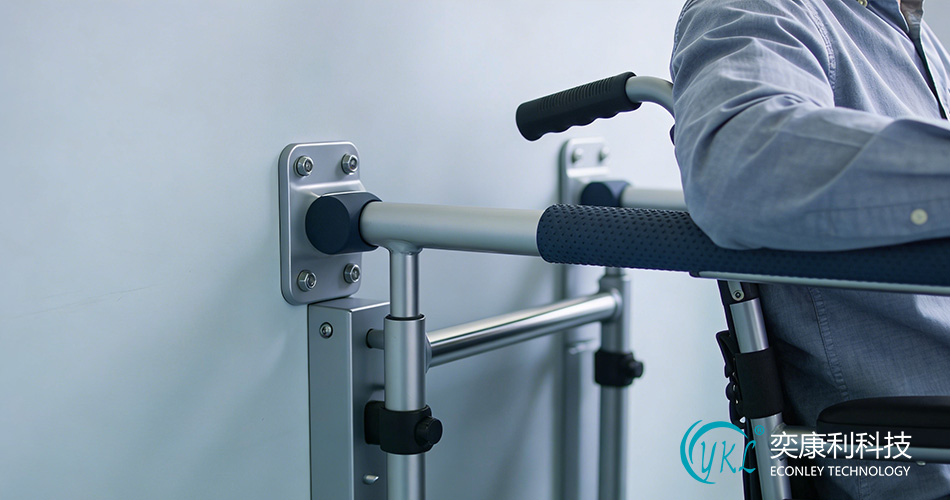
A nursing home handrail system is specifically designed to support elderly residents living in long-term care facilities.
Residents in nursing homes often have mobility limitations. Handrails provide support during walking and help prevent falls.
Corridor handrails are particularly important because they allow seniors to move independently between rooms, dining areas, and recreational spaces.
Common handrail systems used in care homes include:
Dual-level corridor handrails
Wall guard handrails
Anti-collision PVC handrails
Stainless steel accessibility rails
Nursing home handrails provide multiple advantages:
Improved resident safety
Reduced injury risk
Protection for interior walls
Compliance with healthcare regulations
Companies like ECONLEY TECHNOLOGY manufacture handrail systems specifically designed for hospitals, nursing homes, and rehabilitation facilities.
In addition to permanent installations, some facilities use portable grab bars for seniors to provide temporary support.
Portable grab bars are useful because they:
Require minimal installation
Can be repositioned easily
Provide temporary support in bathrooms or bedrooms
However, portable grab bars are generally not recommended for long-term use in hospitals or nursing homes because they may not provide the same level of stability as fixed systems.
Healthcare facilities typically prefer permanently installed handrails or transfer poles for safety reasons.
Bathrooms are one of the most hazardous areas for individuals with mobility limitations. Installing a Disabled Person Bathroom Specialized Handrail significantly improves safety.
Accessible bathrooms may include:
Horizontal grab bars near toilets
Vertical support bars near showers
Transfer poles near bathtubs
Foldable support rails
Bathroom handrails should meet several requirements:
Corrosion-resistant materials
Anti-slip surfaces
High load-bearing capacity
Secure wall mounting
These safety features help prevent slips and falls in wet environments.
When sourcing wheelchair transfer bars and accessibility handrails for healthcare projects, working with a professional manufacturer ensures product reliability and regulatory compliance.
ECONLEY TECHNOLOGY is a trusted supplier of healthcare safety products including:
Transfer poles
Disabled person handrails
Nursing home corridor rails
Bathroom grab bars
Wall protection systems
Professional manufacturing experience
High-quality materials and durable construction
Custom design and OEM services
International project support
Competitive factory pricing
These advantages make ECONLEY an ideal partner for medical construction projects, healthcare distributors, and accessibility equipment suppliers worldwide.
The best grab bars for seniors are typically stainless steel or aluminum grab bars with anti-slip surfaces. These bars provide strong support, corrosion resistance, and long-term durability. Professional manufacturers like ECONLEY TECHNOLOGY design grab bars specifically for healthcare environments to ensure safety and accessibility.
Although shower chairs can improve safety, they also have limitations:
They require additional bathroom space
They may be difficult to reposition
Some users feel unstable when sitting down
Because of these limitations, many healthcare facilities combine shower chairs with wall-mounted grab bars or transfer poles to provide additional support.
Wheelchairs are typically prescribed for individuals with mobility impairments caused by conditions such as spinal cord injuries, severe arthritis, neurological disorders, or recovery from major surgeries.
Healthcare facilities often install transfer poles and accessibility handrails to support wheelchair users during daily activities.
Manufacturers like ECONLEY TECHNOLOGY provide specialized handrail and transfer systems designed to improve safety and accessibility for wheelchair users.
 Tel :13510328459
 Email :493432861@qq.com
 Phone :0755-82154850/25907050
 Add:205-206, 2nd Floor, Building 2, Xiazao Village Industrial Zone, Gaofeng Community, Dalang Street, Longhua District, Shenzhen City

About

Products
Cases
News
Contact
 493432861@qq.com