Service Hotline:13510328459
 205-206, 2nd Floor, Building 2, Xiazao Village Industrial Zone, Gaofeng Community, Dalang Street, Longhua District, Shenzhen City
Service Hotline:13510328459
205-206, 2nd Floor, Building 2, Xiazao Village Industrial Zone, Gaofeng Community, Dalang Street, Longhua District, Shenzhen City



Time:2026-03-10 Preview:
As the global population ages, care homes and nursing facilities face growing demand for safe, accessible environments that support mobility and independence for elderly residents. One of the most effective solutions for improving safety and accessibility is the dual-level nursing home handrail system. These handrails provide support for both ambulatory and wheelchair-bound residents while helping caregivers maintain safe environments.
For healthcare contractors, facility planners, and nursing home developers, partnering with a reliable dual-level nursing home handrail manufacturer ensures high-quality, durable, and customizable solutions that meet international standards and accessibility requirements. ECONLEY TECHNOLOGY specializes in producing professional-grade handrail systems designed for long-term performance in care homes, hospitals, and assisted living facilities.
This article will cover the design, installation, materials, and benefits of dual-level handrail systems, as well as considerations for procurement and installation services.
Proper nursing home handrail installation is essential to guarantee resident safety and regulatory compliance. Handrails are more than a simple support—they are part of the facility's barrier-free design that enables seniors to navigate corridors, hallways, bathrooms, and common areas confidently.
Fall Prevention – Handrails help reduce slips and falls among residents, especially in long corridors and high-traffic areas.
Improved Independence – Elderly individuals can move without relying heavily on caregivers.
Durable Wall Protection – Handrails also serve as crash barriers, protecting walls from damage caused by wheelchairs, carts, or hospital beds.
Compliance with Standards – Properly installed handrails meet ADA, ISO, and local accessibility regulations.
ECONLEY TECHNOLOGY provides installation guidance and engineering services for nursing home handrails, ensuring professional-grade safety and durability.
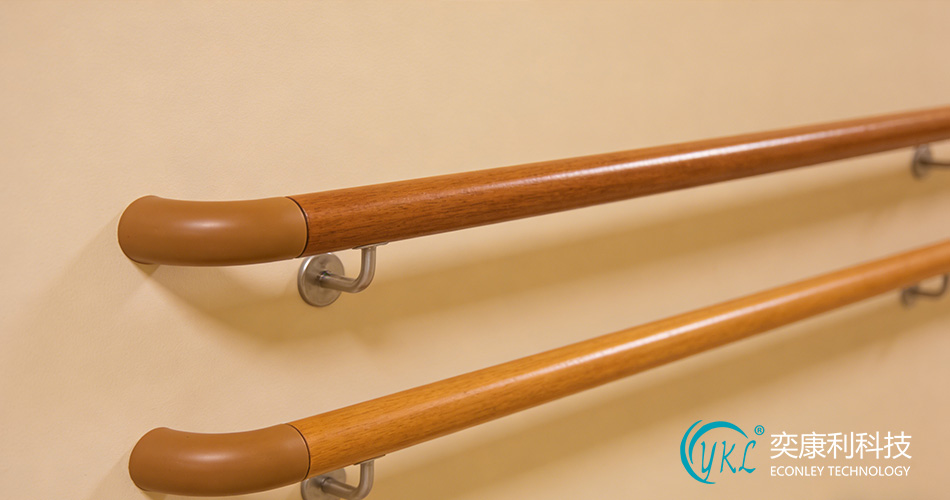
Dual-level handrails are specifically designed to accommodate residents with different heights and mobility needs. Typically, the upper handrail is used by ambulatory adults, while the lower rail supports wheelchair users or shorter residents.
Provide support for a wider range of residents
Improve safety for both ambulatory and wheelchair-bound users
Reduce the risk of falls in corridors, bathrooms, and communal areas
Allow caregivers to assist residents more efficiently
Height Specifications – Upper rail: 850–900 mm from the floor, Lower rail: 650–700 mm from the floor.
Continuous Rails – Rails should be continuous along hallways for uninterrupted support.
Ergonomic Design – Round or oval grip profiles provide comfort and reduce fatigue.
Durability – Materials must withstand repeated use and high impact.
ECONLEY TECHNOLOGY offers dual-level handrail kits and engineering services to simplify installation and ensure precise compliance with safety guidelines.
To streamline the procurement and installation process, manufacturers often provide dual-level nursing home handrail kits. These kits include all necessary components for a complete handrail system:
Upper and lower rails
Wall brackets and mounting hardware
End caps and corner pieces
Optional anti-bacterial or anti-collision covers
Simplified Installation – Pre-fabricated kits reduce labor time.
Consistent Quality – Factory-manufactured components ensure uniformity.
Customization – Kits can be tailored to facility length, colors, and materials.
Durability – Designed for long-term use in care home environments.
Using a professional supplier such as ECONLEY TECHNOLOGY ensures the kits meet international healthcare safety and accessibility standards.
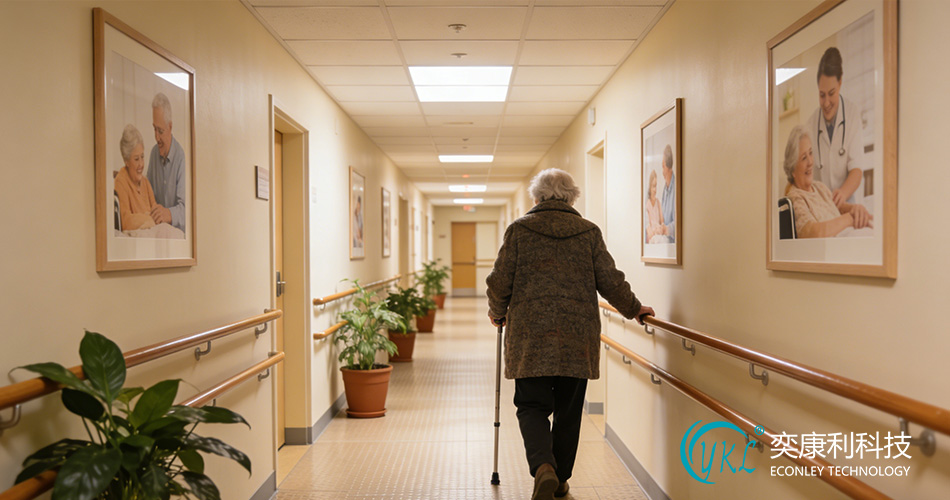
A handrail balustrade integrates vertical or horizontal supports with the handrail system, enhancing structural integrity and safety. In nursing homes, balustrades are often used in:
Staircases
Ramps
Elevated platforms
Corridor corners
Provides additional structural stability for dual-level handrails
Enhances resident safety in high-risk areas
Supports wheelchair and mobility aid navigation
Complements facility design aesthetics
Manufacturers like ECONLEY TECHNOLOGY offer a range of balustrade options that can be seamlessly integrated with dual-level handrail systems.
Professional installation is critical for long-term safety and functionality. Nursing Home Handrail Installation Engineering Services offered by experienced manufacturers include:
On-site Evaluation – Assessing corridor layout, wall conditions, and resident needs.
Customized Design – Developing dual-level handrail layouts based on space and accessibility requirements.
Technical Drawings – Providing detailed schematics for installation teams.
Installation Support – Guiding contractors during handrail mounting and alignment.
Load Testing – Ensuring the handrails can withstand prescribed weight and impact.
Engaging professional engineering services reduces installation errors and ensures compliance with healthcare standards.
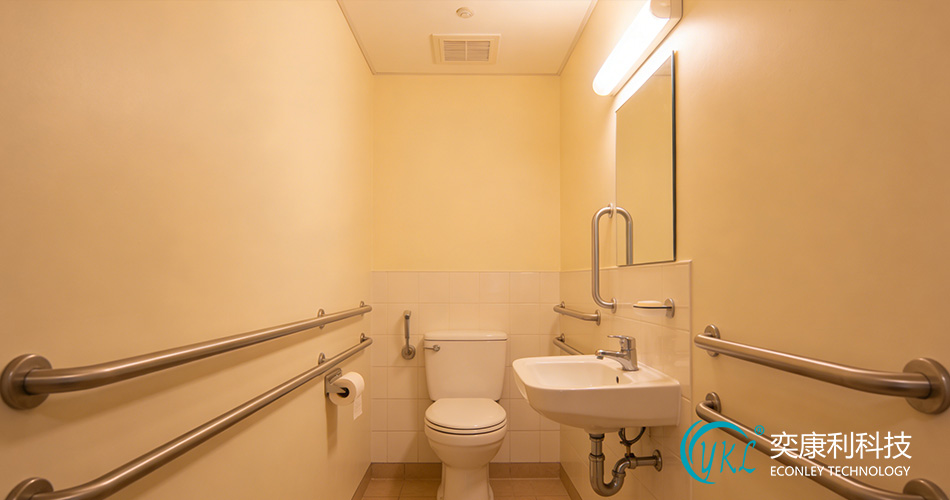
A barrier-free handrail installation solution ensures unobstructed movement for residents with varying mobility levels. Key features of a barrier-free design include:
Continuous dual-level handrails along corridors and ramps
Corner and intersection solutions to maintain uninterrupted support
Smooth, ergonomic grip surfaces
Minimal obstructions to walking paths and wheelchair routes
Barrier-free designs are essential for meeting ADA and ISO accessibility standards. Manufacturers like ECONLEY TECHNOLOGY offer turnkey solutions for barrier-free handrail systems in care homes and nursing facilities.
High-quality dual-level handrails are typically made from:
Aluminum Alloy – Lightweight, durable, and corrosion-resistant.
Stainless Steel – High strength, hygienic, and easy to clean.
PVC-Coated Metals – Anti-collision, antimicrobial surfaces.
Other design considerations include:
Ergonomic grip diameter for comfort
Anti-bacterial coatings for healthcare environments
Impact-resistant protective panels to protect walls
Customizable lengths and colors to match facility interiors
When sourcing dual-level nursing home handrails, consider the following:
Supplier reliability – Experience in healthcare projects is essential.
Customization capabilities – Tailored solutions for corridor layouts.
Compliance certifications – ISO, ADA, and other international standards.
Global shipping and project support – Ensures timely delivery.
ECONLEY TECHNOLOGY is a trusted manufacturer with extensive experience supplying nursing home handrails worldwide, offering both standard and customized solutions.
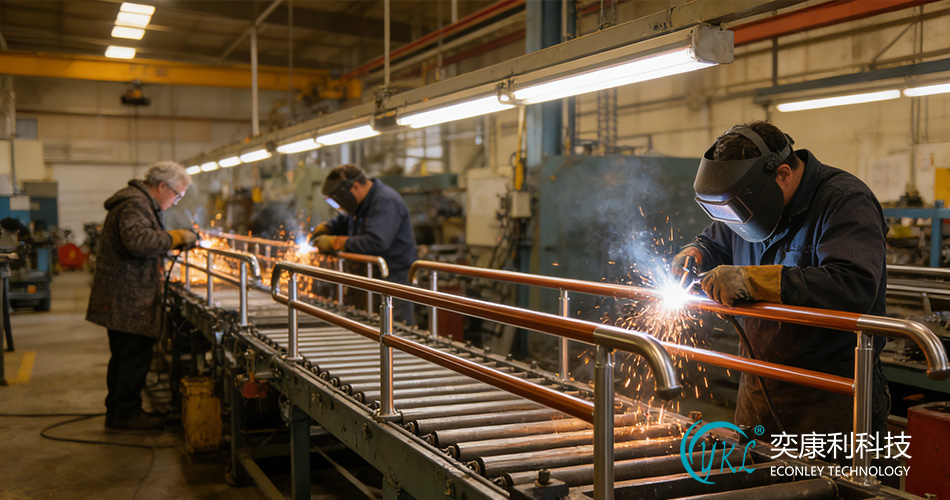
Two railings are connected using mounting brackets and corner joints that align the upper and lower rails securely. Professional suppliers like ECONLEY TECHNOLOGY provide prefabricated joint kits to simplify the installation process and ensure structural stability.
The standard typically specifies:
Upper rail: 850–900 mm above floor
Lower rail: 650–700 mm above floor
Continuous, smooth surface with ergonomic grip
Mounted into reinforced wall structures
Able to support 100–150 kg of weight
ECONLEY TECHNOLOGY designs handrails that comply with ADA and ISO accessibility standards.
Double handrails are recommended in:
Long hallways
Ramps and staircases
Bathrooms and shower areas
High-traffic corridors
Dual-level handrails accommodate both standing and wheelchair-bound residents, improving safety and accessibility throughout the facility.
 Tel :13510328459
 Email :493432861@qq.com
 Phone :0755-82154850/25907050
 Add:205-206, 2nd Floor, Building 2, Xiazao Village Industrial Zone, Gaofeng Community, Dalang Street, Longhua District, Shenzhen City

About

Products
Cases
News
Contact
 493432861@qq.com