Service Hotline:13510328459
 205-206, 2nd Floor, Building 2, Xiazao Village Industrial Zone, Gaofeng Community, Dalang Street, Longhua District, Shenzhen City
Service Hotline:13510328459
205-206, 2nd Floor, Building 2, Xiazao Village Industrial Zone, Gaofeng Community, Dalang Street, Longhua District, Shenzhen City



Time:2026-01-30 Preview:
In the rigorous environment of modern healthcare facilities, infection control stands as a top priority for safeguarding patient and staff health. Hospital Antibacterial Curtain has emerged as a vital line of defense in this effort, transcending the traditional roles of privacy protection and space division to deliver proactive antibacterial performance. Unlike standard hospital curtains that merely act as physical barriers, Hospital Antibacterial Curtain is engineered with specialized materials and technologies to inhibit the growth and spread of pathogenic bacteria, directly reducing the risk of cross-infection. Tailored to the high-hygiene demands of hospitals—such as frequent disinfection, high patient flow, and close contact between individuals—this curtain plays an indispensable role in maintaining a sterile medical environment. For hospital administrators, infection control teams, and facility managers, understanding the core value, antibacterial mechanisms, scenario-specific adaptations, and scientific management strategies of Hospital Antibacterial Curtain is essential to strengthening infection prevention systems. This article explores the comprehensive significance and practical application of Hospital Antibacterial Curtain in healthcare settings.
The primary core value of Hospital Antibacterial Curtain lies in its ability to inhibit pathogenic bacteria and curb cross-infection. Healthcare environments are rife with high-touch surfaces that serve as breeding grounds for bacteria such as Staphylococcus aureus, Escherichia coli, and MRSA. Standard curtains, with their porous fabrics, easily trap dust, moisture, and bacteria, becoming hidden sources of infection. In contrast, Hospital Antibacterial Curtain is treated with advanced antibacterial technologies that either kill bacteria on contact or prevent their reproduction. This proactive antibacterial effect significantly reduces the bacterial load on the curtain surface, minimizing the risk of bacteria spreading to patients, staff, or other surfaces through contact or air circulation. For immunocompromised patients—such as the elderly, post-surgical patients, or those with chronic illnesses—this protection is particularly critical for preventing secondary infections.
Another key value is its compatibility with rigorous medical disinfection protocols. Hospital Antibacterial Curtain is designed to withstand frequent cleaning and disinfection using medical-grade agents, such as chlorine-containing disinfectants, alcohol, and hydrogen peroxide. Unlike ordinary fabrics that may lose functionality or degrade after repeated disinfection, the antibacterial properties of specialized Hospital Antibacterial Curtain remain stable, ensuring long-term effectiveness. This durability ensures that the curtain can maintain its infection control performance even in high-intensity healthcare environments, reducing the need for frequent replacement and lowering long-term operational costs.
Additionally, Hospital Antibacterial Curtain balances infection control with patient comfort and privacy. While prioritizing antibacterial performance, it still retains the basic functions of traditional hospital curtains—creating independent semi-enclosed spaces for patients during examinations, treatments, or rest. The soft, non-irritating fabrics and calm color schemes (such as light blue, beige, or pale green) help soothe patients' anxiety, creating a more reassuring medical environment. This integration of infection control and humanized care makes Hospital Antibacterial Curtain a comprehensive solution for modern healthcare facilities.
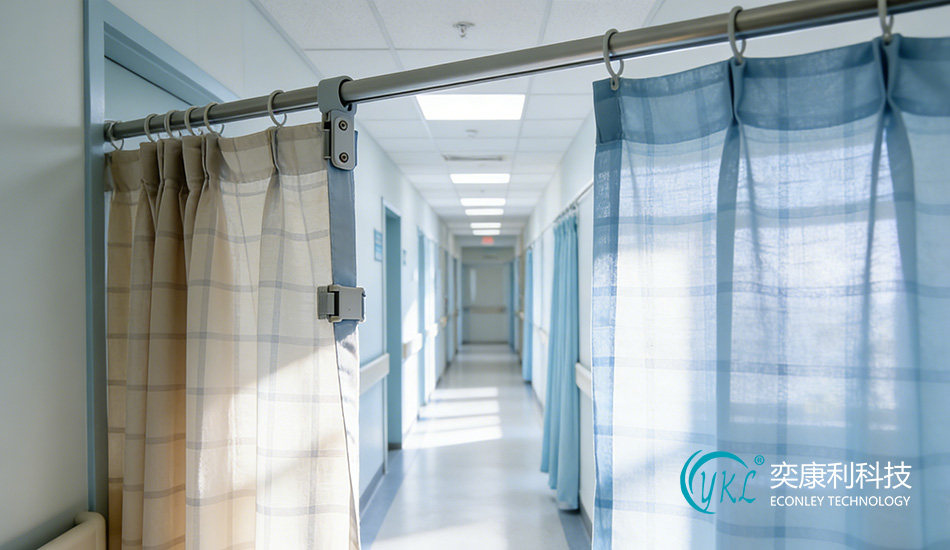
Hospital Antibacterial Curtain adopts two primary types of antibacterial technologies: intrinsic and post-treatment. Intrinsic antibacterial fabrics integrate antibacterial agents (such as silver ions, copper ions, or zinc oxide) into the fiber structure during production, ensuring long-lasting antibacterial performance that does not diminish with washing or use. Post-treatment antibacterial fabrics are coated or impregnated with antibacterial agents after weaving, forming a protective layer on the fabric surface to inhibit bacterial growth. Both technologies effectively target common pathogenic bacteria, but intrinsic antibacterial fabrics are generally more durable and suitable for high-frequency use areas such as ICUs and emergency departments. The fabrics are also designed to be non-porous or tightly woven, reducing the accumulation of dust and moisture that fosters bacterial growth.
Safety is a paramount consideration in the design of Hospital Antibacterial Curtain. The antibacterial agents used are non-toxic, non-irritating, and compliant with international medical safety standards, ensuring no adverse effects on patients' or staff's health. The curtain frames and tracks are made of smooth, burr-free materials with rounded edges to prevent scratches, and the installation is firm and stable to avoid falling hazards. The operation mechanism—whether manual sliding or electric—is designed to be smooth and labor-saving, allowing medical staff to quickly adjust the curtain to form isolation zones when needed. Additionally, many Hospital Antibacterial Curtains feature flame-retardant properties, complying with hospital fire safety standards to further enhance environmental safety.
In ICUs and isolation wards, where patients are highly vulnerable to infections, Hospital Antibacterial Curtain with high-level antibacterial performance is essential. Intrinsic silver-ion antibacterial fabrics are preferred here, as they offer long-lasting, robust bacterial inhibition. The curtains are full-height and opaque, creating a complete physical and antibacterial barrier between beds. They are also resistant to high-level disinfection agents, allowing for daily thorough disinfection to maintain a sterile environment. The electric operation option is often adopted to minimize contact, reducing the risk of cross-infection through touch.
Emergency departments and general wards, with high patient turnover and frequent curtain use, require Hospital Antibacterial Curtain that balances durability, antibacterial efficacy, and ease of maintenance. Post-treatment antibacterial fabrics with wear-resistant and stain-resistant properties are suitable for these areas. The curtains are designed to be easy to clean and quick-drying, allowing for efficient disinfection between patient uses. The color is chosen to be soft and neutral, creating a calm atmosphere for patients while masking minor stains to maintain a clean appearance. The sliding mechanism is reinforced to withstand frequent opening and closing, ensuring long-term reliability.
Pediatric wards and neonatal units demand Hospital Antibacterial Curtain that is gentle and hypoallergenic, in addition to strong antibacterial performance. The fabrics are selected to be soft and skin-friendly, with non-toxic antibacterial agents that pose no risk to children's delicate skin. The color and pattern can be slightly optimized—using light pastel tones or simple, friendly patterns—to ease children's fear of the hospital environment. The curtains are also designed to be easy to disassemble for thorough cleaning, ensuring a hygienic space for vulnerable pediatric patients.
When selecting Hospital Antibacterial Curtain, the first step is to verify its antibacterial certification—ensuring it has passed authoritative tests proving efficacy against target bacteria. The type of antibacterial technology should be matched to the area's usage intensity: intrinsic antibacterial fabrics for high-risk areas and post-treatment for general areas. Compatibility with disinfection protocols is also critical; the curtain must withstand the hospital's regular disinfection agents without losing functionality. Additionally, consider the curtain's durability, operation method, and compliance with safety standards (such as flame retardancy) to ensure it meets the specific needs of the healthcare facility.
Establishing a regular cleaning and disinfection schedule is essential to maintain the antibacterial performance of Hospital Antibacterial Curtain. High-risk areas such as ICUs should be disinfected daily, while general wards can be disinfected weekly. Use disinfectants compatible with the curtain fabric, following the manufacturer's guidelines to avoid damaging the antibacterial properties. For detachable curtains, disassemble them periodically for deep cleaning and drying; for fixed curtains, use specialized tools to clean the fabric surface and track, removing accumulated dust and debris. Regularly inspect the curtain for damage—such as tears or frays—and replace damaged curtains promptly, as compromised fabric may lose its antibacterial efficacy. Train staff on proper curtain use and disinfection procedures to ensure consistent maintenance of infection control standards.
Hospital Antibacterial Curtain is a critical component of a hospital's infection control system, providing a proactive defense against the spread of pathogenic bacteria. By selecting the right type of antibacterial curtain for different scenarios, adhering to scientific management and maintenance practices, healthcare facilities can significantly reduce the risk of cross-infection, safeguard patient and staff health, and enhance the quality of medical services. For hospital administrators committed to strengthening infection prevention, investing in high-quality Hospital Antibacterial Curtain is a strategic and practical decision that aligns with the core value of "patient-centered care." If you need guidance on selecting or managing Hospital Antibacterial Curtain for your facility, contact us today to connect with industry experts specializing in healthcare infection control solutions.
 Tel :13510328459
 Email :493432861@qq.com
 Phone :0755-82154850/25907050
 Add:205-206, 2nd Floor, Building 2, Xiazao Village Industrial Zone, Gaofeng Community, Dalang Street, Longhua District, Shenzhen City

About

Products
Cases
News
Contact
 493432861@qq.com