Service Hotline:13510328459
 205-206, 2nd Floor, Building 2, Xiazao Village Industrial Zone, Gaofeng Community, Dalang Street, Longhua District, Shenzhen City
Service Hotline:13510328459
205-206, 2nd Floor, Building 2, Xiazao Village Industrial Zone, Gaofeng Community, Dalang Street, Longhua District, Shenzhen City



Time:2026-01-30 Preview:
In the operation of small hospitals and clinics, where space and budget are often limited, every facility element plays a vital role in optimizing medical services. Small Hospital Curtain is not just a simple decorative accessory but a core component that integrates privacy protection, infection control, space division, and patient comfort enhancement. Unlike curtains for large hospitals or commercial spaces, Small Hospital Curtain is tailored to the unique needs of small healthcare facilities—such as flexible space utilization, easy maintenance, and compliance with basic medical safety standards. It helps small hospitals maximize the use of limited space, improve patient experience, and maintain a hygienic medical environment without excessive investment. For small hospital administrators, facility managers, and procurement teams, understanding the core functions, scenario-specific adaptations, scientific selection criteria, and cost-effective maintenance methods of Small Hospital Curtain is essential to creating a safe, efficient, and humanized medical space. This article explores the comprehensive significance and practical application of Small Hospital Curtain in small healthcare settings.
The primary core value of Small Hospital Curtain is to safeguard patient privacy and dignity. In small hospitals, where multi-bed wards and combined treatment spaces are common, patients often need to undergo examinations, treatments, or personal care in semi-public areas. Small Hospital Curtain can quickly form independent semi-enclosed spaces around beds or treatment stations, effectively shielding patients from external viewing during medical procedures. This not only respects patients' basic rights but also helps reduce their anxiety and psychological stress, creating a more relaxed state that is conducive to diagnosis and recovery. For vulnerable groups such as the elderly, children, or patients with mental health needs, the privacy protection provided by these curtains is particularly critical for building trust with medical staff.
Another key value is flexible space division and utilization. Small hospitals typically have limited floor space, and many areas need to serve multiple functions—such as a consultation room that doubles as a treatment room. Small Hospital Curtain enables quick and flexible space partitioning without the need for permanent construction. For example, lightweight partition curtains can separate a single large ward into multiple independent areas for different patients, or divide a multi-purpose room into consultation and waiting zones as needed. This flexibility greatly improves the utilization efficiency of limited space, helping small hospitals cope with the challenge of increasing patient flow without expanding the building area.
Infection control and medical safety are also core functions of Small Hospital Curtain. High-quality Small Hospital Curtain adopts antibacterial and easy-to-disinfect fabrics that comply with basic medical hygiene standards. These fabrics can inhibit the growth of common pathogenic bacteria such as Staphylococcus aureus and Escherichia coli, reducing the risk of cross-infection in high-touch medical environments. The smooth surface of the curtains prevents the accumulation of dust, debris, and medical contaminants, making them easy to clean and disinfect with common medical-grade agents. Additionally, flame-retardant Small Hospital Curtain meets fire safety standards, reducing the risk of fire spread and ensuring the safety of patients and staff.
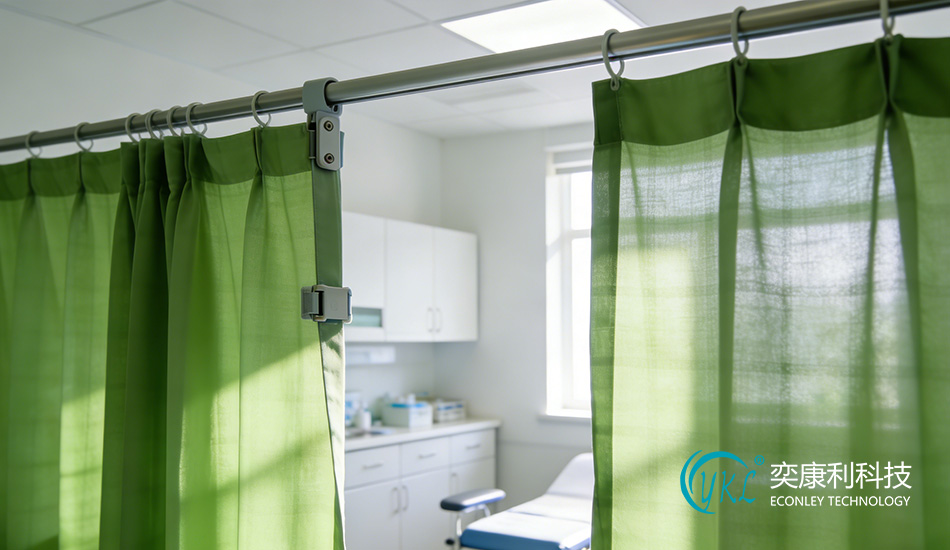
In wards and observation rooms, Small Hospital Curtain focuses on the balance of privacy, ventilation, and patient comfort. Lightweight yet durable partition curtains are used to separate individual beds, allowing for good air circulation while ensuring privacy. The curtains are designed to operate quietly to avoid disturbing resting patients. The color is chosen to be soft and neutral—such as light blue, beige, or light green—which can soothe patients' emotions and create a warm and reassuring ward atmosphere. Additionally, the fabrics are water-resistant and stain-resistant, adapting to the frequent cleaning and disinfection needs of daily ward management.
Treatment rooms and examination rooms require Small Hospital Curtain with strong privacy and hygiene performance. Full-height, opaque curtains are used to block the entire viewing area, ensuring complete privacy during medical procedures. The fabrics are thick enough to provide a certain degree of sound insulation, reducing the spread of medical noise and creating a focused environment for medical staff. These curtains are also easy to wipe clean to cope with accidental spills of medical fluids, maintaining a hygienic treatment environment.
In public areas such as waiting rooms and corridors, Small Hospital Curtain focuses on light filtering and decorative functions. Light-filtering window curtains soften harsh sunlight, creating a comfortable waiting environment for patients and their families. The simple and neat appearance of the curtains enhances the overall image of the small hospital, leaving a positive impression on visitors. For narrow corridors, lightweight and non-obstructive curtains are preferred to avoid hindering the passage of patients, staff, and medical equipment.
When selecting Small Hospital Curtain, the first priority is to ensure compliance with basic medical safety standards. The product should have relevant certification documents for antibacterial efficacy, flame retardancy, and chemical resistance. It is important to choose fabrics that are compatible with common medical disinfectants to avoid damage during cleaning. Additionally, the curtain hardware (such as tracks and hooks) should be sturdy and stable, with no sharp edges to prevent scratches to patients and staff.
Selection should be tailored to the specific space and functional requirements of the small hospital. For small treatment rooms that require flexible space division, choose foldable or sliding partition curtains that can be easily opened and closed. For windows with irregular shapes, custom-sized curtains are preferred to ensure a perfect fit and avoid light gaps. For areas with high traffic or frequent use, select wear-resistant and tear-resistant fabrics to extend the service life of the curtains.
Small hospitals should balance quality and cost when selecting Small Hospital Curtain. Avoid overly expensive high-end curtains that exceed actual needs, but also do not compromise on safety and functionality for the sake of low cost. Choose cost-effective fabrics that meet basic medical standards, such as polyester-cotton blends or recycled polyester fabrics. Bulk purchasing of curtains for the same type of area can also help obtain more favorable pricing from suppliers, reducing procurement costs.
Establish a regular cleaning and disinfection schedule based on the usage intensity of different areas. For high-frequency areas such as wards and treatment rooms, clean the curtains weekly; for public areas, clean them monthly. Use mild, cost-effective disinfectants compatible with the curtain fabrics to avoid damaging the antibacterial and flame-retardant properties. For detachable curtains, disassemble them periodically for thorough cleaning and drying; for fixed curtains, use a soft brush or vacuum cleaner to remove dust from the fabric surface and track.
Regular inspections and maintenance are also essential. Check the integrity of the curtain fabrics, the stability of the tracks, and the flexibility of the operation mechanism. Tighten loose hardware and lubricate sliding components regularly to ensure smooth operation. Train nursing staff on the correct use and maintenance methods of the curtains to avoid damage caused by improper operation. Promptly repair or replace damaged curtains to maintain a safe and hygienic medical environment.
Small Hospital Curtain is an indispensable part of the medical environment in small healthcare facilities, contributing significantly to privacy protection, space utilization, and infection control. By selecting suitable curtains based on scenario needs, adhering to scientific selection criteria, and implementing cost-effective maintenance methods, small hospitals can optimize their medical space, improve patient experience, and achieve efficient operation. For small hospital administrators committed to improving service quality while controlling costs, investing in high-quality and appropriate Small Hospital Curtain is a practical and strategic decision. If you need guidance on selecting or maintaining Small Hospital Curtain for your facility, contact us today to connect with industry experts specializing in healthcare facility solutions for small and medium-sized institutions.
 Tel :13510328459
 Email :493432861@qq.com
 Phone :0755-82154850/25907050
 Add:205-206, 2nd Floor, Building 2, Xiazao Village Industrial Zone, Gaofeng Community, Dalang Street, Longhua District, Shenzhen City

About

Products
Cases
News
Contact
 493432861@qq.com