Service Hotline:13510328459
 205-206, 2nd Floor, Building 2, Xiazao Village Industrial Zone, Gaofeng Community, Dalang Street, Longhua District, Shenzhen City
Service Hotline:13510328459
205-206, 2nd Floor, Building 2, Xiazao Village Industrial Zone, Gaofeng Community, Dalang Street, Longhua District, Shenzhen City



Time:2026-01-26 Preview:
Against the backdrop of increasingly stringent infection control requirements in China's medical industry, China Hospital Antibacterial Curtain Projects have evolved from simple procurement projects into key initiatives for optimizing medical environments and enhancing patient safety. These specialized projects integrate medical textile technology, infection control standards, and project management expertise, aiming to deploy high-performance antibacterial curtains that meet clinical needs across various hospital areas. Unlike ordinary curtain installation tasks, China Hospital Antibacterial Curtain Projects require systematic planning, strict quality control, and seamless coordination between multiple parties—from demand assessment and product selection to on-site installation and post-operation maintenance. For hospital administrators, infection control teams, and project managers, understanding the core value, full-process management essentials, and scenario-specific adaptation strategies of these projects is crucial to ensuring successful implementation and maximizing investment returns. This article explores the comprehensive significance of China Hospital Antibacterial Curtain Projects and provides practical guidance for their efficient execution.
The primary value of China Hospital Antibacterial Curtain Projects lies in strengthening the infection control system of medical institutions. Hospital curtains are high-touch surfaces prone to harboring pathogenic bacteria such as Staphylococcus aureus and Escherichia coli, which can easily become vectors for cross-infection. Through scientific project planning, these projects deploy curtains with long-lasting antibacterial properties that inhibit bacterial growth effectively, even after repeated disinfection and long-term use. Clinical practice has proven that standardized China Hospital Antibacterial Curtain Projects can significantly reduce the bacterial load on curtain surfaces, thereby lowering the risk of hospital-acquired infections and creating a safer medical environment for patients and medical staff.
Another key value is promoting the standardized upgrade of the medical environment. China Hospital Antibacterial Curtain Projects adhere to national medical safety standards and international certifications such as ISO 13485, ensuring that the selected antibacterial curtains are non-toxic, environmentally friendly, and free of harmful substances. These projects also integrate functional needs such as flame retardancy and easy cleaning into the overall plan, making the curtain system not only antibacterial but also compliant with fire safety and daily maintenance requirements. For hospitals undergoing renovation or capacity expansion, such projects have become an important part of improving the quality of medical facilities and enhancing the overall level of medical services.
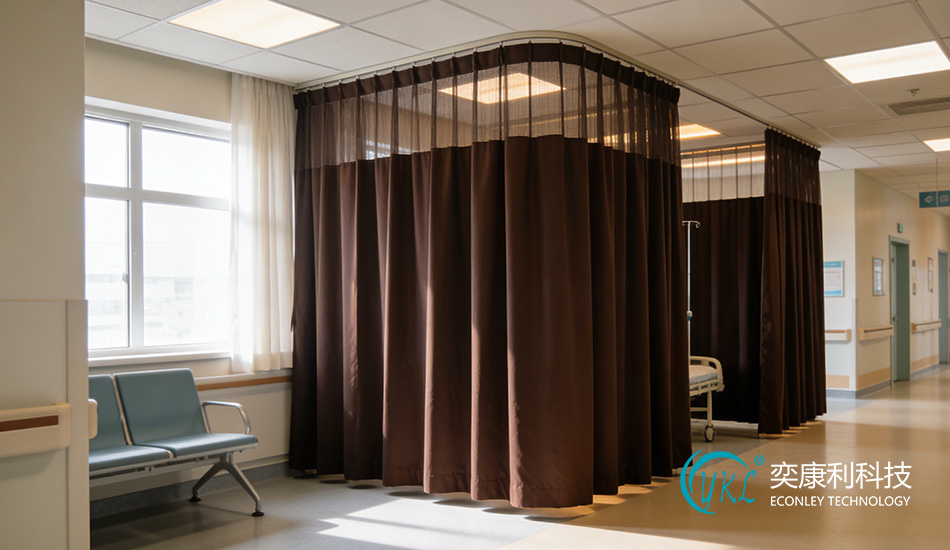
The success of China Hospital Antibacterial Curtain Projects starts with thorough pre-project planning. The first step is to conduct a comprehensive on-site assessment, including precise measurements of installation areas (wards, ICUs, emergency departments) and an evaluation of environmental characteristics such as ventilation conditions and disinfection frequency. Hospital project teams need to collaborate closely with infection control departments to clarify functional requirements—for example, higher antibacterial efficacy for high-risk areas and flame-retardant priority for operating rooms. Additionally, formulating a detailed project plan that covers timelines, resource allocation, and budget estimates is essential to avoid delays and cost overruns during implementation.
Strict quality control in product selection is a core link in China Hospital Antibacterial Curtain Projects. Project teams should prioritize suppliers with professional experience in medical textiles, verifying that their products have passed authoritative antibacterial tests and meet national medical safety standards. The selected fabrics should not only have excellent antibacterial performance but also be resistant to frequent industrial washing and mechanical wear, ensuring long-term functional stability. During the procurement process, establishing a transparent bidding mechanism and clarifying quality standards in contracts can effectively prevent substandard products from entering the project, laying a solid foundation for project quality.
Standardized on-site installation is critical to the functional exertion of China Hospital Antibacterial Curtain Projects. Professional installation teams should be deployed to carry out operations in accordance with pre-defined specifications, including precise fixing of tracks, ensuring smooth curtain movement, and implementing safety protection measures such as anti-loosening reinforcement. For special areas like ICUs, installation should be scheduled during non-working hours to avoid disrupting clinical operations. After installation, a rigorous acceptance process is required, covering tests of antibacterial function, curtain operation, and safety performance. Only projects that meet all acceptance criteria can be officially put into use.
Effective post-project maintenance is essential to sustaining the value of China Hospital Antibacterial Curtain Projects. Hospitals should establish a regular maintenance system, including periodic cleaning and disinfection of antibacterial curtains using compatible agents that do not damage the antibacterial coating. Regular inspections should be conducted to monitor the condition of curtains and tracks, with timely repair or replacement of damaged components. Some advanced projects also incorporate dynamic management mechanisms, such as classifying curtain status and adjusting maintenance cycles based on usage frequency and pollution levels, ensuring that the antibacterial curtains continue to play their role effectively.
China Hospital Antibacterial Curtain Projects in ICUs and critical care areas prioritize enhanced safety and infection control capabilities. These projects select high-performance antibacterial fabrics with liquid-resistant properties to prevent contamination from medical fluids and inhibit the spread of drug-resistant bacteria. The installation plan also includes compatible electric track systems that allow remote operation, reducing direct contact and facilitating emergency treatments. Additionally, the project design ensures that curtains can be quickly removed in emergencies, complying with fire safety regulations.
For general ward renovation projects, China Hospital Antibacterial Curtain Projects focus on balancing functionality, comfort, and cost-effectiveness. The selected curtains feature both antibacterial and light-filtering properties, maintaining privacy while ensuring adequate natural light. The installation process minimizes disruption to ongoing patient care, with modular components that enable quick deployment. These projects also consider the convenience of daily maintenance, selecting fabrics that are easy to clean and disinfect to adapt to the high-frequency maintenance needs of general wards.
Specialized medical areas require tailored China Hospital Antibacterial Curtain Projects. In pediatric wards, projects prioritize non-toxic, tear-resistant fabrics with child-friendly colors and patterns, creating a reassuring environment while ensuring safety. For infectious disease wards, the projects deploy airtight antibacterial curtains that coordinate with negative pressure ventilation systems, enhancing the barrier effect against pathogen transmission. These specialized projects also strictly comply with relevant national standards for infectious disease control, ensuring that every link from product selection to installation meets professional requirements.
Strengthening multi-party collaboration is fundamental to project success. China Hospital Antibacterial Curtain Projects require close coordination between hospital administration, infection control departments, clinical staff, suppliers, and installation teams. Establishing a dedicated project management team to oversee communication and decision-making can effectively resolve potential conflicts and ensure that all parties' needs are met. Regular progress meetings and on-site inspections help monitor project implementation and address issues in a timely manner.
Adhering to standardized processes and compliance requirements is another critical strategy. All links of the project, from pre-planning to post-maintenance, should comply with national medical standards and relevant regulations. Project teams should maintain complete documentation, including product certification, installation records, and maintenance logs, to facilitate regulatory inspections and traceability. Additionally, conducting staff training on the correct use and maintenance of antibacterial curtains ensures that the project's long-term value is sustained.
China Hospital Antibacterial Curtain Projects are important investments in medical environment safety and patient care quality. By implementing scientific full-process management, adapting to the needs of different clinical scenarios, and strengthening multi-party collaboration, these projects can effectively enhance the infection control capabilities of hospitals and create a safer, more comfortable medical environment. For hospital managers committed to promoting medical quality upgrading, prioritizing and optimizing China Hospital Antibacterial Curtain Projects is a strategic decision with far-reaching significance. If you need guidance on planning or implementing such projects for your hospital, contact us today to connect with industry experts specializing in medical infection control and project management solutions.
 Tel :13510328459
 Email :493432861@qq.com
 Phone :0755-82154850/25907050
 Add:205-206, 2nd Floor, Building 2, Xiazao Village Industrial Zone, Gaofeng Community, Dalang Street, Longhua District, Shenzhen City

About

Products
Cases
News
Contact
 493432861@qq.com