Service Hotline:13510328459
 205-206, 2nd Floor, Building 2, Xiazao Village Industrial Zone, Gaofeng Community, Dalang Street, Longhua District, Shenzhen City
Service Hotline:13510328459
205-206, 2nd Floor, Building 2, Xiazao Village Industrial Zone, Gaofeng Community, Dalang Street, Longhua District, Shenzhen City



Time:2026-01-22 Preview:
Hospital Curtains are an indispensable element in medical facility design, serving far beyond simple privacy partitioning. These specialized textiles play a multi-faceted role in shaping a safe, hygienic, and comfortable environment for patients, while supporting the efficient workflow of medical staff. Unlike ordinary commercial curtains, Hospital Curtains are engineered to meet the unique demands of healthcare settings—from infection control and fire safety to adaptability across diverse clinical areas. For hospital administrators, facility managers, and design teams, understanding the core functions, scenario-specific applications, management practices, and selection criteria of Hospital Curtains is essential to optimizing the medical environment. This article explores the comprehensive value of Hospital Curtains and provides practical guidance for their rational application in healthcare facilities.
Privacy protection stands as the foundational function of Hospital Curtains. In busy medical environments such as general wards, emergency departments, and outpatient clinics, these curtains create semi-private zones that shield patients from unnecessary exposure during examinations, treatments, or daily care. This privacy not only respects patients’ dignity but also helps reduce anxiety, fostering a more trusting patient-staff relationship. Beyond privacy, Hospital Curtains contribute to effective space division, allowing medical facilities to maximize the use of limited space by creating flexible, temporary partitions that can be adjusted according to patient flow and treatment needs.
Infection control and safety are equally critical functional values of Hospital Curtains. High-quality Hospital Curtains are designed with anti-microbial properties or easy-to-disinfect fabrics, which inhibit the growth of pathogenic bacteria and prevent cross-contamination— a major concern in healthcare settings. Additionally, compliant Hospital Curtains meet strict fire safety standards, featuring flame-retardant materials that slow the spread of fire and minimize smoke emission, safeguarding patients (especially those with limited mobility) and medical staff in emergency situations. Some advanced options also integrate sound insulation properties, reducing noise transmission between patient areas and creating a quieter rest environment for recovery.
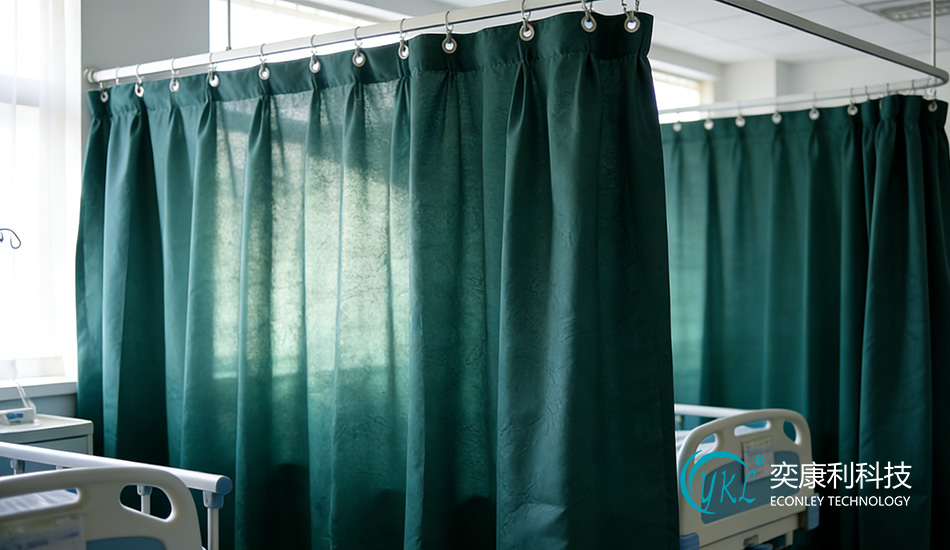
In general wards and observation areas, Hospital Curtains prioritize flexibility and hygiene. These curtains need to be easy to open and close to facilitate medical rounds, patient transfers, and emergency responses. Fabric selection focuses on durability and ease of disinfection, as they are frequently exposed to contact with patients, medical equipment, and cleaning agents. Light-filtering fabrics are often preferred here, as they maintain privacy while allowing natural light to penetrate, creating a brighter and more pleasant environment that supports patient recovery. The design also considers smooth operation to avoid disturbing resting patients when adjusted.
Critical care areas such as ICUs and operating rooms demand Hospital Curtains with enhanced safety and hygiene performance. In ICUs, curtains with strong anti-microbial and liquid-resistant properties are essential to prevent contamination from medical fluids and inhibit the spread of drug-resistant bacteria. Operating room curtains must meet the highest fire safety standards, as they coexist with flammable anesthetics and electrical surgical equipment. These curtains are also designed to be lint-free and easy to sterilize, ensuring they do not compromise the sterile environment required for surgical procedures. Additionally, they may feature opaque fabrics to block light and reduce distractions during operations.
Specialized medical areas require Hospital Curtains tailored to specific patient needs. Pediatric wards benefit from Hospital Curtains in soft, warm colors or with gentle patterns, which help alleviate children’s fear of medical environments. The fabrics are chosen for durability and safety, with no small, detachable parts that could pose a choking hazard. In mental health units, Hospital Curtains are designed to be tear-resistant and tamper-proof, minimizing the risk of self-harm. They also avoid overly stimulating colors, contributing to a calm and stable environment that supports patients’ mental well-being.
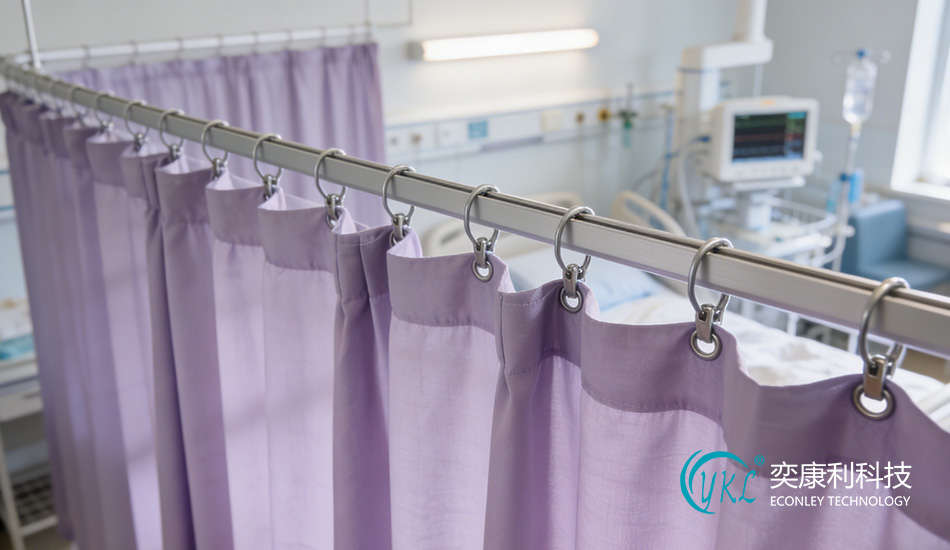
Regular cleaning and disinfection are fundamental to maintaining the safety and hygiene of Hospital Curtains. Healthcare facilities should establish a standardized cleaning schedule, with more frequent disinfection for curtains in high-risk areas such as ICUs and emergency departments. It is crucial to use cleaning agents compatible with the curtain fabric to avoid damaging functional properties (such as anti-microbial coatings or flame-retardant treatments). Contaminated curtains should be removed and cleaned promptly, with sealed transportation to prevent cross-contamination during handling. Additionally, staff should be trained on proper curtain operation to minimize unnecessary contact and wear.
Routine inspection and timely replacement are also key to effective curtain management. Hospital staff should regularly check for signs of wear, tear, or staining on Hospital Curtains. Curtains that have lost their functional properties (such as reduced anti-microbial efficacy or damaged flame-retardant coatings) or are severely soiled should be replaced immediately. Proper storage of clean curtains is equally important—they should be kept in a dry, clean area, away from the ground and walls to avoid secondary pollution. Establishing a clear record-keeping system for curtain installation, cleaning, and replacement helps track their service life and ensure compliance with hygiene standards.
When selecting Hospital Curtains, compliance with industry standards and regulations is the top priority. Ensure the curtains meet local and international healthcare textile standards for safety, including flame-retardancy, anti-microbial performance (if applicable), and low emission of harmful substances. Reputable manufacturers will provide official test reports and certifications to verify these properties. It is also important to choose curtains that are compatible with the facility’s existing cleaning and disinfection protocols, ensuring they can withstand regular maintenance without compromising functionality.
Scenario-specific functionality and durability should guide material and design choices. For high-traffic areas, opt for tear-resistant and wear-resistant fabrics; for wet areas (such as rehabilitation pools or bathroom enclosures), select water-resistant materials. Consider the ease of operation—curtains with smooth-sliding tracks or lightweight designs reduce the workload for medical staff. Additionally, balancing functionality with aesthetics is advisable; choosing curtains in appropriate colors and textures can enhance the overall atmosphere of the medical space, contributing to patient comfort and well-being.
Hospital Curtains are a vital component of a well-designed healthcare environment, integrating privacy protection, infection control, safety, and humanized care. By understanding their multi-faceted value, adapting them to specific clinical scenarios, implementing scientific management practices, and selecting appropriate products, hospitals can significantly improve the quality of patient care and the efficiency of medical operations. For healthcare facility managers looking to optimize their environment, investing in high-quality Hospital Curtains tailored to their needs is a strategic decision. If you need guidance on selecting or managing Hospital Curtains for your facility, contact us today to connect with industry experts specializing in healthcare environment design and textile solutions.
 Tel :13510328459
 Email :493432861@qq.com
 Phone :0755-82154850/25907050
 Add:205-206, 2nd Floor, Building 2, Xiazao Village Industrial Zone, Gaofeng Community, Dalang Street, Longhua District, Shenzhen City

About

Products
Cases
News
Contact
 493432861@qq.com