Service Hotline:13510328459
 205-206, 2nd Floor, Building 2, Xiazao Village Industrial Zone, Gaofeng Community, Dalang Street, Longhua District, Shenzhen City
Service Hotline:13510328459
205-206, 2nd Floor, Building 2, Xiazao Village Industrial Zone, Gaofeng Community, Dalang Street, Longhua District, Shenzhen City



Time:2026-01-22 Preview:
In the strict environment of hospital infection control, every detail related to the medical environment plays a vital role in protecting the health of patients and medical staff. China Hospital Antibacterial Curtain, as an essential part of medical textiles, has evolved from a simple privacy partition tool to a key barrier for infection prevention and control. Unlike ordinary curtains, China Hospital Antibacterial Curtain is specially designed to meet the rigorous hygiene requirements of medical institutions, with the core function of inhibiting the growth and spread of pathogenic bacteria. For hospital administrators, infection control teams, and facility managers, understanding the core value, scenario-specific applications, standardized management methods, and scientific selection strategies of China Hospital Antibacterial Curtain is crucial to enhancing the overall level of infection control. This article explores the important role of China Hospital Antibacterial Curtain in medical environments and provides practical guidance for its rational application.
The primary value of China Hospital Antibacterial Curtain lies in its ability to block the transmission of pathogenic bacteria, effectively reducing the risk of cross-infection. Medical environments are prone to the spread of common pathogenic bacteria such as Escherichia coli, Staphylococcus aureus, and Pseudomonas aeruginosa, which can easily attach to textile surfaces and spread through contact or air. China Hospital Antibacterial Curtain adopts professional antibacterial technology that can inhibit the growth and reproduction of these harmful bacteria on the curtain surface, keeping the curtain itself hygienic and reducing the possibility of it becoming a medium for bacterial transmission. This is particularly important in high-traffic and high-risk areas such as general wards, emergency departments, and intensive care units (ICUs), where it directly contributes to the reduction of hospital-acquired infections.
Another key value is its compliance with strict medical safety and environmental standards. China Hospital Antibacterial Curtain must meet national textile safety specifications, including low formaldehyde emissions, no odors, and no decomposable carcinogenic aromatic amines, ensuring it does not cause additional harm to the fragile respiratory systems of patients and medical staff. Many high-quality products also integrate flame-retardant functions, complying with national fire safety standards for public places, which is essential for maintaining the overall safety of medical facilities where flammable medical supplies and electrical equipment are concentrated. The combination of antibacterial and safety properties makes China Hospital Antibacterial Curtain an indispensable part of a comprehensive hospital safety system.
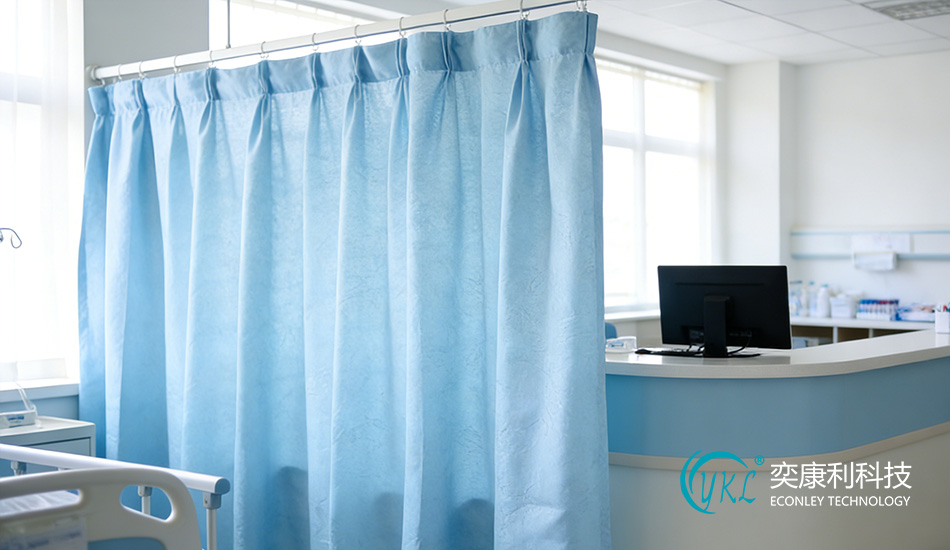
In general and isolation wards, China Hospital Antibacterial Curtain is mainly used to create semi-private spaces between beds while undertaking the important task of infection control. The curtains here need to have strong and long-lasting antibacterial properties to cope with frequent contact by patients, medical staff, and visitors. They should also be resistant to repeated disinfection, as ward curtains require regular cleaning and disinfection to maintain hygiene. Additionally, the design of China Hospital Antibacterial Curtain in these areas usually considers ventilation and light transmission, with proper mesh structures or light-filtering fabrics to ensure air circulation in the ward and avoid affecting the patient's rest environment.
ICUs and operating rooms have the highest requirements for infection control, so China Hospital Antibacterial Curtain used here must meet stricter standards. These curtains not only need to have excellent antibacterial performance but also feature liquid resistance to prevent contamination from medical fluids such as blood and disinfectants. The fabrics are usually designed to be smooth and easy to clean, facilitating quick disinfection and turnover between medical procedures. In operating rooms, flame-retardant performance is particularly emphasized to cope with the potential fire risks from electrical surgical equipment and anesthetics, ensuring the safety of the surgical environment.
Emergency departments and outpatient clinics face a large number of floating patients with complex conditions, making infection control more challenging. China Hospital Antibacterial Curtain in these areas needs to have wear-resistant and durable properties to withstand high-frequency use and cleaning. The antibacterial function must be effective against a wide range of pathogens to adapt to the diverse infection risks brought by different patients. Additionally, the curtains can be designed with appropriate color schemes to create a reassuring atmosphere for anxious patients, balancing infection control functions with humanistic care.
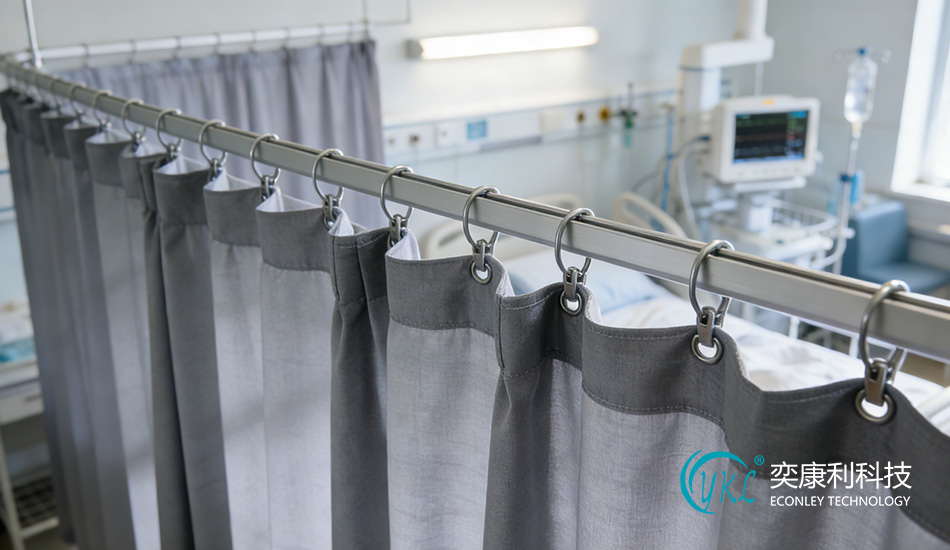
Scientific cleaning and disinfection are the keys to maintaining the antibacterial effect of China Hospital Antibacterial Curtain. Hospitals should establish a regular cleaning system, with the frequency of cleaning and disinfection adjusted according to the usage scenario—for example, curtains in high-risk areas such as ICUs and emergency departments should be cleaned more frequently. It is important to use disinfectants that are compatible with the curtain fabric to avoid damaging the antibacterial coating and reducing the antibacterial effect. Contaminated curtains should be replaced and cleaned in a timely manner, and the collection and transportation process should be sealed to prevent cross-contamination during handling.
Regular inspection and replacement are also essential. Hospital staff should regularly check the condition of China Hospital Antibacterial Curtain, including whether the fabric is damaged, whether the antibacterial function is effective, and whether there are stains that are difficult to remove. Curtains that have lost their antibacterial effect or are severely worn should be replaced promptly to ensure they continue to play their infection control role. The storage of clean curtains should also be standardized, with storage racks placed at an appropriate distance from the ground and walls to avoid secondary pollution.
When selecting China Hospital Antibacterial Curtain, the first priority is to verify compliance with national medical standards. Ensure the product has official test reports and certifications, confirming that its antibacterial efficacy, safety indicators, and flame-retardant performance meet the relevant national requirements. It is recommended to choose products that have passed authoritative certifications such as ISO 13485 medical device quality management system certification, which reflects the manufacturer's professional capabilities and product reliability.
Match the product to the specific needs of the scenario. For high-infection-risk areas, prioritize curtains with enhanced antibacterial and liquid-resistant properties; for areas with high fire risks, focus on flame-retardant performance; for high-traffic areas, select wear-resistant and easy-to-clean fabrics. It is also advisable to cooperate with manufacturers with rich experience in serving medical institutions, as they can provide more professional customized solutions according to the unique layout and needs of the hospital.
China Hospital Antibacterial Curtain is an important part of the hospital infection control system, providing a silent but effective barrier for the health of patients and medical staff. By giving full play to its antibacterial function, adapting to different medical scenarios, and implementing standardized management, hospitals can significantly reduce the risk of cross-infection and improve the overall safety of the medical environment. For hospital managers committed to enhancing infection control levels, selecting and managing China Hospital Antibacterial Curtain scientifically is a key link that cannot be ignored. If you need guidance on selecting or managing China Hospital Antibacterial Curtain for your facility, contact us today to connect with industry experts specializing in medical infection control and textile solutions.
 Tel :13510328459
 Email :493432861@qq.com
 Phone :0755-82154850/25907050
 Add:205-206, 2nd Floor, Building 2, Xiazao Village Industrial Zone, Gaofeng Community, Dalang Street, Longhua District, Shenzhen City

About

Products
Cases
News
Contact
 493432861@qq.com