Service Hotline:13510328459
 205-206, 2nd Floor, Building 2, Xiazao Village Industrial Zone, Gaofeng Community, Dalang Street, Longhua District, Shenzhen City
Service Hotline:13510328459
205-206, 2nd Floor, Building 2, Xiazao Village Industrial Zone, Gaofeng Community, Dalang Street, Longhua District, Shenzhen City



Time:2026-01-20 Preview:
In the pursuit of creating truly inclusive environments, one-size-fits-all accessibility handrails often fall short of meeting the diverse needs of spaces and users. Custom-Made Accessible Handrail from Design emerges as a game-changing solution, where every detail—from shape and height to material and functionality—is crafted based on tailored design to align with specific space characteristics and user requirements. Unlike standard handrails, Custom-Made Accessible Handrail from Design starts with a deep understanding of the environment (whether it’s a home, hospital, school, or public building) and the people who will use it, ensuring that the final product is not just a safety feature but a seamless, user-centric addition to the space. For architects, facility managers, and homeowners, embracing Custom-Made Accessible Handrail from Design is key to unlocking the full potential of inclusive design. This article explores the core significance of Custom-Made Accessible Handrail from Design, the critical stages of its design-to-finish process, scenario-specific customization highlights, and strategies to maximize its value.
The primary significance of Custom-Made Accessible Handrail from Design lies in its ability to resolve the mismatch between standard products and unique space-user needs. Every inclusive space has distinct challenges: a narrow residential bathroom may require foldable handrails to save space, a rehabilitation center may need ergonomic handrails to support patients with limited grip strength, or a historic building may demand handrails that blend with its architectural style. Custom-Made Accessible Handrail from Design addresses these challenges by centering the design process on the specific context, ensuring that the final handrail fits perfectly in terms of size, shape, and function. This level of customization not only enhances the practicality and safety of the handrail but also preserves the aesthetic integrity of the space.
Another key significance is empowering diverse user groups. Custom-Made Accessible Handrail from Design can be tailored to the needs of the elderly, people with disabilities (visual, mobility, or upper limb impairments), children, and other vulnerable groups. For example, handrails for visually impaired users can be designed with tactile indicators through the design phase, while those for children can feature lower heights and child-friendly textures. By prioritizing user needs in the design stage, Custom-Made Accessible Handrail from Design ensures that everyone can use the space independently and with dignity, advancing the goal of social inclusion.
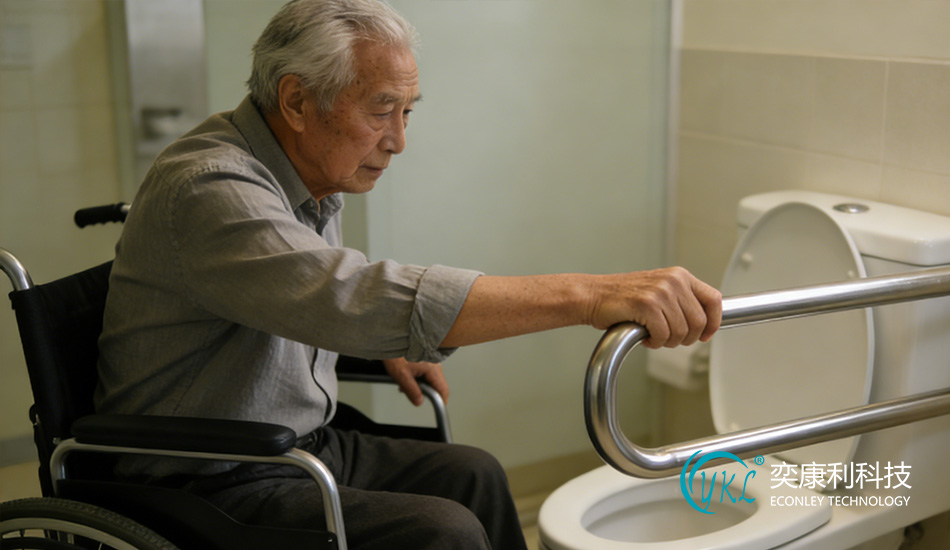
The foundation of Custom-Made Accessible Handrail from Design is a comprehensive demand assessment. This stage involves on-site inspections to evaluate the space layout, existing infrastructure, and environmental conditions (such as moisture levels in bathrooms or traffic flow in corridors). Equally important is understanding the target users—their mobility abilities, grip strength, height, and any specific needs (such as compatibility with wheelchairs or walkers). Based on this assessment, designers draft initial concepts that outline the handrail’s basic shape, position, and core functions, ensuring alignment with both user needs and accessibility standards (such as ADA guidelines or ISO 14122).
After the initial concept, the Custom-Made Accessible Handrail from Design process moves to refinement and prototyping. Designers collaborate closely with clients to adjust details such as material selection (corrosion-resistant metals for wet areas, lightweight materials for residential use), color matching (to blend with the space’s decor), and functional add-ons (tactile guides, integrated lighting). To ensure the design is feasible and effective, a prototype is often created—either a physical model or a 3D rendering—to visualize the final product. Client feedback on the prototype is integrated into the design, refining it until it meets all requirements.
Once the design is finalized, the Custom-Made Accessible Handrail from Design process enters manufacturing. Skilled craftsmen or advanced production equipment bring the design to life, adhering strictly to the design specifications. Quality control is critical at this stage: every component is inspected for durability, safety, and consistency with the design. For example, anti-slip surfaces are tested for grip performance, and load-bearing capacity is verified to meet safety standards. This rigorous quality control ensures that the custom handrail not only matches the design but also performs reliably in real-world use.
The final stage of Custom-Made Accessible Handrail from Design is professional installation and evaluation. Installers familiar with the custom design ensure that the handrail is mounted securely, positioned accurately, and integrated seamlessly with the existing space. After installation, a joint evaluation is conducted with the client to verify that the handrail meets all functional and aesthetic requirements. Any minor adjustments are made promptly, and guidance on maintenance and proper use is provided to ensure the handrail’s long-term performance.
In residential settings, Custom-Made Accessible Handrail from Design focuses on blending functionality with home decor. For example, a homeowner may need handrails for an elderly family member’s bedroom and bathroom. The design can incorporate wood-grain finishes to match the home’s furniture, foldable designs to save space in small bathrooms, and adjustable heights to accommodate different family members. The custom handrails not only provide essential support but also avoid the industrial look of standard handrails, maintaining the warmth and comfort of the home.
In hospitals or nursing homes, Custom-Made Accessible Handrail from Design prioritizes durability, hygiene, and compatibility with medical equipment. Designs may include corrosion-resistant stainless steel materials that withstand frequent disinfection, handrails with rounded edges to prevent injuries, and positions that avoid interfering with hospital beds, IV stands, or oxygen outlets. For rehabilitation wards, handrails can be designed with varying grip textures to support patients in different stages of recovery, helping them rebuild strength and independence.
In public spaces such as museums, parks, or transportation hubs, Custom-Made Accessible Handrail from Design balances accessibility with public aesthetics and high traffic demands. For example, handrails in a historic museum can be designed to match the building’s architectural style, using materials and shapes that complement the historic decor. In busy train stations, handrails are designed with enhanced durability and anti-slip surfaces, and tactile indicators are integrated to guide visually impaired users to key locations (ticket counters, platforms, restrooms).
To fully leverage the value of Custom-Made Accessible Handrail from Design, stakeholders should adopt targeted strategies. Firstly, involve all relevant parties early in the design process—users, caregivers, architects, and installers— to ensure all needs are considered. Secondly, prioritize long-term usability: select durable materials and designs that can adapt to changing user needs (such as adjustable heights for growing children or aging family members). Thirdly, work with professionals experienced in accessible design and custom manufacturing to ensure the design meets compliance standards and technical feasibility.
Additionally, document the design and manufacturing process for future reference, especially for large-scale projects or facilities that may require additional custom handrails later. Finally, invest in proper maintenance to extend the handrail’s lifespan—follow the manufacturer’s guidance on cleaning and inspection, and address any damage promptly.
Custom-Made Accessible Handrail from Design redefines inclusive design by putting space and user needs at the center of the process. From demand assessment and design refinement to manufacturing and installation, every stage is tailored to create a handrail that is safe, functional, and aesthetically harmonious. Whether for residential, healthcare, or public spaces, this custom approach ensures that accessibility is not an afterthought but an integral part of the space’s design. By embracing Custom-Made Accessible Handrail from Design, we can create environments that truly serve everyone, fostering equality and independence for all users. If you are planning an inclusive design project and need guidance on Custom-Made Accessible Handrail from Design, contact us today to connect with design and manufacturing experts.
 Tel :13510328459
 Email :493432861@qq.com
 Phone :0755-82154850/25907050
 Add:205-206, 2nd Floor, Building 2, Xiazao Village Industrial Zone, Gaofeng Community, Dalang Street, Longhua District, Shenzhen City

About

Products
Cases
News
Contact
 493432861@qq.com