Service Hotline:13510328459
 205-206, 2nd Floor, Building 2, Xiazao Village Industrial Zone, Gaofeng Community, Dalang Street, Longhua District, Shenzhen City
Service Hotline:13510328459
205-206, 2nd Floor, Building 2, Xiazao Village Industrial Zone, Gaofeng Community, Dalang Street, Longhua District, Shenzhen City



Time:2026-01-19 Preview:
Hospital corridors are the lifelines of healthcare facilities, facilitating the movement of patients, medical staff, and equipment around the clock. Amidst the constant flow of people and high-stakes medical workflows, Hospital Corridor Handrail emerges as a critical safety infrastructure tailored to the unique needs of medical environments. Unlike standard building handrails, Hospital Corridor Handrail is engineered to support patients with diverse mobility challenges, integrate seamlessly with medical equipment, and withstand the rigorous demands of healthcare settings. For healthcare administrators, facility managers, and care teams, understanding the importance, design principles, and implementation strategies of Hospital Corridor Handrail is essential to creating a safe, accessible, and efficient care environment. This article explores the core value, scenario-specific adaptations, safety design essentials, compliance requirements, and maintenance strategies of Hospital Corridor Handrail.
The primary value of Hospital Corridor Handrail lies in safeguarding patients with mobility limitations—including the elderly, post-surgical patients, individuals with disabilities, and those recovering from acute illnesses. Hospital corridors often feature smooth floors that can be slippery, and patients may experience dizziness from medications or weakened muscle strength, increasing fall risks. Hospital Corridor Handrail provides continuous, stable support, allowing patients to navigate independently or with minimal assistance, significantly reducing the chance of falls and secondary injuries that could prolong recovery. Beyond physical safety, these handrails also offer psychological reassurance, easing patient anxiety about moving through unfamiliar, busy medical environments.
Another key value is optimizing medical workflow efficiency. Hospital Corridor Handrail is designed to accommodate the movement of medical equipment such as wheelchairs, stretchers, and mobile medical carts. By maintaining appropriate spacing from walls and ensuring continuous installation without obstructions, these handrails facilitate smooth passage for equipment and staff, reducing congestion in high-traffic areas like emergency departments and surgical wings. This seamless flow directly enhances the speed and quality of care, ensuring timely access to treatment for patients in critical need.
In general patient corridors, Hospital Corridor Handrail is designed for universal accessibility and continuous support. The handrails are installed along both sides of the corridor, extending from one end to the other without gaps at doorways, intersections, or elevator entrances. Dual-height handrails are often adopted to cater to different user groups—upper rails for standing patients and lower rails for wheelchair users or children. The design also considers the comfort of patients with weak grip strength, featuring anti-slip textures and ergonomic diameters that reduce hand fatigue during long walks. Additionally, handrails are positioned to avoid interfering with wall-mounted medical devices such as oxygen outlets and call buttons.
Emergency department corridors demand Hospital Corridor Handrail that can withstand high-pressure, fast-paced workflows. These handrails are built with enhanced durability to support frequent, heavy use and sudden impacts from rushing staff or equipment. The installation is optimized to maximize clear passage space, ensuring stretchers and emergency carts can move freely. High-contrast color schemes are used for handrails to enhance visibility, helping staff and patients navigate quickly even in chaotic situations. Additionally, handrails near emergency rooms and triage areas are designed with smooth surfaces for easy cleaning and disinfection, aligning with infection control protocols.
Hospital Corridor Handrail in pediatric and geriatric ward corridors features specialized adaptations for vulnerable groups. For pediatric wards, lower handrail heights and rounded, child-friendly designs are adopted to accommodate smaller statures and prevent injuries. Bright, soothing colors may be used to reduce children’s anxiety. For geriatric wards, handrails are equipped with enhanced anti-slip textures and may include tactile indicators (such as raised dots) to assist visually impaired elderly patients in navigating. The installation also considers the movement of walkers and rollators, ensuring sufficient space between handrails and walls for these assistive devices.
In surgical and critical care corridors, Hospital Corridor Handrail is designed to meet sterile environment requirements. The handrails are made of corrosion-resistant, easy-to-disinfect materials that do not harbor bacteria, supporting infection control in areas where patient immunity is low. The mounting brackets are concealed to avoid accumulating dust or debris, and the surfaces are smooth to prevent the adhesion of contaminants. Additionally, handrails in these corridors are positioned to assist in transferring critically ill patients from stretchers to operating rooms or intensive care units, providing stable anchor points for medical staff during high-risk movements.
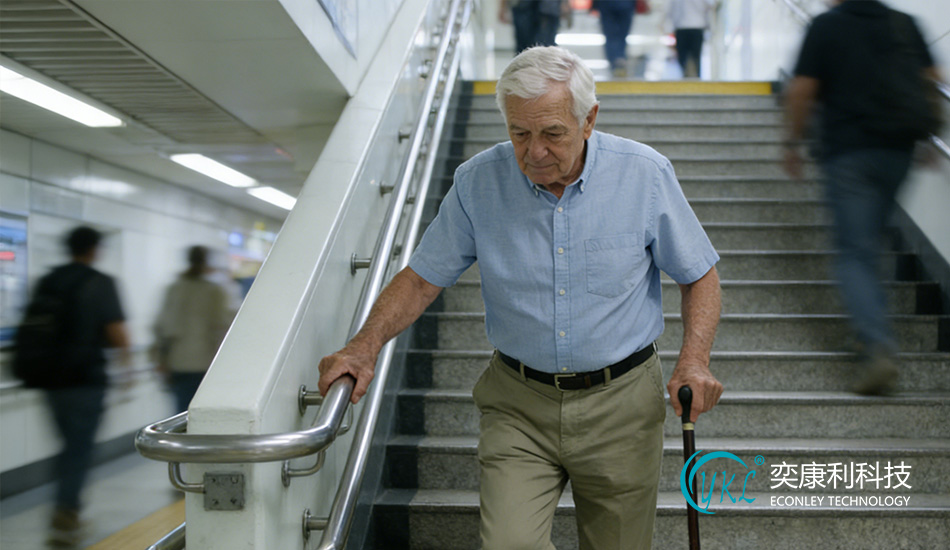
High-quality Hospital Corridor Handrail adheres to strict safety design principles. Firstly, stable load-bearing capacity is non-negotiable—handrails and their mounting systems must withstand significant weight to support patients who may lean fully on them. Secondly, anti-slip surface treatment is essential, with textures or coatings that ensure a secure grip even when hands are wet or covered with gloves. Thirdly, rounded edges and smooth surfaces eliminate sharp corners that could scratch patients or staff, especially those with fragile skin.
Additionally, continuous installation ensures no gaps that could disrupt support or cause tripping hazards. The design also considers visibility, with high-contrast colors or subtle lighting integration to help visually impaired users or those in low-light conditions locate the handrails easily. Compatibility with medical equipment is another key design element, ensuring handrails do not impede the movement of stretchers, wheelchairs, or mobile medical devices.
Hospital Corridor Handrail must comply with strict international and local healthcare regulations and accessibility standards, such as ADA (Americans with Disabilities Act) guidelines, ISO 14122 barrier-free design standards, and specific medical facility safety codes. These standards specify critical requirements, including handrail height, spacing from walls, load-bearing capacity, and material specifications. For example, ADA guidelines require horizontal handrails to be installed at a height between 34 and 38 inches for standing users, with a lower rail at 27 inches for wheelchair users, and a minimum clearance of 1.5 inches from the wall.
Compliance is not only a regulatory obligation but also a commitment to patient safety. Healthcare facilities must conduct regular audits and inspections to ensure Hospital Corridor Handrail meets these standards, addressing any non-compliant issues promptly. Documentation of compliance, including installation records and material certifications, is essential to demonstrate adherence during regulatory reviews.
Regular maintenance is critical to ensuring the long-term safety and functionality of Hospital Corridor Handrail. Healthcare facilities should establish a routine inspection schedule, checking handrails for loose connections, wear and tear, corrosion, or damage. Fasteners should be tightened regularly to maintain stability, and any damaged components should be replaced immediately. Additionally, handrails must be cleaned and disinfected regularly using hospital-grade disinfectants that do not damage the material, aligning with infection control protocols.
Staff training is also an important part of maintenance management. Care teams should be trained to identify signs of handrail damage or malfunction and report issues promptly. Patients and visitors should be educated on the proper use of Hospital Corridor Handrail, such as avoiding hanging objects on the rails or using them for non-support purposes. By implementing comprehensive maintenance and management strategies, healthcare facilities can ensure Hospital Corridor Handrail continues to serve its critical safety function effectively.
Hospital Corridor Handrail is an indispensable component of safe, accessible healthcare environments, playing a vital role in protecting patients, optimizing medical workflows, and ensuring regulatory compliance. By adhering to scenario-specific adaptations, strict safety design principles, and comprehensive maintenance strategies, healthcare facilities can maximize the value of Hospital Corridor Handrail. For healthcare administrators seeking to enhance patient safety and care efficiency, investing in high-quality, compliant Hospital Corridor Handrail is a crucial step. If you need guidance on selecting, installing, or maintaining Hospital Corridor Handrail tailored to your facility’s needs, contact us today to connect with healthcare accessibility experts.
 Tel :13510328459
 Email :493432861@qq.com
 Phone :0755-82154850/25907050
 Add:205-206, 2nd Floor, Building 2, Xiazao Village Industrial Zone, Gaofeng Community, Dalang Street, Longhua District, Shenzhen City

About

Products
Cases
News
Contact
 493432861@qq.com