Service Hotline:13510328459
 205-206, 2nd Floor, Building 2, Xiazao Village Industrial Zone, Gaofeng Community, Dalang Street, Longhua District, Shenzhen City
Service Hotline:13510328459
205-206, 2nd Floor, Building 2, Xiazao Village Industrial Zone, Gaofeng Community, Dalang Street, Longhua District, Shenzhen City



Time:2026-01-16 Preview:
Hospital bathrooms are among the highest-risk areas for patient falls and injuries, due to wet surfaces, limited mobility of patients, and sudden dizziness from medications or treatments. Hospital Bathroom Grab Bar is a critical safety infrastructure tailored to the unique needs of medical environments, serving as a lifeline for patients with diverse mobility challenges. Unlike residential or public bathroom grab bars, Hospital Bathroom Grab Bar is engineered to meet strict medical safety standards, integrate with healthcare workflows, and accommodate the needs of bedridden, post-surgical, or disabled patients. Understanding the importance and proper implementation of Hospital Bathroom Grab Bar is essential for healthcare administrators, facility managers, and care teams to protect patients, ensure regulatory compliance, and enhance the quality of care. This article explores the core value, scenario-specific adaptations, safety design principles, compliance requirements, and maintenance strategies of Hospital Bathroom Grab Bar, providing comprehensive guidance for healthcare facilities.
The primary value of Hospital Bathroom Grab Bar lies in preventing falls and reducing injury risks for vulnerable patients. Patients in hospitals often face physical limitations—such as weakened muscle strength after surgery, balance disorders from chronic illnesses, or temporary mobility loss due to treatments. In wet bathroom environments, these limitations significantly increase the risk of slips and falls, which can lead to secondary injuries like fractures or head trauma, prolonging recovery and increasing healthcare costs. Hospital Bathroom Grab Bar provides stable, reliable support for patients during critical movements, such as sitting down or standing up from the toilet, entering or exiting the shower, and maintaining balance while washing hands. This physical support also delivers psychological reassurance, easing patients’ anxiety about navigating the bathroom independently, which is crucial for their emotional well-being during treatment.
Another key value is promoting patient independence and reducing caregiver burden. With the support of Hospital Bathroom Grab Bar, many patients—especially those in rehabilitation or with mild mobility impairments—can complete bathroom activities without relying on caregivers. This independence enhances patients’ sense of dignity and self-esteem, which plays a positive role in their overall recovery. For care teams, this reduces the workload of assisting patients with daily bathroom tasks, allowing them to focus on more critical medical care responsibilities, thereby improving overall care efficiency.
The Hospital Bathroom Grab Bar in toilet areas is designed to support patients during sitting and standing movements. Typically, a combination of horizontal and vertical grab bars is installed around the toilet: horizontal bars on the side walls provide support when sitting down or standing up, while vertical bars near the front help patients stabilize their bodies during transfer. The placement of these grab bars is carefully calibrated to accommodate patients of different heights and those using wheelchairs, ensuring easy reach without straining. Additionally, the grab bars are designed to not obstruct the movement of assistive devices like commodes or transfer benches, ensuring seamless integration with patient care equipment.
Shower and bathtub areas are the most slippery and high-risk zones in hospital bathrooms, so Hospital Bathroom Grab Bar here focuses on multi-angle support and anti-slip performance. Grab bars are installed near shower entrances to assist patients in entering and exiting the shower safely, and along the walls of the shower area to provide continuous support during bathing. For bathtubs, grab bars are mounted on the outer edge and inside the tub, helping patients step in and out and maintain balance while bathing. These grab bars feature anti-slip surfaces to ensure a secure grip even when wet, and are made of corrosion-resistant materials to withstand frequent exposure to water and disinfectants.
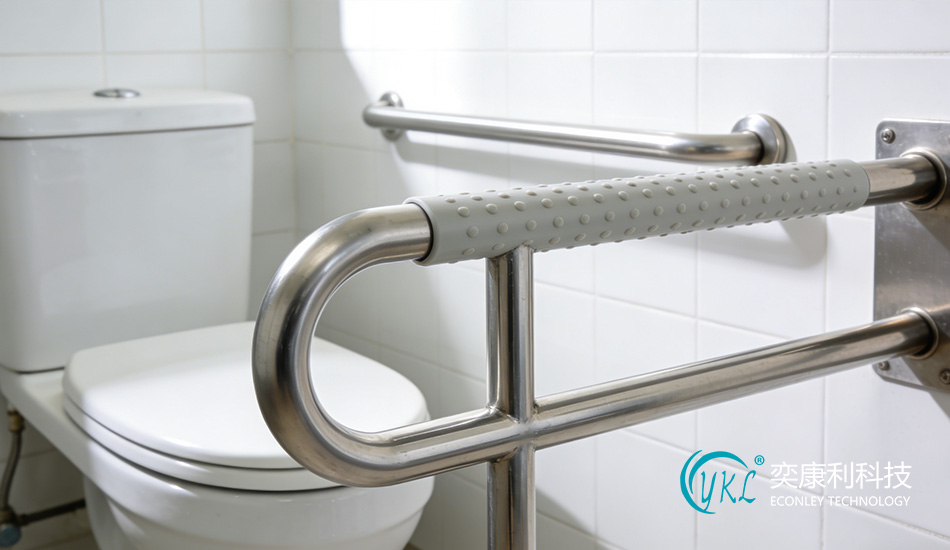
In sink and grooming areas, Hospital Bathroom Grab Bar provides support for patients during grooming activities such as washing hands, brushing teeth, or shaving. Horizontal grab bars installed beside the sink help patients maintain balance while standing, especially for those who may experience dizziness or weakness. The design of these grab bars ensures that they do not block access to the sink or interfere with the use of grooming supplies, and they are positioned at a height that allows patients to comfortably reach the sink while holding onto the bar. This support is particularly important for patients recovering from neurological conditions or orthopedic surgeries, who may struggle with fine motor skills and balance.
High-quality Hospital Bathroom Grab Bar adheres to strict safety design principles to ensure maximum protection for patients. Firstly, stable load-bearing capacity is non-negotiable: the grab bars and their mounting systems must be able to withstand significant weight, as patients may fully rely on them for support. Secondly, anti-slip surface treatment is essential—surfaces are typically textured or coated with non-slip materials to prevent hands from slipping, even when wet or covered with soap. Thirdly, rounded edges and smooth surfaces eliminate sharp corners that could cause scratches or injuries to patients with fragile skin.
Additionally, concealed mounting is preferred for Hospital Bathroom Grab Bar, as it avoids protruding fasteners that could catch on clothing or injure patients. The design also considers ergonomic comfort, with grip diameters optimized to fit the hands of patients with weak grip strength, reducing the effort required to hold on. These design principles ensure that the grab bars are not only safe but also user-friendly for the diverse patient population in hospitals.
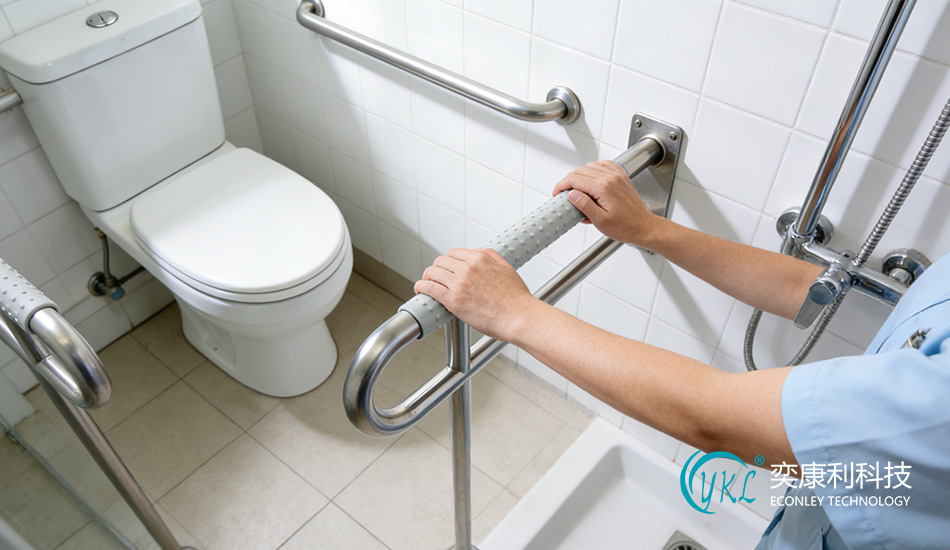
Hospital Bathroom Grab Bar must comply with strict international and local healthcare regulations and accessibility standards, such as ADA (Americans with Disabilities Act) guidelines, ISO 14122 barrier-free design standards, and specific medical facility safety codes. These standards specify critical requirements, including grab bar height, spacing from walls, load-bearing capacity, and material specifications. For example, ADA guidelines require that horizontal grab bars in toilet areas be installed at a height between 33 and 36 inches, with a minimum clearance of 1.5 inches from the wall to accommodate hand placement.
Compliance is not only a regulatory obligation but also a commitment to patient safety. Healthcare facilities must conduct regular audits and inspections to ensure that Hospital Bathroom Grab Bar meets these standards, and make timely adjustments or replacements for non-compliant or damaged grab bars. Documentation of compliance, including installation records and material certifications, is also essential to demonstrate adherence to regulations during inspections.
Regular maintenance is critical to ensure the long-term safety and functionality of Hospital Bathroom Grab Bar. Healthcare facilities should establish a routine inspection schedule, checking grab bars for loose connections, wear and tear, corrosion, or damage. Fasteners should be tightened regularly to maintain stability, and any damaged components should be replaced immediately to avoid safety hazards. Additionally, grab bars should be cleaned and disinfected regularly using hospital-grade disinfectants that do not damage the material, ensuring compliance with infection control standards.
Staff training is also an important part of maintenance and management. Care teams should be trained to identify signs of grab bar damage or malfunction, and to report issues promptly. Patients should also be educated on the proper use of Hospital Bathroom Grab Bar, such as avoiding hanging heavy objects on the bars or using them for purposes other than support. By implementing comprehensive maintenance and management strategies, healthcare facilities can ensure that Hospital Bathroom Grab Bar continues to serve its critical safety function effectively.
Hospital Bathroom Grab Bar is an indispensable safety component in healthcare facilities, playing a vital role in protecting vulnerable patients, promoting independence, and ensuring regulatory compliance. By adhering to scenario-specific adaptations, strict safety design principles, and comprehensive maintenance strategies, healthcare facilities can maximize the value of Hospital Bathroom Grab Bar and create a safer environment for patients. For healthcare administrators seeking to enhance patient safety and care quality, investing in high-quality, compliant Hospital Bathroom Grab Bar and implementing proper management practices is a crucial step. If you need guidance on selecting, installing, or maintaining Hospital Bathroom Grab Bar tailored to your facility’s needs, contact us today. Our team of experts will provide personalized solutions to help you create a safer, more patient-centered hospital environment.
 Tel :13510328459
 Email :493432861@qq.com
 Phone :0755-82154850/25907050
 Add:205-206, 2nd Floor, Building 2, Xiazao Village Industrial Zone, Gaofeng Community, Dalang Street, Longhua District, Shenzhen City

About

Products
Cases
News
Contact
 493432861@qq.com