Service Hotline:13510328459
 205-206, 2nd Floor, Building 2, Xiazao Village Industrial Zone, Gaofeng Community, Dalang Street, Longhua District, Shenzhen City
Service Hotline:13510328459
205-206, 2nd Floor, Building 2, Xiazao Village Industrial Zone, Gaofeng Community, Dalang Street, Longhua District, Shenzhen City



Time:2026-01-16 Preview:
Accessibility handrails are fundamental components of barrier-free design, serving as critical support systems for individuals with mobility challenges, elderly people, people with disabilities, and those recovering from injuries. Understanding Accessibility Handrail Uses and Function Introduction is essential for designing inclusive environments that cater to the diverse needs of all users, whether in public buildings, residential spaces, healthcare facilities, or commercial areas. Unlike standard handrails that focus solely on basic support, accessibility handrails integrate multiple targeted functions to enhance safety, independence, and usability. This article provides a comprehensive overview of Accessibility Handrail Uses and Function Introduction, exploring core functional features, scenario-specific applications, adaptive functions for special groups, extended value, and practical usage guidelines, offering valuable insights for architects, facility managers, and anyone involved in creating inclusive spaces.
The primary functions of accessibility handrails revolve around safety and support, forming a multi-dimensional functional system. Firstly, the balance maintenance function is fundamental: by providing a stable grip point, accessibility handrails help users maintain body equilibrium when walking, standing, or transitioning between positions, significantly reducing the risk of falls. This function is particularly critical for individuals with weakened muscle strength, balance disorders, or visual impairments who rely on tactile feedback to navigate their surroundings.
Secondly, the load-bearing support function enables users to redistribute body weight, alleviating pressure on lower limbs. For elderly people with joint pain, individuals with mobility impairments, or post-surgery patients, this function reduces physical strain during movement, allowing them to move more comfortably and independently. Additionally, accessibility handrails feature an anti-slip protection function: their surfaces are typically treated with special textures or materials that enhance friction, ensuring a secure grip even when hands are wet, sweaty, or covered with gloves.
A less obvious but equally important function is navigation guidance. Many accessibility handrails are designed with tactile indicators, such as raised dots or continuous strips, to help visually impaired users identify directions, turns, or key locations (e.g., entrances, exits, or restrooms). This function transforms handrails into "tactile maps," enabling independent navigation in unfamiliar environments.
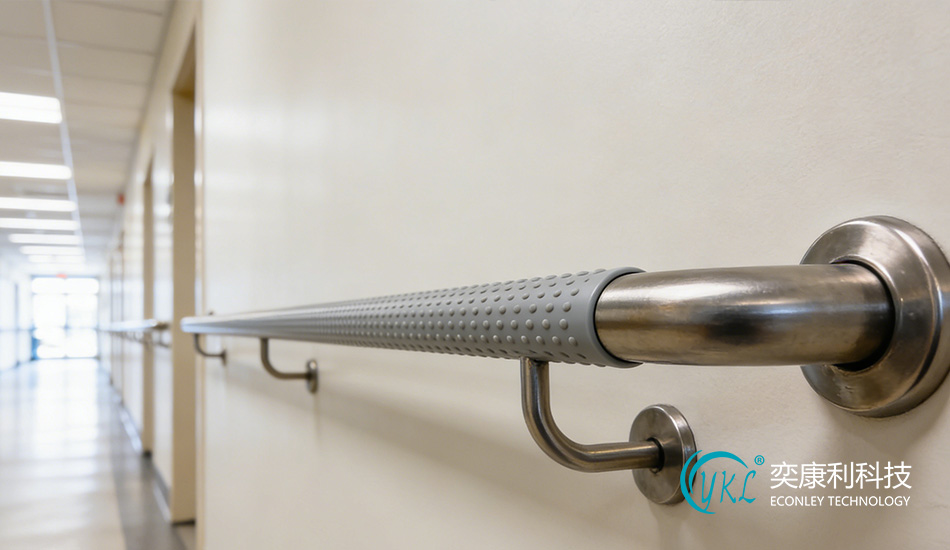
In public buildings such as libraries, museums, shopping malls, and government offices, accessibility handrails are widely used in corridors, stairwells, ramps, and restrooms. Their primary use here is to ensure that all visitors, regardless of mobility status, can access facilities independently. For example, in stairwells and ramps, handrails provide continuous support for users climbing or descending; in restrooms, they assist with sitting, standing, and maintaining balance in wet environments. These uses not only meet accessibility regulations but also enhance the overall user experience for all visitors.
In homes, accessibility handrails are commonly installed in bathrooms, bedrooms, hallways, and near staircases. Their uses are tailored to the daily living needs of residents, such as assisting the elderly or disabled family members in getting in and out of bed, using the toilet, or taking showers. In residential settings, accessibility handrails also serve a preventive function, reducing the risk of household falls—a leading cause of injury among the elderly. Additionally, they can be integrated into home decor seamlessly, balancing functionality with aesthetic appeal.
In hospitals, clinics, nursing homes, and rehabilitation centers, accessibility handrails have specialized uses aligned with medical and care needs. Beyond basic support, they assist in patient transfers (e.g., from beds to wheelchairs), support rehabilitation training for individuals recovering from mobility-related injuries, and ensure safe movement in high-traffic, high-risk areas such as emergency departments and operating room corridors. In these settings, their functions also include compatibility with medical equipment, such as wheelchairs, stretchers, and walkers, ensuring unobstructed care workflows.
Outdoor accessibility handrails are used in parks, sidewalks, crosswalks, and public transportation stations. Their key uses include supporting users on outdoor ramps, assisting with getting on and off public transport vehicles, and providing stability on uneven or sloped surfaces. Designed to withstand harsh weather conditions, these handrails retain their anti-slip and load-bearing functions in rain, snow, or extreme temperatures, ensuring year-round accessibility.
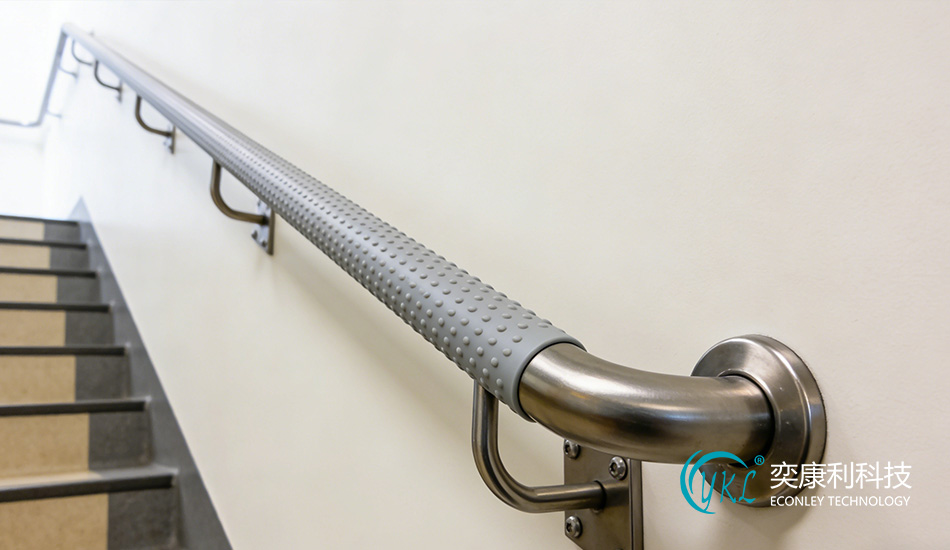
Accessibility handrails are designed with adaptive functions to cater to the unique needs of specific groups. For visually impaired individuals, as mentioned earlier, tactile guidance functions and high-contrast color schemes (to enhance visibility) are key features. For individuals with upper limb disabilities, handrails with extended grip areas, ergonomic shapes, or adjustable heights reduce the effort required to grasp and use them.
For pediatric users (children with disabilities or young children learning to navigate), lower handrail heights and smaller grip diameters ensure usability. For wheelchair users, handrails installed at appropriate heights and distances from walls allow easy access while seated, supporting independent movement and transfers. These adaptive functions ensure that accessibility handrails are truly inclusive, meeting the needs of diverse user groups.
Beyond their direct support and safety functions, accessibility handrails offer extended value to individuals and communities. They promoteindependence and dignity for people with disabilities and the elderly, reducing reliance on caregivers and enabling active participation in social, work, and recreational activities. This, in turn, fosters social inclusion and equality.
For facility managers and building owners, investing in accessibility handrails ensures compliance with international and local accessibility standards (e.g., ADA, ISO 14122), avoiding regulatory penalties and enhancing the reputation of the space as inclusive. Additionally, these handrails contribute to risk mitigation by reducing fall-related injuries and potential liability claims, making them a cost-effective investment in long-term safety.
To maximize the benefits of accessibility handrails, it is important to use them correctly. Users should grasp the handrail firmly with one or both hands, maintaining contact throughout movement (e.g., walking, climbing stairs, or transitioning between positions). For individuals with visual impairments, familiarizing oneself with tactile indicators and their meanings (e.g., dots for stops, strips for turns) enhances navigation efficiency.
Facility managers should ensure that handrails are kept clean, free of obstacles, and regularly inspected to maintain their functional integrity. Avoiding the placement of objects near handrails or using them for non-support purposes (e.g., hanging items) ensures unobstructed access for all users. Educating staff and visitors about the uses and functions of accessibility handrails also promotes their effective and respectful use.
Accessibility Handrail Uses and Function Introduction reveals the critical role these devices play in creating inclusive, safe, and user-friendly environments. From core support and safety functions to scenario-specific applications and adaptive features for special groups, accessibility handrails are indispensable for ensuring equal access and independence for all. By understanding and leveraging their full range of uses and functions, we can design spaces that cater to the diverse needs of individuals, fostering a more inclusive society. For those seeking to enhance the accessibility of their spaces, consulting with professionals to select and install handrails that align with specific use cases and user needs is essential. Contact us today for expert guidance on accessibility handrail solutions tailored to your requirements.
 Tel :13510328459
 Email :493432861@qq.com
 Phone :0755-82154850/25907050
 Add:205-206, 2nd Floor, Building 2, Xiazao Village Industrial Zone, Gaofeng Community, Dalang Street, Longhua District, Shenzhen City

About

Products
Cases
News
Contact
 493432861@qq.com