Service Hotline:13510328459
 205-206, 2nd Floor, Building 2, Xiazao Village Industrial Zone, Gaofeng Community, Dalang Street, Longhua District, Shenzhen City
Service Hotline:13510328459
205-206, 2nd Floor, Building 2, Xiazao Village Industrial Zone, Gaofeng Community, Dalang Street, Longhua District, Shenzhen City



Time:2026-01-15 Preview:
Hospitals serve a diverse population of patients, visitors, and medical staff, including individuals with mobility impairments, visual disabilities, elderly people, and those using medical devices such as wheelchairs or walkers. Hospital Accessible Handrail emerges as a critical infrastructure that ensures safe and independent movement throughout healthcare facilities, bridging the gap between medical service needs and the physical limitations of users. Unlike standard building handrails, Hospital Accessible Handrail is specifically designed to meet the rigorous accessibility requirements of medical environments, integrating ergonomic principles, anti-slip technology, and compatibility with medical equipment. This article explores the core value, scenario-specific adaptation solutions, special population-oriented designs, compliance standard implementation, and selection and maintenance strategies of Hospital Accessible Handrail, providing comprehensive guidance for hospital administrators, architects, and facility management teams.
The primary value of Hospital Accessible Handrail lies in ensuring universal accessibility and safety for all users. In hospitals, where timely movement to medical services can be critical, these handrails provide stable support for individuals with weakened mobility, helping them navigate corridors, bathrooms, and treatment areas without excessive reliance on others. For patients recovering from surgery or with chronic conditions, Hospital Accessible Handrail reduces the risk of falls, a major cause of secondary injuries in healthcare settings. Additionally, these handrails enhance the efficiency of medical services by facilitating smooth movement of patients and medical equipment, reducing congestion in high-traffic areas such as emergency departments and outpatient clinics.
Another key value is ensuring compliance with healthcare accessibility regulations. Reputable Hospital Accessible Handrail systems are designed and installed in strict alignment with international and local standards, such as ADA (Americans with Disabilities Act) guidelines, ISO 14122 barrier-free design standards, and specific medical facility safety codes. Compliance not only helps hospitals avoid regulatory penalties but also enhances their reputation as inclusive healthcare providers. Moreover, investing in high-quality Hospital Accessible Handrail demonstrates a commitment to patient-centered care, improving the overall patient experience and satisfaction.
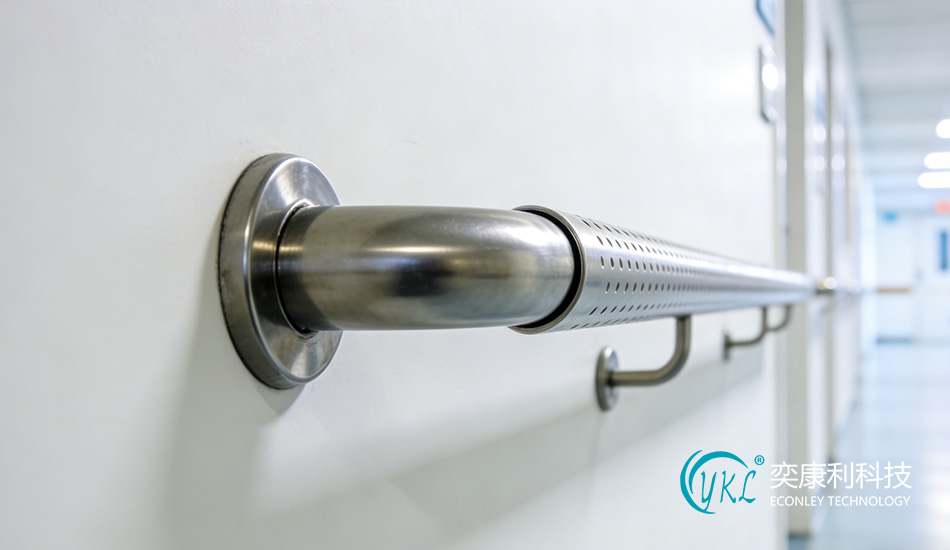
Hospital Accessible Handrail in corridors and waiting areas prioritizes continuity and compatibility with medical equipment. The design specifies continuous installation along both sides of corridors, with no gaps at intersections, doorways, or elevator entrances, to provide uninterrupted support. These handrails are positioned at heights suitable for both standing users and wheelchair occupants, with sufficient distance from walls to accommodate the grip of users with limited hand mobility or thick gloves. In waiting areas, Hospital Accessible Handrail is integrated with seating arrangements, extending alongside benches to assist users in sitting down and standing up. Special attention is paid to avoiding obstacles that may hinder the movement of wheelchairs or stretchers, ensuring the handrail system does not impede medical service workflows.
Bathrooms and shower facilities in hospitals are high-risk areas for falls, so Hospital Accessible Handrail here focuses on anti-slip performance and multi-angle support. The design includes U-shaped handrails around toilets for assistance with sitting and standing, and vertical handrails near sinks and shower entrances for stability. These handrails are made of corrosion-resistant materials to withstand frequent cleaning and disinfection, a critical requirement in medical environments. Waterproof installation techniques are employed to ensure structural stability in humid conditions, and the handrail surfaces are treated with anti-slip textures to prevent slipping even when wet. Additionally, the handrails are positioned to avoid interfering with assistive devices such as commodes or shower chairs.
In treatment rooms and operating areas, Hospital Accessible Handrail is designed to support medical procedures while ensuring patient safety. The handrails are installed at strategic positions to assist patients in transferring from stretchers to treatment tables or operating beds, reducing the physical burden on medical staff. The design avoids sharp edges and protruding components to prevent injury to patients with fragile skin or catheters. Moreover, Hospital Accessible Handrail in these areas is compatible with sterile environments, using materials that can withstand high-temperature disinfection and do not harbor bacteria. The installation is also flexible, allowing for temporary adjustments to accommodate different treatment equipment and patient positions.
For multi-story hospitals, Hospital Accessible Handrail in stairwells and ramps focuses on stability and ease of use for all users. Stairwells are equipped with dual-level handrails, with the lower rail positioned to accommodate wheelchair users and children. The handrails extend beyond the top and bottom steps to help users stabilize their bodies before climbing or descending. Ramps feature continuous handrails on both sides, with appropriate spacing from the ramp surface to ensure a comfortable grip for wheelchair users. The surfaces of these handrails are treated with anti-slip materials, and high-contrast colors are used to enhance visibility for visually impaired users, ensuring safety in all weather conditions.
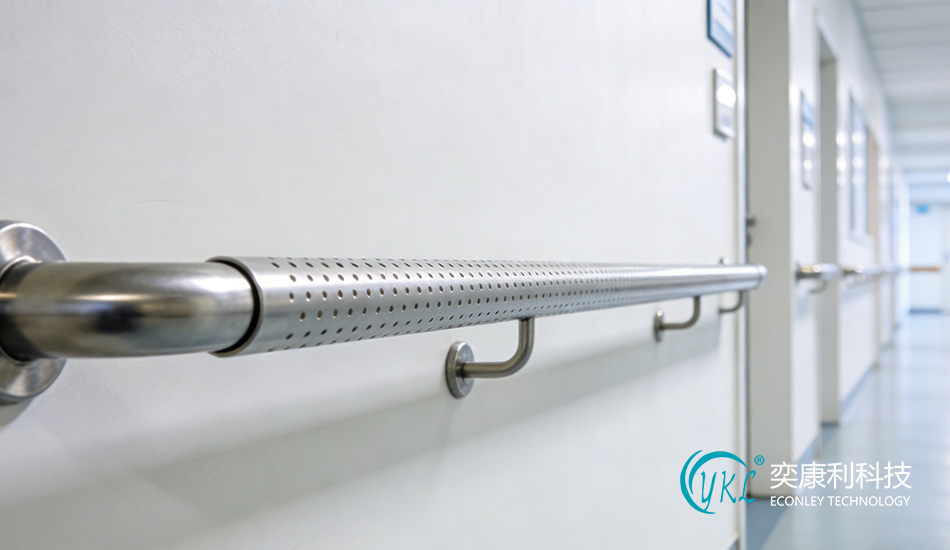
High-quality Hospital Accessible Handrail incorporates designs tailored to the needs of specific populations. For visually impaired users, the handrails are equipped with tactile indicators, such as raised dots or strips, to signal upcoming turns, doorways, or key areas like medical stations. These tactile elements are consistent with international accessibility standards, allowing users to navigate independently through touch. For patients with limited upper limb mobility, the handrails feature extended grip areas and ergonomic shapes that reduce the effort required to hold on. For pediatric patients, adjustable-height handrails or specially designed grips are available to ensure compatibility with their smaller stature.
Implementing compliance with accessibility standards is a critical aspect of Hospital Accessible Handrail installation. Hospitals must ensure that all handrail systems meet the requirements of relevant regulations, including height specifications, load-bearing capacity, and anti-slip performance. Regular audits and inspections are conducted to verify compliance, with adjustments made as needed to address any gaps. Additionally, staff training is provided to ensure that medical personnel understand the proper use of accessible handrails and can assist patients in utilizing them effectively. Documentation of compliance, including material certifications and installation records, is maintained to demonstrate adherence to standards during regulatory reviews.
When selecting Hospital Accessible Handrail, hospitals should prioritize safety, durability, and compliance. It is essential to choose products from reputable manufacturers with experience in healthcare accessibility solutions, ensuring that the handrails meet the specific needs of medical environments. Factors such as material corrosion resistance, ease of cleaning, and compatibility with medical equipment should be carefully considered. Regular maintenance is also crucial to ensure the long-term performance of Hospital Accessible Handrail. This includes routine inspections for loose connections, wear and tear, and damage, as well as regular cleaning and disinfection to maintain hygiene standards. Damaged or non-compliant handrails should be repaired or replaced immediately to avoid safety hazards.
Hospital Accessible Handrail is a cornerstone of inclusive healthcare design, ensuring that all users—regardless of their physical abilities—can access medical services safely and independently. By integrating scenario-specific adaptations, special population-oriented designs, and strict compliance with accessibility standards, these handrails enhance the quality of care and improve the patient experience. For hospital administrators seeking to upgrade their facility's accessibility infrastructure, investing in professional Hospital Accessible Handrail solutions is a critical step. If you need personalized recommendations for Hospital Accessible Handrail systems tailored to your hospital's unique needs, contact us today. We will connect you with expert manufacturers and provide guidance to help you create a safe, inclusive, and patient-centered healthcare environment.
 Tel :13510328459
 Email :493432861@qq.com
 Phone :0755-82154850/25907050
 Add:205-206, 2nd Floor, Building 2, Xiazao Village Industrial Zone, Gaofeng Community, Dalang Street, Longhua District, Shenzhen City

About

Products
Cases
News
Contact
 493432861@qq.com