Service Hotline:13510328459
 205-206, 2nd Floor, Building 2, Xiazao Village Industrial Zone, Gaofeng Community, Dalang Street, Longhua District, Shenzhen City
Service Hotline:13510328459
205-206, 2nd Floor, Building 2, Xiazao Village Industrial Zone, Gaofeng Community, Dalang Street, Longhua District, Shenzhen City



Time:2026-01-15 Preview:
Nursing homes strive to create a safe and independent living environment for elderly residents, most of whom face mobility challenges like weakened muscle strength, balance disorders, or visual impairments. A well-crafted Nursing Home Handrail Installation Blueprint serves as the foundational design document that bridges elderly-centric needs, barrier-free principles, and construction practice. Unlike generic building blueprints, this specialized document is tailored to the unique scenarios of nursing homes, ensuring that handrail installation not only meets safety and accessibility standards but also aligns with the daily living habits of senior residents. This article explores the core value, key design elements, scenario-specific adaptation points, compliance verification criteria, and practical application strategies of Nursing Home Handrail Installation Blueprint, providing comprehensive guidance for nursing home administrators, architects, and construction teams.
The primary value of Nursing Home Handrail Installation Blueprint lies in standardizing design and ensuring elderly-centric safety. The blueprint translates the complex physical characteristics and mobility needs of the elderly into clear design specifications, such as optimal handrail height, grip texture, and installation positions. It avoids one-size-fits-all design flaws, ensuring that handrails are accessible and usable for residents with different mobility levels—from semi-independent seniors to those relying on wheelchairs. By providing precise design guidance, the Nursing Home Handrail Installation Blueprint minimizes construction errors, reduces rework, and ensures that the installed handrails effectively prevent falls and provide stable support, safeguarding residents' daily mobility safety.
Another key value is facilitating compliance and cross-team collaboration. Reputable Nursing Home Handrail Installation Blueprint is developed in strict alignment with international and local barrier-free design standards, such as ISO 14122 and relevant elderly care facility regulations. This ensures that handrail installation meets regulatory requirements, helping nursing homes avoid penalties and enhance service quality ratings. Additionally, the blueprint serves as a unified communication tool for designers, contractors, and caregivers, clarifying design intentions and installation standards, and ensuring consistent implementation of the handrail system across the entire facility.
A high-quality Nursing Home Handrail Installation Blueprint contains several core design elements tailored to the elderly. Firstly, ergonomic design specifications: the blueprint clearly defines handrail height (optimized for the average arm length of the elderly), grip diameter (suitable for weak hand strength), and surface treatment (soft anti-slip texture to prevent slipping and enhance comfort). Secondly, continuous support design: it specifies continuous handrail installation in key areas, avoiding gaps that may cause safety hazards. Thirdly, safety detail design: all handrail edges are required to be rounded to prevent scratches, and mounting brackets are concealed to avoid catching clothing. Finally, coordination with surrounding environments: the blueprint ensures that handrail installation does not interfere with the placement of beds, medical equipment, or walkways, maintaining smooth circulation in the nursing home.

The Nursing Home Handrail Installation Blueprint for corridors and public activity areas focuses on continuity and guidance. It specifies continuous handrail installation along both sides of corridors, with smooth arc transitions at corners to avoid sudden direction changes that may cause residents to lose balance. For long corridors, the blueprint recommends setting handrail extension sections at regular intervals to match rest seats, facilitating residents to sit down and stand up safely. Additionally, it includes design details of tactile guidance marks on handrails to assist visually impaired residents in identifying directions and key locations, such as dining areas and activity rooms.
Bathrooms and shower zones are high-risk areas for falls, so the Nursing Home Handrail Installation Blueprint for these spaces emphasizes anti-slip and multi-angle support. It specifies the layout of U-shaped or L-shaped handrails around toilets, with precise spacing to assist residents in sitting and standing. For shower areas, the blueprint requires handrails to be installed near entrances and shower seats, with moisture-resistant material specifications and waterproof installation details to adapt to the humid environment. It also ensures that handrails are installed at heights that allow residents to grasp them easily while sitting or standing, reducing the risk of slipping on wet surfaces.
In bedrooms and private quarters, the Nursing Home Handrail Installation Blueprint prioritizes personalization and privacy. It provides flexible design options for bedside handrails, such as adjustable height or foldable designs, to meet individual residents' needs without affecting bed placement or movement. For private bathrooms, the blueprint maintains consistency with public bathroom safety standards while using concealed installation methods to keep the space tidy and preserve residents' privacy. It also specifies that handrails should be installed at positions that are easy to reach when getting in and out of bed, reducing the risk of falls during daily activities.
For nursing homes with multiple floors, the Nursing Home Handrail Installation Blueprint for stairwells and ramps focuses on stability and ease of use. Stairwells are designed with dual-level handrails to accommodate residents of different heights and those using wheelchairs, with handrails extending beyond the top and bottom steps to help residents stabilize their bodies before climbing or descending. For ramps, the blueprint specifies continuous handrail installation on both sides, with appropriate spacing from the ramp surface to ensure wheelchair users can grasp them comfortably. It also includes anti-slip surface treatment requirements for handrails to enhance safety in all weather conditions.
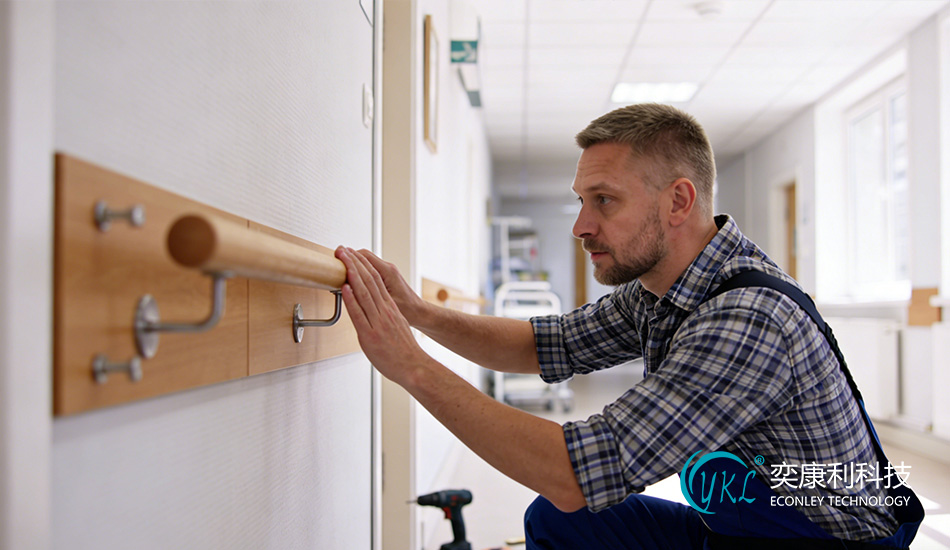
When formulating and using Nursing Home Handrail Installation Blueprint, compliance verification is a critical step. The blueprint must be cross-checked against the latest international and local elderly care facility standards and barrier-free design regulations, ensuring that key indicators such as handrail height, load-bearing capacity, and anti-slip performance meet requirements. Special attention should be paid to the compatibility of handrail materials with medical hygiene standards, ensuring they are non-toxic, corrosion-resistant, and easy to clean and disinfect. Additionally, the blueprint should be reviewed by occupational therapists or elderly care experts to verify its practicality and adaptability to the elderly's needs.
The practical application of Nursing Home Handrail Installation Blueprint requires close collaboration between multiple teams. Before construction, the construction team should conduct a detailed review of the blueprint, comparing it with on-site conditions to identify potential conflicts and make necessary adjustments. During construction, the blueprint should be used as a real-time reference to ensure that installation details align with design requirements. After installation, a comprehensive inspection should be conducted based on the blueprint, including usability tests with residents and caregivers to collect feedback.
The Nursing Home Handrail Installation Blueprint should also be continuously optimized. As residents' needs change or new safety standards are issued, the blueprint should be updated to ensure the handrail system remains effective and compliant. For example, adding handrail designs for newly admitted residents with special mobility needs or integrating smart sensing elements into the blueprint to enhance safety monitoring.
Nursing Home Handrail Installation Blueprint is an indispensable guide for creating a safe and elderly-friendly environment in nursing homes. By integrating elderly-centric design, scenario-specific adaptations, and compliance requirements, it ensures that handrail installation effectively supports residents' mobility and safety. For nursing home administrators seeking to enhance the quality of care and safety of their facilities, adopting a professional Nursing Home Handrail Installation Blueprint is a crucial step. If you need personalized blueprint customization or professional guidance for handrail installation, contact us today. We will connect you with expert teams to develop a tailored solution that meets the unique needs of your nursing home and residents.
 Tel :13510328459
 Email :493432861@qq.com
 Phone :0755-82154850/25907050
 Add:205-206, 2nd Floor, Building 2, Xiazao Village Industrial Zone, Gaofeng Community, Dalang Street, Longhua District, Shenzhen City

About

Products
Cases
News
Contact
 493432861@qq.com