Service Hotline:13510328459
 205-206, 2nd Floor, Building 2, Xiazao Village Industrial Zone, Gaofeng Community, Dalang Street, Longhua District, Shenzhen City
Service Hotline:13510328459
205-206, 2nd Floor, Building 2, Xiazao Village Industrial Zone, Gaofeng Community, Dalang Street, Longhua District, Shenzhen City



Time:2026-01-15 Preview:
Creating a barrier-free environment is a core requirement for nursing homes to ensure the safety, independence, and dignity of elderly residents, especially those with mobility impairments, visual disabilities, or limited motor functions. Nursing Home Accessibility Handrail Construction Solutions serve as a comprehensive and actionable framework for implementing high-quality, compliant handrail systems that meet the diverse accessibility needs of senior residents. Unlike generic construction approaches, these specialized solutions integrate barrier-free design principles, elderly ergonomic characteristics, and industry safety standards into every stage of the construction process—from pre-construction assessment to post-installation maintenance. This article explores the core value, scenario-specific construction adaptation plan, accessibility compliance essentials, quality control measures, and after-sales support strategies of Nursing Home Accessibility Handrail Construction Solutions, providing practical guidance for nursing home administrators, construction contractors, and accessibility design professionals.
The primary value of Nursing Home Accessibility Handrail Construction Solutions lies in realizing true accessibility and ensuring resident safety. These solutions are tailored to the physical limitations of the elderly, such as weakened grip strength, poor balance, and slow reaction speeds, through scientific construction techniques and design adaptations. For example, they specify the precise installation height, grip texture, and connection methods of handrails to ensure that residents of different physical conditions—including those using wheelchairs or walkers—can use them easily and safely. By eliminating mobility barriers, Nursing Home Accessibility Handrail Construction Solutions enable elderly residents to move freely between rooms, dining areas, and activity spaces, enhancing their quality of life and sense of independence.
Another key value is ensuring compliance with accessibility standards and regulations. Reputable Nursing Home Accessibility Handrail Construction Solutions are developed in strict alignment with international and local barrier-free design standards, such as ISO 14122 and ADA (Americans with Disabilities Act) guidelines, as well as specific elderly care facility regulations. Compliance with these standards not only helps nursing homes avoid regulatory penalties but also enhances their service quality rating and reputation. Additionally, these solutions streamline the construction process by providing clear, standardized operation guidelines, reducing construction errors, rework rates, and overall project costs.
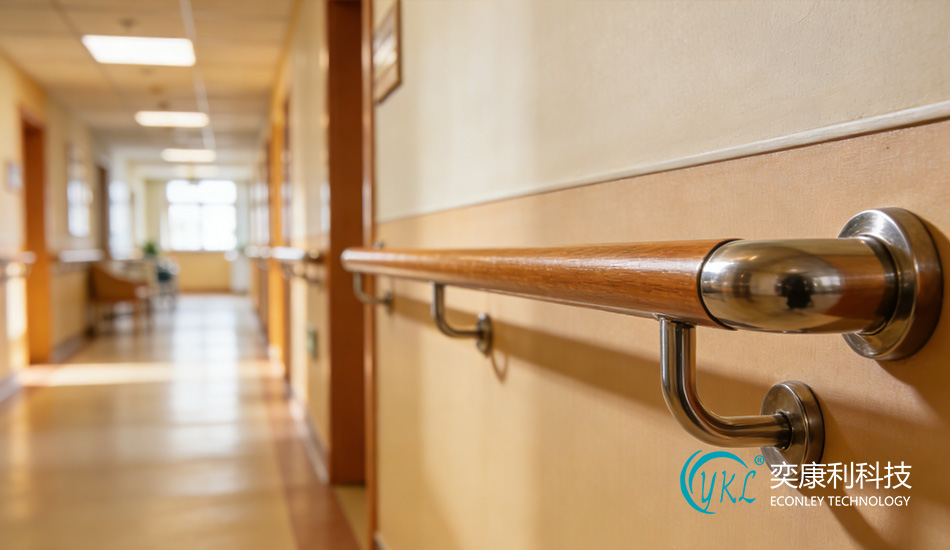
Nursing Home Accessibility Handrail Construction Solutions for corridors and public passageways focus on continuity and universal accessibility. The solutions specify continuous handrail installation along both sides of corridors, with no gaps at intersections, doorways, or turns, to provide uninterrupted support for residents. They also detail the construction method for dual-level handrails—installing upper and lower rails at heights suitable for standing residents and wheelchair users respectively. To assist visually impaired residents, the solutions include techniques for installing tactile guidance strips integrated with handrails, ensuring precise alignment and stable fixation to avoid displacement during use. Additionally, the construction process emphasizes smooth transitions at corners, using arc-shaped connection components to prevent scratches and ensure safe passage.
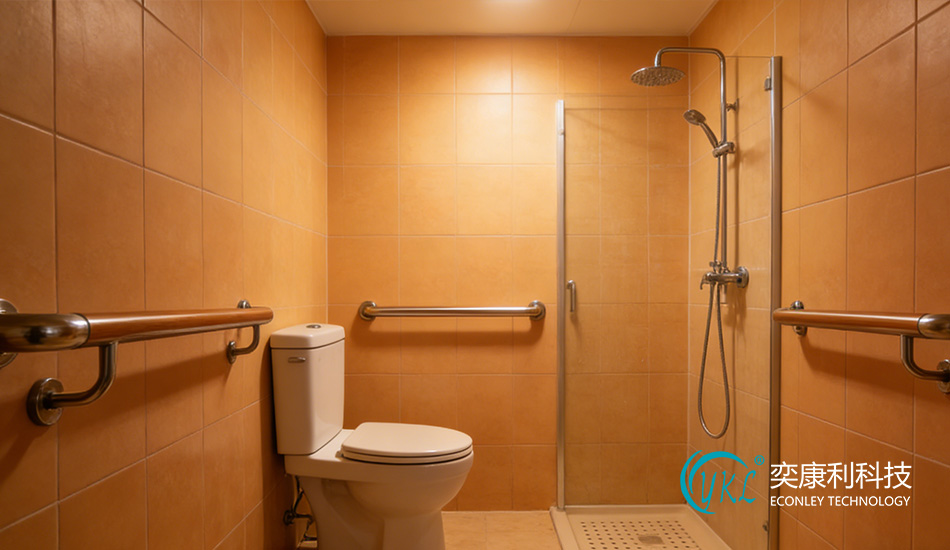
Bathrooms and shower zones are high-risk areas for falls, so Nursing Home Accessibility Handrail Construction Solutions for these spaces prioritize anti-slip performance and multi-angle support. The solutions specify corrosion-resistant materials and moisture-proof construction techniques to adapt to the humid environment, such as using stainless steel fasteners and waterproof sealants at connection points. For toilet areas, they detail the construction of U-shaped or L-shaped handrails with appropriate spacing to assist residents in sitting down and standing up, including reinforcement measures for wall-mounted handrails to ensure load-bearing stability. In shower zones, the solutions require handrails to be installed near entrances and seats, with non-slip surface treatment and rounded edges to enhance safety and comfort.
In bedrooms and private quarters, Nursing Home Accessibility Handrail Construction Solutions emphasize personalized accessibility and privacy protection. The solutions provide flexible construction options for bedside handrails, such as adjustable height mechanisms, to meet the individual needs of residents. They also specify installation positions that avoid interfering with the placement of medical equipment, beds, and furniture, ensuring unobstructed movement for both residents and caregivers. For private bathrooms, the construction process maintains consistency with public bathroom accessibility standards while using concealed mounting techniques to keep the space tidy and avoid visual clutter, preserving the resident’s sense of privacy.
For nursing homes with multiple floors, Nursing Home Accessibility Handrail Construction Solutions for stairwells and ramps focus on stability and ease of use for elderly residents. Stairwell construction solutions require dual-level handrails that extend beyond the top and bottom steps, with secure anchoring to the stair structure to withstand repeated use. The solutions also specify anti-slip surface treatment for handrails and clear marking of the handrail ends to assist residents in identifying the start and end of the stairwell. For ramps, the construction process ensures continuous handrail installation on both sides, with appropriate spacing from the ramp surface to accommodate wheelchair users’ hands, and reinforcement of the ramp-handrail connection to ensure stability on inclined surfaces.
Nursing Home Accessibility Handrail Construction Solutions must strictly adhere to accessibility compliance requirements to ensure the handrail systems meet the needs of all residents. Key compliance points include handrail height, which must be within the range suitable for both standing elderly and wheelchair users; grip diameter, optimized for residents with weak hand strength; and load-bearing capacity, sufficient to support the weight of multiple users. The solutions also require compliance with hygiene standards, specifying materials that are easy to clean and disinfect to prevent the spread of germs in nursing home environments.
Special attention should be paid to compliance for residents with specific disabilities. For visually impaired residents, the construction solutions include the installation of tactile indicators on handrails to guide them to key areas, such as medical stations and restrooms. For residents with limited upper limb mobility, the solutions may specify handrails with extended grip areas or auxiliary support components. Ensuring that all construction details align with the latest accessibility standards is a critical part of Nursing Home Accessibility Handrail Construction Solutions, as it directly impacts the usability and safety of the handrail system.
High-quality Nursing Home Accessibility Handrail Construction Solutions include strict quality control measures throughout the construction process. Pre-construction quality control involves inspecting the quality of handrail materials, fasteners, and accessories to ensure they meet design requirements and compliance standards. During construction, quality control focuses on installation precision, such as verifying handrail height, spacing, and levelness with professional tools, and ensuring that mounting brackets are securely fixed to the building structure. Special attention is paid to high-risk areas, such as bathrooms and stairwells, where additional load-bearing tests may be conducted to confirm stability.
Post-construction quality control includes a comprehensive inspection of the entire handrail system, checking for loose connections, sharp edges, or surface defects. It also involves testing the usability of the handrail system with actual residents or caregivers to collect feedback and make necessary adjustments. Additionally, the construction solutions specify documentation requirements, such as recording construction details, material certificates, and test results, to ensure traceability and facilitate future maintenance and inspections.
Reliable Nursing Home Accessibility Handrail Construction Solutions include comprehensive after-sales support strategies to ensure the long-term usability and safety of the handrail system. These strategies include regular maintenance guidance, such as cleaning methods, inspection frequency, and replacement cycles for wear parts. Many solutions also provide a warranty period for construction quality, covering repairs or replacements for issues caused by improper construction. Additionally, the solutions offer training for nursing home staff on how to inspect and maintain the handrail system, enabling them to identify and address minor issues in a timely manner.
For aging handrail systems or when resident needs change, the after-sales support may include upgrade and renovation services, such as adjusting handrail heights, adding new handrail components, or replacing worn materials. This continuous support ensures that the handrail system remains compliant with accessibility standards and meets the evolving needs of the nursing home’s resident population.
Nursing Home Accessibility Handrail Construction Solutions are a critical component of building a safe, inclusive, and barrier-free environment for elderly residents. By integrating scenario-specific adaptations, accessibility compliance, and strict quality control, these solutions ensure that handrail systems effectively meet the diverse needs of senior residents. For nursing home administrators seeking to enhance their facility’s accessibility and safety, adopting professional Nursing Home Accessibility Handrail Construction Solutions is an essential step. If you need personalized construction solutions tailored to your nursing home’s specific needs, contact us today. We will connect you with experienced construction teams and accessibility experts to develop a customized plan that builds a truly barrier-free living environment for your residents.
 Tel :13510328459
 Email :493432861@qq.com
 Phone :0755-82154850/25907050
 Add:205-206, 2nd Floor, Building 2, Xiazao Village Industrial Zone, Gaofeng Community, Dalang Street, Longhua District, Shenzhen City

About

Products
Cases
News
Contact
 493432861@qq.com