Service Hotline:13510328459
 205-206, 2nd Floor, Building 2, Xiazao Village Industrial Zone, Gaofeng Community, Dalang Street, Longhua District, Shenzhen City
Service Hotline:13510328459
205-206, 2nd Floor, Building 2, Xiazao Village Industrial Zone, Gaofeng Community, Dalang Street, Longhua District, Shenzhen City



Time:2026-01-14 Preview:
The installation of handrails in hospitals is a critical link that directly relates to the safety of patients, staff, and visitors, as well as the overall accessibility and compliance of the facility. A well-designed Hospital Handrail Installation Blueprint serves as a comprehensive guiding document for the entire construction process, integrating ergonomic requirements, accessibility standards, and medical environment characteristics into clear and actionable construction guidelines. Unlike specialized crash-resistant or customized drawings, Hospital Handrail Installation Blueprint focuses on universal applicability across multiple functional areas of the hospital, ensuring that handrail installation is standardized, efficient, and consistent with industry regulations. This article explores the core value, key content for different areas, full-process application methods, reliable acquisition channels, and adaptive adjustment strategies of Hospital Handrail Installation Blueprint, providing practical support for architects, contractors, and healthcare facility managers.
The primary value of Hospital Handrail Installation Blueprint lies in standardizing construction processes and ensuring installation accuracy. Hospitals cover diverse functional areas such as corridors, bathrooms, stairwells, and wards, each with unique handrail installation requirements. A unified installation blueprint establishes consistent construction standards for handrail height, spacing, connection methods, and material selection, avoiding inconsistencies caused by fragmented operations. For construction teams, this blueprint provides precise positional and dimensional references, reducing errors and rework, and significantly improving construction efficiency.
Another key value is safeguarding regulatory compliance. Global healthcare facility standards, including ADA (Americans with Disabilities Act) standards and ISO 14122 barrier-free design specifications, have strict requirements for hospital handrails. Hospital Handrail Installation Blueprint is developed in full alignment with these standards, ensuring that every detail of the installation process meets regulatory requirements—from the load-bearing capacity of handrails to the anti-slip treatment of surfaces. This helps healthcare facilities avoid penalties for non-compliance and enhances the overall safety rating of the facility.
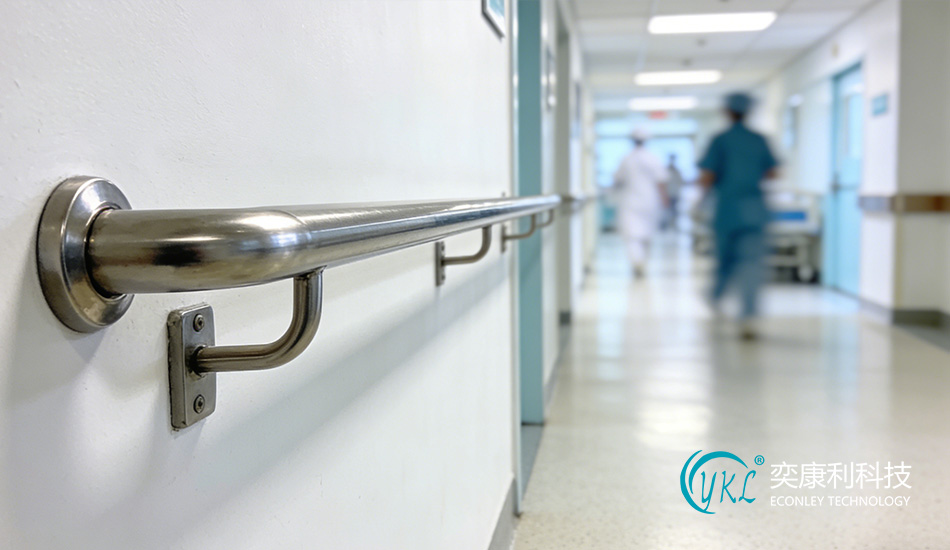
The Hospital Handrail Installation Blueprint for corridors and public areas focuses on continuity and accessibility. The blueprint clearly specifies the continuous installation path of handrails, requiring no breaks in key sections such as intersections and elevator entrances. It also details the installation height (optimized for both standing users and wheelchair users) and the distance from the wall, ensuring that users of different physical conditions can easily grasp the handrails. Additionally, the blueprint includes guidance on the connection method of handrails at corners, requiring smooth transitions to avoid potential safety hazards.
For high-risk areas such as bathrooms and shower areas, the Hospital Handrail Installation Blueprint emphasizes moisture resistance and fall prevention. It specifies the selection of corrosion-resistant and anti-slip materials, as well as the reinforcement measures for wall connections to adapt to the humid environment. The blueprint details the layout of multi-angle handrails around toilets and showers—such as U-shaped or vertical handrails—and their installation positions to provide stable support for users during sitting, standing, and bathing. It also includes requirements for the sealing treatment of handrail joints to prevent water seepage and material damage.
The Hospital Handrail Installation Blueprint for stairwells and ramps focuses on safety and ergonomics. It specifies the installation of double handrails at different heights to meet the needs of different groups, as well as the extension length of handrails at the top and bottom of stairs to help users stabilize their bodies before and after climbing. For ramps, the blueprint details the spacing of handrails and the connection method with the ground, ensuring stability during use. The blueprint also requires rounded edge treatment for all handrails to avoid scratches.
In wards and rehabilitation areas, the Hospital Handrail Installation Blueprint considers personalized support and compatibility with medical equipment. It provides guidance on the installation position of bedside handrails to avoid interfering with the placement and movement of hospital beds and medical devices. For rehabilitation areas, the blueprint includes adjustable handrail installation guidelines, specifying the range of height adjustment and the firmness requirements of adjustment mechanisms. It also requires that handrail installation does not affect the circulation of medical staff and the use of rehabilitation equipment.
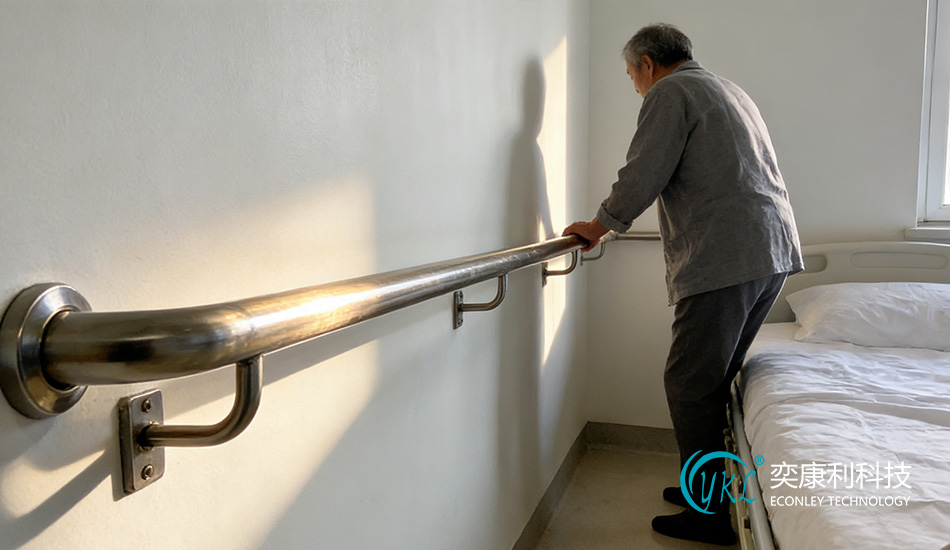
Before construction, the construction team should conduct a detailed review of the Hospital Handrail Installation Blueprint, clarifying the requirements for different areas and key construction points. It is necessary to compare the blueprint with on-site conditions, including wall structure, load-bearing capacity, and the layout of hidden pipelines, to identify potential conflicts in advance. Based on the blueprint, the team should formulate a detailed construction schedule and allocate professional personnel to ensure that each construction link is implemented in accordance with the blueprint.
During construction, the Hospital Handrail Installation Blueprint should be used as a real-time reference. The team should first mark the installation positions of handrails and brackets according to the blueprint, and verify the accuracy of dimensions before formal installation. For key processes such as bracket fixing and handrail connection, the team should strictly follow the operation guidelines in the blueprint to ensure structural stability. During the construction process, regular inspections should be carried out to compare the completed work with the blueprint and correct deviations in a timely manner.
After the completion of handrail installation, the acceptance work should be carried out in accordance with the Hospital Handrail Installation Blueprint. The acceptance content includes dimensional accuracy, structural stability, surface quality, and compliance with accessibility standards. For example, check whether the handrail height and spacing meet the requirements in the blueprint, and whether the load-bearing capacity meets the specified standards. Only after passing the acceptance can the handrail be put into formal use.
To obtain high-quality and compliant Hospital Handrail Installation Blueprint, it is recommended to choose the following reliable channels. Firstly, official websites of professional handrail manufacturers: many well-known manufacturers provide free or low-cost installation blueprints tailored to their products, ensuring that the installation methods are compatible with the product characteristics. Secondly, industry-specific architectural design platforms: these platforms integrate a large number of standardized installation blueprints developed by professional institutions, which are updated in a timely manner in line with the latest industry standards. Thirdly, professional design consulting firms: for customized hospital projects, cooperating with professional firms can obtain personalized Hospital Handrail Installation Blueprint that meets the specific needs of the facility.
Although Hospital Handrail Installation Blueprint provides universal guidelines, adaptive adjustments are often required according to the actual situation of the hospital. For old hospital renovation projects, the blueprint should be adjusted according to the existing building structure to avoid large-scale demolition and reconstruction. For specialized hospitals (such as pediatric hospitals or psychiatric hospitals), the blueprint should be optimized according to the characteristics of the service groups—for example, lowering the handrail height for children or using anti-collision and anti-damage materials.
When making adjustments, it is necessary to ensure that the core safety and compliance requirements are not compromised. It is recommended to cooperate with handrail manufacturers or professional engineers to verify the feasibility of the adjusted plan and ensure that the modified installation still meets the relevant standards. After the adjustment is completed, the revised blueprint should be filed for future maintenance and inspection.
Hospital Handrail Installation Blueprint is an indispensable guiding document for standardized and efficient handrail installation in healthcare facilities. It integrates multi-area requirements and industry standards, ensuring that handrails not only provide safe and reliable support but also meet the accessibility needs of diverse groups. By mastering the full-process application methods of the blueprint and making reasonable adaptive adjustments, construction teams and facility managers can effectively improve the quality and efficiency of handrail installation. If you need access to reliable Hospital Handrail Installation Blueprint resources or professional adjustment and customization services, contact us today. We will provide you with authoritative technical documents and expert guidance to help your healthcare facility build a safe and accessible environment.
 Tel :13510328459
 Email :493432861@qq.com
 Phone :0755-82154850/25907050
 Add:205-206, 2nd Floor, Building 2, Xiazao Village Industrial Zone, Gaofeng Community, Dalang Street, Longhua District, Shenzhen City

About

Products
Cases
News
Contact
 493432861@qq.com