Service Hotline:13510328459
 205-206, 2nd Floor, Building 2, Xiazao Village Industrial Zone, Gaofeng Community, Dalang Street, Longhua District, Shenzhen City
Service Hotline:13510328459
205-206, 2nd Floor, Building 2, Xiazao Village Industrial Zone, Gaofeng Community, Dalang Street, Longhua District, Shenzhen City



Time:2026-01-13 Preview:
Nursing homes serve as a critical haven for elderly residents, many of whom face mobility challenges such as limited balance, muscle weakness, or partial disability. Ensuring their safety and independence within these facilities is paramount, and the Dual-Level Nursing Home Handrail has emerged as a game-changing solution in this regard. Unlike traditional single-level handrails, this specialized design features two parallel rails at different heights, catering to the diverse physical needs of elderly residents—from semi-independent seniors requiring minimal support to fully dependent individuals relying on steady assistance. Dual-Level Nursing Home Handrail not only effectively reduces fall risks but also upholds the dignity of residents by enabling greater self-reliance. This article explores the core value, scenario-specific applications, human-centered design elements, compliance standards, and selection strategies of Dual-Level Nursing Home Handrail, providing comprehensive guidance for nursing home administrators and facility managers.
The primary value of Dual-Level Nursing Home Handrail lies in its ability to accommodate the varied mobility needs of elderly residents. The upper rail is designed for residents with relatively stable mobility, providing support for balance during walking, while the lower rail caters to those with limited strength or who use wheelchairs, offering a reliable grip point at a more accessible height. This dual-design eliminates the one-size-fits-all limitation of traditional handrails, ensuring that every resident—regardless of their physical condition—can find a safe and comfortable support option. By reducing the need for constant caregiver assistance, Dual-Level Nursing Home Handrail empowers residents to move independently, fostering a sense of self-worth and reducing feelings of helplessness.
Another key value is the significant reduction of fall risks, which are the leading safety concern in nursing homes. Elderly residents often struggle with sudden loss of balance or leg weakness, and the continuous support provided by Dual-Level Nursing Home Handrail offers a critical safety net. The two rails create a more stable support system, allowing residents to switch between grips as needed and preventing slips in high-risk areas. Additionally, this design enhances the overall accessibility of the nursing home, aligning with global standards for elderly care facilities and reflecting the institution’s commitment to providing high-quality, inclusive care.
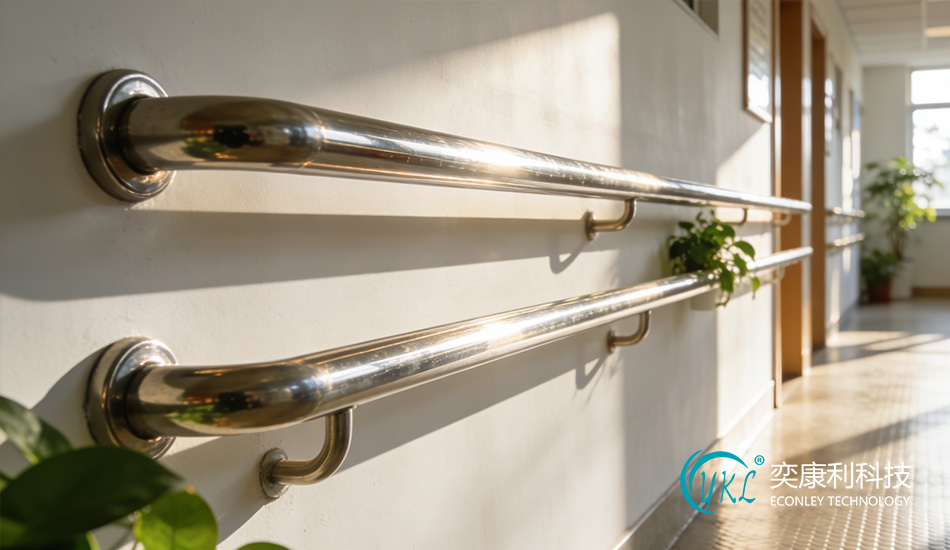
Corridors are the most frequently used spaces in nursing homes, and installing Dual-Level Nursing Home Handrail along these walkways is essential for maintaining resident safety. The continuous dual rails run the entire length of the corridor, providing consistent support for residents moving between rooms, dining areas, and activity spaces. The upper rail helps semi-independent seniors maintain an upright posture, while the lower rail offers security for those who need to lean forward or use a walker. This design also facilitates caregiver assistance, allowing staff to support residents from either height as needed. In addition, the rails can be integrated with tactile indicators at key points—such as intersections or room entrances—to assist visually impaired residents.
Bathrooms and shower areas are high-risk zones for falls due to wet surfaces, making Dual-Level Nursing Home Handrail an indispensable safety feature. Around toilets, the dual-level design provides multi-angle support: the upper rail aids in sitting down and standing up, while the lower rail offers stability during transfers. In shower areas, the two rails are installed along the walls and near shower seats, allowing residents to grip securely while moving in and out of the shower or adjusting their position. The rails are made of corrosion-resistant and slip-resistant materials, ensuring durability even in humid environments and with frequent disinfection—critical for maintaining hygiene in nursing home settings.
For nursing homes with multiple floors, Dual-Level Nursing Home Handrail is essential for stairwells and ramps. Stairwells present unique challenges for elderly residents, as ascending and descending requires greater balance and leg strength. The dual rails provide support at different heights, allowing residents to choose the grip that best suits their physical condition. The rails extend beyond the start and end of the stairwell, enabling residents to grasp them before stepping onto the stairs, reducing the risk of missteps. On ramps, the dual-level design offers continuous support for residents using wheelchairs or walkers, ensuring stability on inclined surfaces.
Installing Dual-Level Nursing Home Handrail in resident bedrooms enhances safety and independence in private spaces. Near beds, the dual rails assist residents in getting in and out of bed—a critical daily activity that often poses a fall risk. The upper rail can be positioned at shoulder height for sitting up, while the lower rail provides support for swinging legs over the bed. In private bathrooms attached to bedrooms, the dual-level design ensures consistent safety standards, allowing residents to maintain their privacy while accessing necessary support. The design of these handrails is often integrated with the room’s decor, avoiding a clinical appearance and creating a more homely atmosphere.
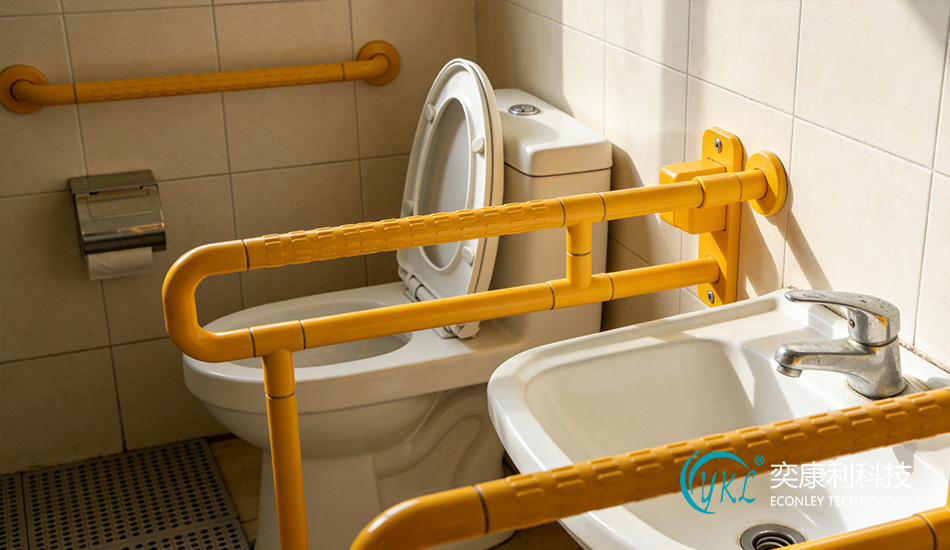
High-quality Dual-Level Nursing Home Handrail incorporates thoughtful human-centered design elements to enhance comfort and usability. The rail surfaces are treated with a soft, non-slip texture that is gentle on the hands, reducing discomfort during prolonged use and ensuring a secure grip even for residents with weak hand strength. The edges of the rails are rounded to prevent scratches or injuries, a critical detail for residents with fragile skin.
The height difference between the two rails is carefully calibrated to meet ergonomic principles, ensuring that both tall and short residents, as well as wheelchair users, can access the rails comfortably. Additionally, the handrails are installed with sufficient distance from the wall to accommodate different hand sizes and allow for easy grip. Some advanced models feature color-coded rails to help residents with cognitive impairments distinguish between the two levels, further enhancing usability. The connection points of the rails are concealed, preventing dust accumulation and facilitating easy cleaning and disinfection—essential for maintaining a hygienic environment in nursing homes.
Dual-Level Nursing Home Handrail must strictly comply with international and local standards for elderly care facilities to ensure safety and accessibility. Key standards include the ADA (Americans with Disabilities Act) Standards, ISO 14122 (Barrier-Free Design for Buildings), and regional nursing home safety regulations. These standards govern critical aspects such as the stability of the handrails, load-bearing capacity, and the appropriate height range for both rails.
Compliance also extends to material safety, requiring that the handrails are made of non-toxic, corrosion-resistant, and easy-to-disinfect materials. This ensures that the handrails can withstand frequent cleaning with medical-grade disinfectants without degrading, maintaining their safety and durability over time. Nursing home administrators must verify that the Dual-Level Nursing Home Handrail they select meets these standards, as non-compliant products may pose safety risks and lead to regulatory issues.
When selecting Dual-Level Nursing Home Handrail, facility managers should prioritize three core criteria: usability, durability, and compliance. Firstly, choose a design that caters to the specific needs of the resident population—for example, if the facility has a high number of wheelchair users, ensure the lower rail is positioned at an accessible height. Secondly, select handrails made of high-quality, corrosion-resistant materials that can withstand heavy use and frequent disinfection. Finally, verify compliance with relevant standards and choose products from reputable manufacturers with experience in nursing home facilities.
Regular maintenance is essential to ensure the long-term safety and functionality of Dual-Level Nursing Home Handrail. Nursing homes should establish a routine inspection schedule to check for loose fasteners, wear and tear, or corrosion. The handrail surfaces should be cleaned and disinfected daily to prevent the spread of germs. Any damaged or unstable handrails should be repaired or replaced immediately to avoid safety hazards. Reputable manufacturers often provide detailed maintenance guidelines and after-sales support, helping facilities maintain the quality of their handrail systems.
Dual-Level Nursing Home Handrail is a critical investment in the safety, independence, and dignity of elderly residents. Its specialized dual-height design addresses the diverse mobility needs of nursing home populations, reducing fall risks and enhancing accessibility. By incorporating human-centered design elements and adhering to strict compliance standards, this handrail system significantly improves the quality of care in nursing homes. For nursing home administrators seeking to upgrade their facility’s safety infrastructure, selecting the right Dual-Level Nursing Home Handrail is a key step toward creating a secure and inclusive environment. If you need personalized recommendations for Dual-Level Nursing Home Handrail solutions tailored to your facility’s needs, contact us today. We will connect you with professional manufacturers and provide expert guidance to help you implement a high-quality safety system for your residents.
 Tel :13510328459
 Email :493432861@qq.com
 Phone :0755-82154850/25907050
 Add:205-206, 2nd Floor, Building 2, Xiazao Village Industrial Zone, Gaofeng Community, Dalang Street, Longhua District, Shenzhen City

About

Products
Cases
News
Contact
 493432861@qq.com