Service Hotline:13510328459
 205-206, 2nd Floor, Building 2, Xiazao Village Industrial Zone, Gaofeng Community, Dalang Street, Longhua District, Shenzhen City
Service Hotline:13510328459
205-206, 2nd Floor, Building 2, Xiazao Village Industrial Zone, Gaofeng Community, Dalang Street, Longhua District, Shenzhen City



Time:2026-01-12 Preview:
Hospitals serve as critical spaces for medical treatment and rehabilitation, where the safety and accessibility of facilities directly affect the medical experience of patients, especially those with disabilities, the elderly, and post-operative individuals with limited mobility. Hospital Accessible Handrail, as a core component of the hospital’s barrier-free system, is not only a basic safety safeguard but also a key carrier of humanistic medical care. Unlike ordinary building handrails or commercial space handrails, Hospital Accessible Handrail is designed to adapt to the complex medical environment, diverse patient needs, and rigorous hygiene requirements. It integrates functional safety, scenario adaptability, and humanistic care, playing an indispensable role in optimizing medical workflows and protecting the independent mobility rights of vulnerable groups. This article explores the core value, full-scenario adaptation solutions, humanistic design highlights, and procurement criteria of Hospital Accessible Handrail, providing practical guidance for hospital administrators, facility managers, and design teams.
The primary value of Hospital Accessible Handrail lies in targeted fall prevention and mobility support. Patients in hospitals often face physical weakness, balance disorders, or temporary mobility impairments due to illness or surgery, making them highly prone to falls in areas such as corridors, bathrooms, and stairwells. Hospital Accessible Handrail provides stable, continuous grip points, helping patients maintain body balance during standing, walking, and transferring, effectively reducing fall risks and avoiding secondary injuries. For patients with disabilities (such as paraplegia, hemiplegia, or visual impairments), the handrail serves as a reliable navigation and support tool, enabling them to move independently within the hospital and reducing dependence on caregivers.
Another key value is optimizing medical workflows and improving care efficiency. Hospital Accessible Handrail is designed to coordinate with medical workflows—for example, handrails installed beside hospital beds and operating tables assist medical staff in transferring patients, reducing the physical burden of caregivers and improving the efficiency of medical operations. Additionally, a well-designed Hospital Accessible Handrail system enhances the overall accessibility of the hospital, aligning with international medical service standards and reflecting the hospital’s commitment to inclusive medical care, which helps improve patient satisfaction and the hospital’s brand image.
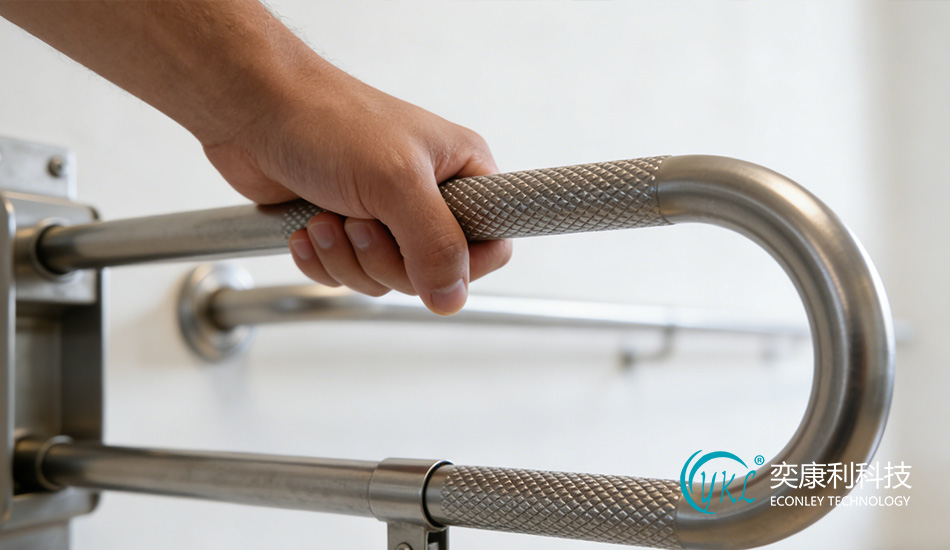
In inpatient wards, Hospital Accessible Handrail is installed beside beds, along ward corridors, and near ward entrances. Bedside handrails are designed to match the height of hospital beds, helping patients transition from lying to sitting and standing positions easily. The handrail surface is smooth and easy to disinfect, meeting the hygiene requirements of ward environments. In operating rooms and recovery rooms, Hospital Accessible Handrail is made of corrosion-resistant, sterile materials (such as 316L stainless steel) to avoid bacterial contamination. The installation position is carefully planned to avoid interfering with the placement of medical equipment and the movement of surgical staff, while providing stable support for medical staff during patient transfer.
Bathrooms and toilets are high-risk areas for falls in hospitals, requiring specialized Hospital Accessible Handrail configurations. Around toilets, U-shaped or L-shaped handrails are installed to provide multi-angle support for patients when sitting down and standing up. Vertical handrails are added beside showers and sinks to prevent slips on wet surfaces. These handrails are designed with anti-slip textures and moisture-resistant materials to withstand the humid environment and frequent disinfection. Some advanced handrails are also equipped with anti-slip mats at the bottom to further enhance stability.
In hospital rehabilitation areas, Hospital Accessible Handrail adopts adjustable designs to meet the needs of patients in different recovery stages. Adjustable-height handrails are used for walking training, allowing medical staff to adjust the height according to the patient’s physical condition. Handrails with adjustable angles are installed in balance training areas to help patients gradually restore motor function. The handrail surface is soft and non-slip, reducing hand fatigue during long-term training and protecting patients’ delicate skin during the recovery period.
In public corridors, Hospital Accessible Handrail runs continuously along the walls, extending through the entire passage to form a seamless support system. For visually impaired patients, the handrails are designed with high-contrast colors (such as bright yellow against light gray walls) and tactile prompts (such as raised dots and strips) at key positions such as turns, elevators, and nurse stations, coordinating with ground tactile paving to form dual visual and tactile guidance. In stairwells, double parallel handrails are installed at different heights to adapt to the needs of standing patients and wheelchair users, with rounded edges to avoid scratches.
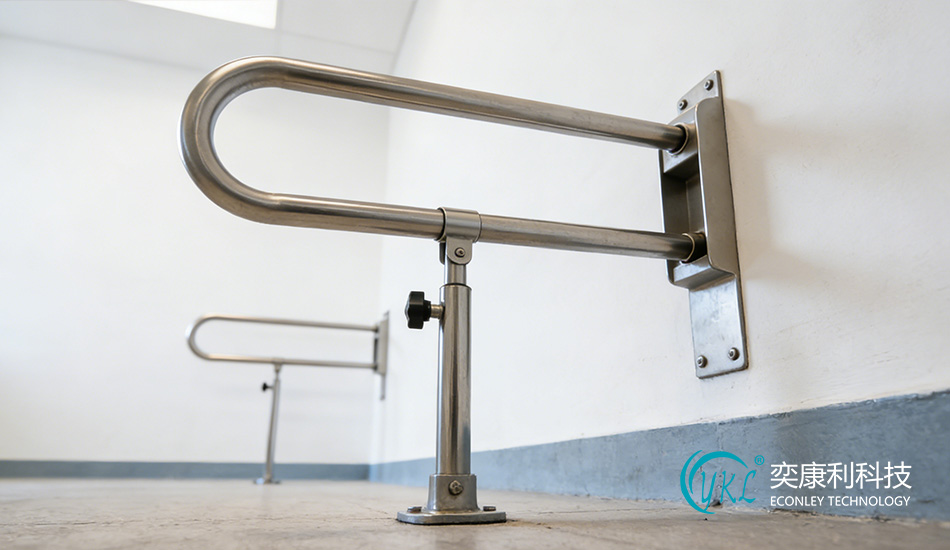
High-quality Hospital Accessible Handrail integrates thoughtful humanistic design elements to enhance the comfort and usability of vulnerable groups. The grip diameter is optimized to fit the average size of adults’ and children’s hands, reducing hand fatigue during prolonged use. For patients with weak grip strength (such as those with arthritis or stroke sequelae), the handrail surface is treated with a soft, rubberized texture to ensure a firm grip even with limited strength.
For pediatric patients, Hospital Accessible Handrail adopts soft colors and rounded shapes, reducing children’s fear of the medical environment. Some handrails are printed with simple, friendly cartoon patterns to attract children’s attention and guide them to use the handrails correctly. Additionally, the installation of handrails avoids sharp corners and protrusions, eliminating potential safety hazards for patients with limited mobility. The connection points of handrails are concealed to avoid dust accumulation and facilitate daily cleaning and disinfection.
Professional Hospital Accessible Handrail strictly complies with international and national medical facility standards, such as the ADA (Americans with Disabilities Act) Standards, ISO 14122 (Barrier-Free Design for Buildings), and local medical building safety codes. These standards regulate key indicators such as the load-bearing capacity, anti-slip performance, installation height, and spacing of handrails, ensuring that the handrails meet the rigorous safety and accessibility requirements of hospitals.
Regular maintenance is essential to ensure the long-term safety and usability of Hospital Accessible Handrail. Hospitals should establish a routine inspection system to check for loose fasteners, wear and tear, or corrosion of handrails. The handrail surface should be cleaned and disinfected regularly using medical-grade disinfectants that do not damage the material. Reputable suppliers of Hospital Accessible Handrail provide detailed maintenance guidelines and after-sales support, helping hospitals maintain the functionality and safety of handrails over time.
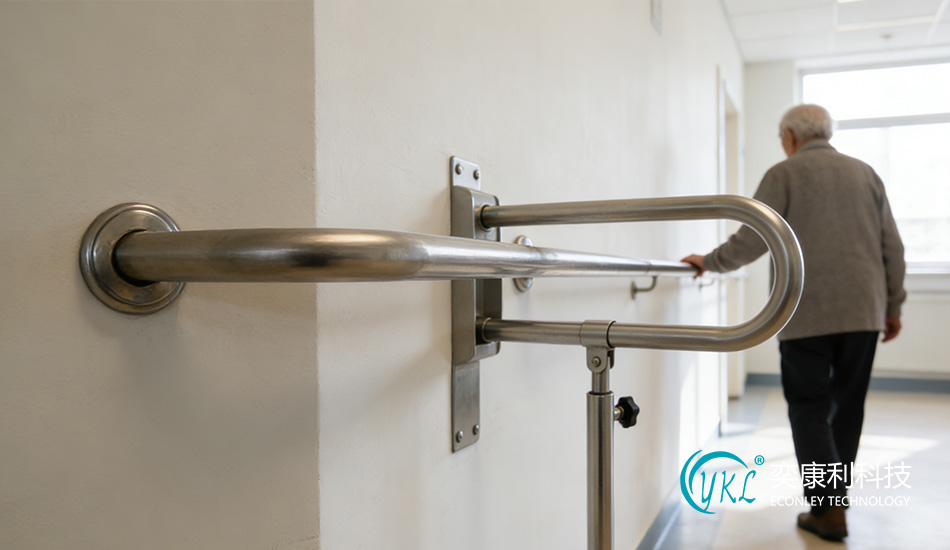
When procuring Hospital Accessible Handrail, hospital teams should focus on three core criteria: safety performance, scenario adaptability, and hygiene compliance. Firstly, prioritize products with reliable load-bearing capacity and anti-slip performance, selecting materials that are non-toxic, corrosion-resistant, and easy to disinfect to meet the hygiene requirements of medical environments.
Secondly, match the handrail type to the specific scenario—for example, sterile handrails for operating rooms, adjustable handrails for rehabilitation areas, and multi-angle handrails for bathrooms. Consider the diverse needs of patients and select handrails that can adapt to different disability types and physical conditions. Finally, choose suppliers with rich experience in medical facility projects, who can provide personalized design recommendations based on the hospital’s layout and workflow, as well as professional installation and after-sales services.
Hospital Accessible Handrail is a critical facility for building an inclusive, safe, and efficient medical environment. Its full-scenario adaptation, humanistic design, and strict compliance not only protect the safety and independent mobility of patients but also optimize medical workflows and improve the quality of medical services. By selecting high-quality Hospital Accessible Handrail solutions, hospitals can better fulfill their commitment to inclusive medical care and create a more caring and accessible environment for patients, caregivers, and medical staff. If you are a hospital administrator or facility manager seeking professional Hospital Accessible Handrail solutions, contact us today. We will provide personalized design plans, complete compliance documents, and professional technical support, helping you build a high-standard barrier-free safety system for your medical facility.
 Tel :13510328459
 Email :493432861@qq.com
 Phone :0755-82154850/25907050
 Add:205-206, 2nd Floor, Building 2, Xiazao Village Industrial Zone, Gaofeng Community, Dalang Street, Longhua District, Shenzhen City

About

Products
Cases
News
Contact
 493432861@qq.com