Service Hotline:13510328459
 205-206, 2nd Floor, Building 2, Xiazao Village Industrial Zone, Gaofeng Community, Dalang Street, Longhua District, Shenzhen City
Service Hotline:13510328459
205-206, 2nd Floor, Building 2, Xiazao Village Industrial Zone, Gaofeng Community, Dalang Street, Longhua District, Shenzhen City



Time:2026-01-12 Preview:
In the global healthcare facility design field, medical handrails are no longer just functional safety components—they have become an integral part of the overall architectural aesthetic and humanized care system. Foreign Medical Handrail Design Pictures serve as a bridge for spreading international advanced design concepts, vividly presenting how global designers balance safety compliance, infection control, and environmental coordination in handrail creation. Unlike ordinary product photos, these design pictures focus on scenario integration, humanized details, and trend expression, providing valuable visual references for domestic healthcare institutions, designers, and procurement teams. This article explores the core reference value, global design style characteristics, scenario-specific presentation value, and selection criteria of Foreign Medical Handrail Design Pictures, helping relevant professionals grasp international trends and improve the quality of medical space design.
The primary value of Foreign Medical Handrail Design Pictures lies in their ability to intuitively display international advanced design trends. With the deepening of global healthcare integration, concepts such as "universal design" and "infection control-oriented design" have been widely practiced in foreign medical facilities. These design pictures clearly show how foreign handrails integrate these concepts—for example, the combination of anti-corrosion materials and minimalist shapes, or the hidden integration of intelligent sensing functions into the handrail design. For domestic designers, they can directly learn from these visual cases to avoid reinventing the wheel and accelerate the localization application of advanced design concepts.
Another key value is facilitating cross-border communication and decision-making. When healthcare institutions plan to introduce international medical facility standards or carry out high-end medical space renovation, Foreign Medical Handrail Design Pictures provide a unified visual language. They help decision-makers quickly understand the design effects of handrails in international top-tier hospitals, compare the advantages and disadvantages of different design schemes, and make more scientific procurement and design decisions. At the same time, these pictures also help communicate design requirements between designers and construction teams, ensuring that the final implementation effect is consistent with international advanced standards.
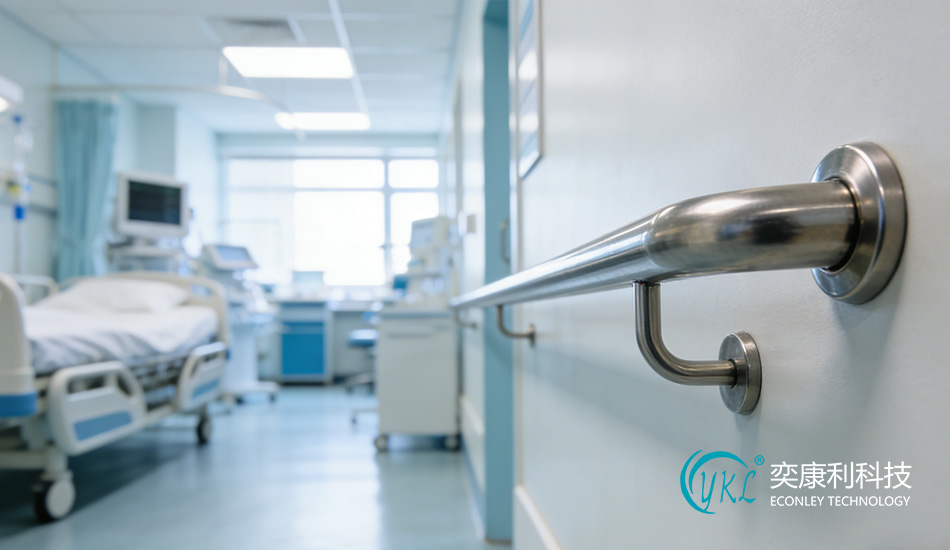
Foreign Medical Handrail Design Pictures comprehensively present the diverse design styles of different regions, reflecting the differences in medical care concepts and architectural aesthetics. European and American designs, as shown in many Foreign Medical Handrail Design Pictures, focus on modularization and durability. Common elements include anodized aluminum handrails with smooth surfaces and wire mesh infill panels, which not only meet the strict anti-corrosion and easy-to-clean requirements of medical environments but also present a concise and modern architectural style. These pictures often highlight the seamless connection between handrails and walls, as well as the rounded edge design that complies with ADA standards, embodying a rigorous attitude towards safety details.
Japanese medical handrail design pictures, on the other hand, emphasize warmth and "ageless design". The handrails are often made of wood-grain composite materials or soft-toned powder-coated metals, avoiding the cold feeling of traditional medical facilities. Many pictures show handrails integrated with functional components such as storage shelves or lighting, realizing the integration of functionality and aesthetics. This design concept, which reduces the psychological pressure of patients through visual warmth, is fully displayed in the design pictures. In addition, some foreign design pictures also show the trend of intelligent integration, such as handrails with built-in fall alarm sensors, whose design perfectly hides electronic components while ensuring the integrity of the gripping surface.
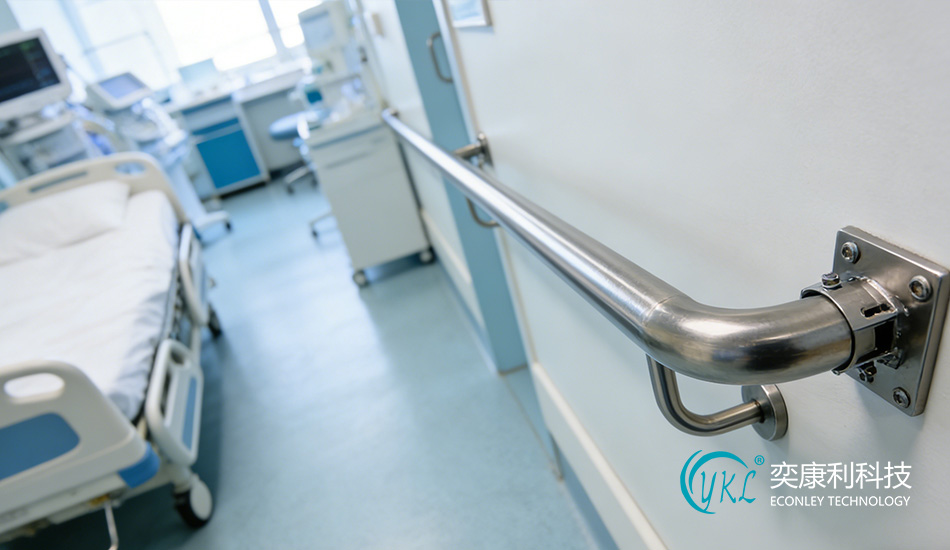
Foreign Medical Handrail Design Pictures have targeted presentation value for different functional areas of medical facilities, providing precise design references for scenario-specific needs. In operating rooms and intensive care units, the design pictures focus on the compatibility of handrails with sterile environments. They show handrails made of corrosion-resistant stainless steel or aluminum alloy with smooth surfaces that do not harbor bacteria, and the installation positions avoid interfering with medical equipment placement and staff movement.
In obstetric and gynecological wards, design pictures present specially designed handrails with padded vinyl surfaces, which provide comfortable support for pregnant women during labor and recovery. The pictures also show the reasonable layout of vertical and horizontal handrails around delivery beds, helping patients adjust their positions independently. In rehabilitation areas, Foreign Medical Handrail Design Pictures display adjustable-height handrail systems, which can be adapted to different stages of patients' physical recovery. The pictures clearly show the connection details of adjustable components, ensuring both functionality and safety. In public areas such as corridors and elevators, the design pictures highlight the guiding role of handrails, with color-coded designs or integrated lighting functions to help visually impaired patients navigate.
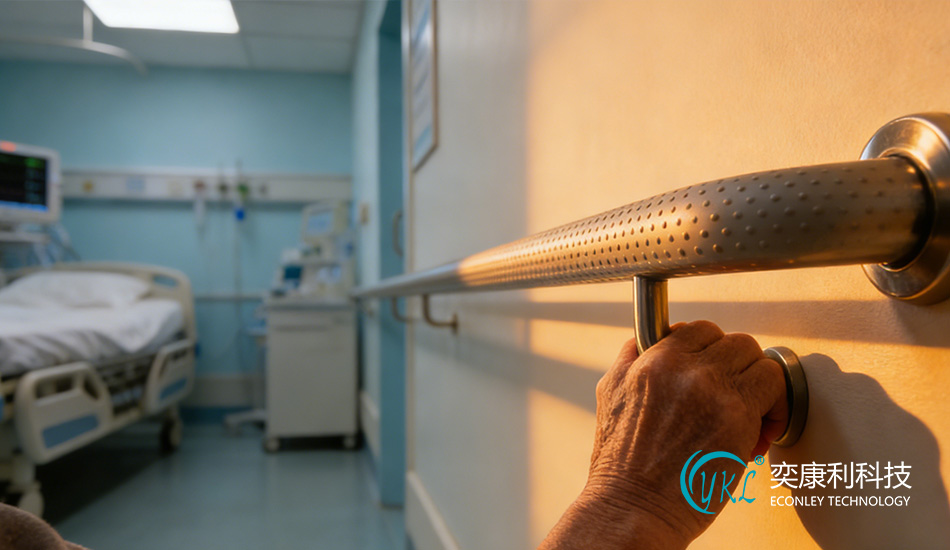
High-quality Foreign Medical Handrail Design Pictures play an important empowering role in the entire medical space design process. In the early design stage, designers can use these pictures to inspire creativity, extract elements that conform to the project's positioning, and integrate them into the overall design scheme. For example, referencing the modular handrail design in European design pictures to improve the flexibility of space use.
During the design review stage, the pictures serve as a visual tool to demonstrate the design effect to the client, making it easier for the client to understand the design concept and make adjustments. In the construction implementation stage, the detailed presentation in the design pictures (such as the connection method of handrails and the coordination with surrounding decorations) can guide the construction team to carry out precise construction, reducing errors and rework. After the project is completed, these design pictures can also be used as important materials for project cases, helping to promote the spread of excellent design practices.
When selecting Foreign Medical Handrail Design Pictures for reference or application, relevant professionals should focus on three core criteria: authenticity, detail completeness, and trend representativeness. Firstly, the pictures must be authentic, reflecting the real installation effect of handrails in actual medical facilities, avoiding excessive retouching that deviates from reality.
Secondly, the pictures should have complete details, clearly showing the handrail's material texture, connection details, and integration with the surrounding environment. These details are crucial for understanding the design's rationality and feasibility. Finally, the pictures should be representative of trends, selecting works that reflect the latest international design concepts (such as intelligent, low-carbon, and universal design) to ensure the reference value of the pictures. It is also recommended to select design pictures from authoritative design platforms or well-known medical facility projects to ensure the professionalism and reliability of the design.
Foreign Medical Handrail Design Pictures are not only a display of design aesthetics but also an important carrier of advanced medical safety concepts. They provide a convenient way for domestic medical institutions and designers to learn from international experience, helping to improve the level of humanized design and safety protection of domestic medical facilities. By in-depth interpreting and learning from these design pictures, we can better integrate global advanced concepts with local needs, creating a safer, more comfortable, and more humane medical environment. If you need a collection of high-quality Foreign Medical Handrail Design Pictures or professional design consultation services, contact us today. We will provide you with targeted resources and technical support to help you achieve excellence in medical space design.
 Tel :13510328459
 Email :493432861@qq.com
 Phone :0755-82154850/25907050
 Add:205-206, 2nd Floor, Building 2, Xiazao Village Industrial Zone, Gaofeng Community, Dalang Street, Longhua District, Shenzhen City

About

Products
Cases
News
Contact
 493432861@qq.com