Service Hotline:13510328459
 205-206, 2nd Floor, Building 2, Xiazao Village Industrial Zone, Gaofeng Community, Dalang Street, Longhua District, Shenzhen City
Service Hotline:13510328459
205-206, 2nd Floor, Building 2, Xiazao Village Industrial Zone, Gaofeng Community, Dalang Street, Longhua District, Shenzhen City



Time:2026-01-08 Preview:
Corridors serve as the core traffic arteries in public spaces such as hospitals, shopping malls, schools, and office buildings, where pedestrian flow is dense and collision risks are inherent. Corridor Anti-Collision Handrail, as a critical safety facility, is no longer limited to basic collision protection—it has evolved into an important element of space decoration, with Corridor Anti-Collision Handrail Decoration Effect becoming a key consideration for space designers and facility managers. Unlike traditional anti-collision handrails that prioritize only functionality and ignore aesthetics, modern Corridor Anti-Collision Handrail integrates scientific anti-collision structures with diverse decorative designs, realizing the dual value of safety protection and aesthetic enhancement. This article explores the core integration value, style-adaptive decorative effects, material-color design strategies, scenario-specific adaptations, and procurement criteria of Corridor Anti-Collision Handrail Decoration Effect, providing practical guidance for designers, facility administrators, and procurement teams.
The primary value of Corridor Anti-Collision Handrail Decoration Effect lies in balancing safety protection and space aesthetic appeal. In high-traffic public corridors, the anti-collision handrail’s core function is to absorb impact force, reducing injuries caused by collisions between pedestrians or between pedestrians and walls. On this basis, excellent Corridor Anti-Collision Handrail Decoration Effect can integrate the handrail into the overall space style, avoiding the sense of abruptness brought by traditional functional handrails, and enhancing the overall beauty and comfort of the corridor.
Another key value is enhancing space atmosphere and user experience. Different decorative effects of corridor anti-collision handrails can convey different emotional cues: warm and soft decorative styles in hospital corridors can alleviate patients’ anxiety; fashionable and dynamic decorative effects in shopping mall corridors can enhance the shopping experience; simple and elegant designs in office building corridors can improve work efficiency. For public facilities, outstanding Corridor Anti-Collision Handrail Decoration Effect also reflects the facility’s attention to detail and humanized service, enhancing the brand image and user recognition.
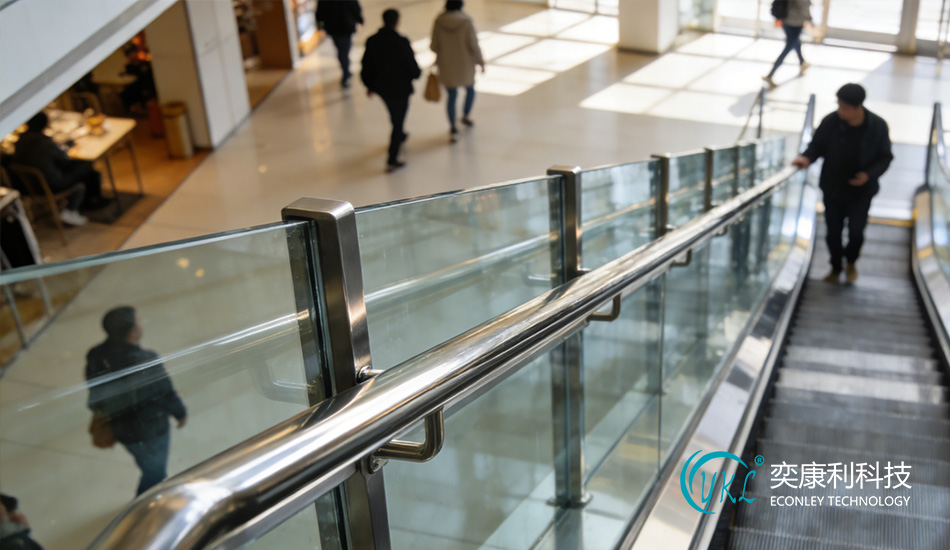
Corridor Anti-Collision Handrail Decoration Effect can be customized to match different space styles, realizing seamless integration with the environment. For minimalist modern spaces (such as high-end office buildings and new commercial complexes), the anti-collision handrail adopts a sleek and simple design—flat handrail surfaces, hidden connection points, and monochromatic color schemes (such as matte black, white, or gray). The decorative effect is concise and generous, highlighting the sense of space hierarchy and modernity.
For warm and humanistic spaces (such as hospitals, kindergartens, and nursing homes), the handrail uses soft curved lines and warm color tones (such as light wood color, beige, or pastel blue). The surface can be designed with subtle texture patterns (such as wood grain or fabric texture) to enhance the sense of warmth. For industrial-style spaces (such as creative parks and characteristic shopping malls), the anti-collision handrail adopts metal materials (such as brushed stainless steel) with exposed connection structures, and the decorative effect is rough and individual, echoing the industrial style’s raw and original characteristics. For traditional cultural spaces (such as cultural centers and ancient buildings), the handrail integrates traditional decorative elements (such as carved patterns, retro colors), and the decorative effect is elegant and solemn, inheriting cultural connotations.
The selection of materials and colors is crucial to shaping Corridor Anti-Collision Handrail Decoration Effect. In terms of materials, diverse options are available to meet different decorative needs: wood-grain PVC or solid wood materials can create a natural and warm decorative effect, suitable for spaces that pursue comfort; stainless steel or aluminum alloy materials can present a modern and fashionable sense, suitable for high-end commercial and office spaces; soft rubber materials with texture can bring a soft and safe decorative experience, suitable for children’s spaces and elderly care facilities.
In color matching, the handrail color should coordinate with the corridor’s wall, floor, and ceiling colors. Complementary color matching (such as blue handrails with orange wall decorations) can create a lively and dynamic decorative effect, suitable for lively spaces such as shopping malls and children’s playgrounds; similar color matching (such as light brown handrails with beige walls) can achieve a harmonious and unified decorative effect, suitable for quiet and elegant spaces such as libraries and hospitals. For spaces that need to highlight the handrail as a decorative focal point, bright and contrasting colors can be used, making the handrail a visual highlight that enriches the space’s decorative level.
Corridor Anti-Collision Handrail Decoration Effect needs to be adjusted according to the functional characteristics of different scenarios, ensuring that aesthetics and functionality coexist. In hospital corridors, the decorative effect should prioritize comfort and ease of cleaning—smooth surfaces, non-toxic and odorless materials, and warm and soft colors. The handrail should not have excessive decorative details to avoid dust accumulation and facilitate daily disinfection.
In shopping mall corridors with high pedestrian flow and frequent collisions, the decorative effect should balance durability and aesthetics—wear-resistant materials (such as scratch-resistant stainless steel) and easy-to-clean surfaces. The color can be bright to attract customers’ attention. In school corridors, the decorative effect should be safe and lively—rounded edges, non-toxic materials, and colorful designs that conform to children’s aesthetic preferences. In long corridors (such as subway stations and airport corridors), the handrail can adopt segmented color design or decorative pattern changes to break the monotony, and the decorative effect can guide pedestrian flow and enhance the sense of direction.
When procuring corridor anti-collision handrails, it is necessary to focus on three core criteria related to decoration effect: style matching, material quality, and customization capability. Firstly, clarify the overall style of the corridor space, and select handrails whose decorative effect can seamlessly integrate with the space, avoiding style conflicts.
Secondly, pay attention to the quality of materials and craftsmanship—high-quality materials can ensure the durability of the decorative effect, and exquisite craftsmanship (such as smooth surface treatment, firm connection) can enhance the overall aesthetic feeling. Finally, choose suppliers with strong customization capabilities, who can tailor Corridor Anti-Collision Handrail Decoration Effect according to the space’s specific needs (such as custom colors, patterns, and shapes). Professional suppliers should also provide design renderings in advance, allowing buyers to preview the decorative effect before procurement.
Corridor Anti-Collision Handrail Decoration Effect is an important part of public space design, realizing the perfect combination of safety protection and aesthetic appeal. By selecting handrails with appropriate decorative effects that match the space style and functional needs, public facilities can create a more comfortable, safe, and attractive environment for users. If you are seeking high-quality corridor anti-collision handrails with excellent Corridor Anti-Collision Handrail Decoration Effect, contact us today. We will provide personalized design solutions, detailed decorative effect renderings, and professional technical support, helping you achieve the dual goal of safety and aesthetics in corridor spaces.
 Tel :13510328459
 Email :493432861@qq.com
 Phone :0755-82154850/25907050
 Add:205-206, 2nd Floor, Building 2, Xiazao Village Industrial Zone, Gaofeng Community, Dalang Street, Longhua District, Shenzhen City

About

Products
Cases
News
Contact
 493432861@qq.com