Service Hotline:13510328459
 205-206, 2nd Floor, Building 2, Xiazao Village Industrial Zone, Gaofeng Community, Dalang Street, Longhua District, Shenzhen City
Service Hotline:13510328459
205-206, 2nd Floor, Building 2, Xiazao Village Industrial Zone, Gaofeng Community, Dalang Street, Longhua District, Shenzhen City



Time:2026-01-05 Preview:
Special needs schools are committed to creating an inclusive learning environment where students with diverse disabilities—including physical impairments, cognitive disorders, sensory disabilities, and autism spectrum disorders—can fully participate in educational and social activities. For these students, navigating the campus and engaging in learning tasks often requires tailored support to overcome mobility and sensory barriers. Special Needs School Handrail, as a critical inclusive education facility, goes beyond basic safety protection to integrate learning-scenario adaptation and social integration support, designed to match the unique needs of students with different disabilities. Unlike ordinary school handrails or even nursing home handrails, Special Needs School Handrail focuses on facilitating students’ access to learning resources, participating in classroom interactions, and building confidence in social settings. This article explores the core empowering value, subject-specific scenario adaptation, disability-type targeted designs, and procurement criteria of Special Needs School Handrail, providing practical guidance for special needs school administrators and procurement teams.
The primary value of Special Needs School Handrail lies in safeguarding students’ safety while promoting their participation in learning activities. Students with physical disabilities (such as cerebral palsy or spinal cord injuries) often face challenges in moving between desks, labs, and activity areas; the handrail provides stable support to help them maintain balance, reducing the risk of falls and enabling them to focus on learning rather than mobility concerns. For students with cognitive disorders, the handrail serves as a predictable environmental cue, helping them establish a sense of security and stability in the campus environment.
Another key value is fostering students’ social integration and self-confidence. By enabling independent movement across the campus, Special Needs School Handrail allows students with disabilities to actively participate in group activities, such as dining in the cafeteria, participating in art classes, or joining outdoor games. This independence reduces their sense of isolation and helps them build positive relationships with peers. For special needs schools, equipping with professional Special Needs School Handrail also reflects the school’s commitment to inclusive education, aligning with international educational equity standards and enhancing the quality of special education services.
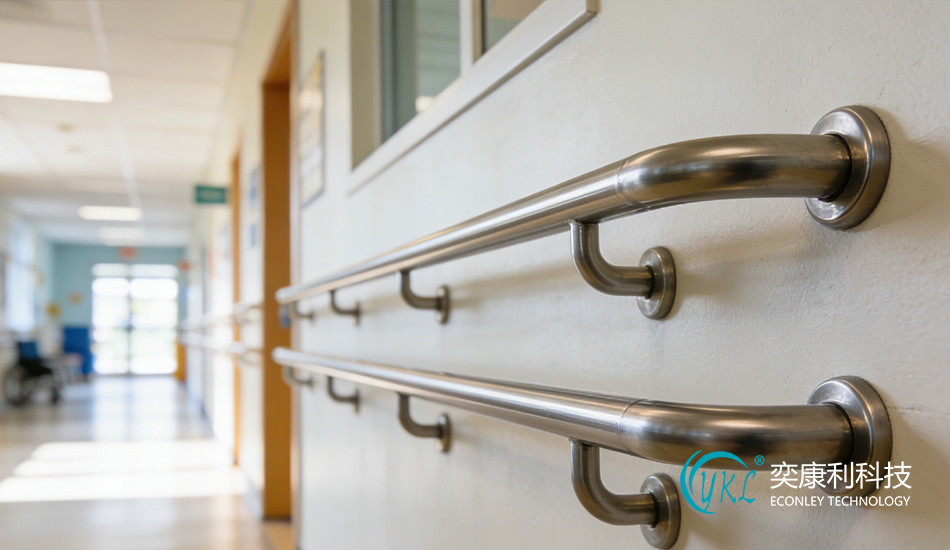
Special Needs School Handrail requires targeted adaptation to meet the needs of different subject classrooms and functional zones, ensuring students can fully engage in diverse learning activities. In science laboratories, where students may need to move between experiment stations with equipment, the handrail is installed along the edges of lab tables and walkways. It is designed with a non-slip, chemical-resistant surface to withstand contact with experimental materials, and the height is adjusted to allow students to grip comfortably while operating equipment.
In art and music classrooms, the handrail integrates sensory-friendly design elements: the surface is made of soft, low-stimulation materials to avoid overwhelming students with autism or sensory processing disorders. For music classrooms, handrails near instrument areas are designed to be vibration-dampening to reduce sound interference. In libraries and reading corners, the handrail is installed beside bookshelves at a lower height, with tactile markers to help visually impaired students locate different book sections. In cafeteria and playground rest areas, the handrail is designed with rest platforms at intervals, allowing students with limited stamina to take breaks during movement, supporting their participation in daily social activities.
Special Needs School Handrail features personalized designs to cater to the unique needs of students with different types of disabilities. For students with visual impairments, the handrail uses high-contrast color matching (e.g., bright orange against light gray walls) and integrates multi-level tactile prompts—raised dots for turning points, raised strips for stair landings, and braille labels for key areas (such as classroom numbers, restrooms). These features help students navigate the campus independently and safely.
For students with physical disabilities (such as hemiplegia or paraplegia), the handrail is designed with ergonomic grips and adjustable heights. Double parallel handrails are installed in corridors and staircases to accommodate the use of functional hands, and the grip surface is textured to ensure a firm hold even with weak grip strength. For students with autism spectrum disorders, the handrail adopts a simple, uniform design with no redundant decorations or bright colors that may cause sensory overload. The installation route is straight and consistent to help students establish predictable movement patterns. For students with hearing impairments, some advanced handrails are integrated with vibration prompts to signal important cues (such as class start, emergency evacuation) that they may not hear.
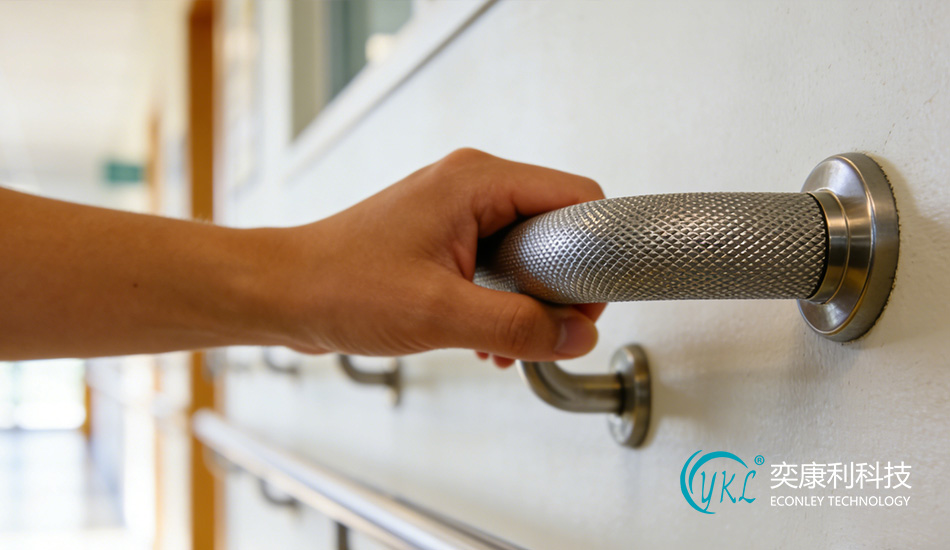
High-quality Special Needs School Handrail incorporates auxiliary design elements to support students’ social integration and emotional well-being. In common areas such as cafeterias and playgrounds, the handrail is designed with built-in rest bars at appropriate intervals, providing students with a place to rest and interact with peers. The rest bars are wide enough to accommodate wheelchairs, facilitating inclusive social interactions.
Additionally, the handrail can be customized with positive, encouraging symbols or words (e.g., “You Can Do It”) to boost students’ self-confidence. For younger students with special needs, the handrail surface can be printed with simple, friendly cartoon patterns that align with their cognitive level, reducing their anxiety about the environment and encouraging them to explore the campus more actively.
Professional Special Needs School Handrail strictly complies with international and national standards for inclusive education facilities, such as ISO 14122 (Barrier-Free Design for Buildings), the ADA (Americans with Disabilities Act) Standards for Accessible Design, and local special education facility safety codes. These standards specify strict requirements for the handrail’s load-bearing capacity, anti-slip performance, material safety, and adaptive functions, ensuring it meets the high safety and accessibility needs of students with disabilities.
In material selection, medical-grade, non-toxic, and wear-resistant materials are used, avoiding harmful substances that may affect students’ health. All edges and corners are fully rounded to prevent scratches, and connection points are seamless to avoid dust accumulation and facilitate daily cleaning and disinfection. Reputable suppliers provide complete compliance documents, including product safety certification, adaptive function test reports, and material environmental protection certificates, facilitating school safety audits and inclusive education certification.
When procuring Special Needs School Handrail, special needs school teams should focus on three core criteria: learning scenario adaptability, multi-disability type compatibility, and supplier professionalism. Firstly, clarify the types of disabilities of students and the characteristics of different subject classrooms to select handrails that can adapt to diverse learning scenarios—such as chemical-resistant handrails for labs and sensory-friendly handrails for art classes.
Secondly, prioritize handrails that can meet the needs of multiple disability types, ensuring inclusive protection for all students. Finally, choose suppliers with rich experience in special needs school projects, who can provide personalized design plans based on the school’s layout and student needs. Professional suppliers should also offer on-site installation guidance, teacher training (on how to guide students to use the handrails), and long-term after-sales maintenance services.
Special Needs School Handrail is a critical facility for building an inclusive learning environment, directly related to the learning participation, social integration, and emotional well-being of students with disabilities. By selecting targeted Special Needs School Handrail solutions, special needs schools can remove mobility barriers, enhance students’ learning experience, and foster their all-round development. If you are a special needs school administrator or procurement team seeking high-quality Special Needs School Handrail and integrated inclusive education facility solutions, contact us today. We will provide personalized product recommendations, complete compliance documents, and professional technical support, helping you build a truly inclusive and supportive campus for students with disabilities.
 Tel :13510328459
 Email :493432861@qq.com
 Phone :0755-82154850/25907050
 Add:205-206, 2nd Floor, Building 2, Xiazao Village Industrial Zone, Gaofeng Community, Dalang Street, Longhua District, Shenzhen City

About

Products
Cases
News
Contact
 493432861@qq.com