Service Hotline:13510328459
 205-206, 2nd Floor, Building 2, Xiazao Village Industrial Zone, Gaofeng Community, Dalang Street, Longhua District, Shenzhen City
Service Hotline:13510328459
205-206, 2nd Floor, Building 2, Xiazao Village Industrial Zone, Gaofeng Community, Dalang Street, Longhua District, Shenzhen City



Time:2026-01-05 Preview:
For nursing home operators and procurement teams, controlling operational costs while ensuring the safety and comfort of elderly residents is a core challenge. As a necessary safety facility, nursing home handrails require large-scale deployment across bedrooms, bathrooms, corridors, and rehabilitation areas, making procurement volume a key factor affecting overall budget allocation. Nursing Home Handrail Wholesale Price has thus become a crucial consideration in the procurement process, as it directly impacts cost efficiency without compromising product quality. Unlike retail purchases that focus on single-unit transactions, wholesale procurement of nursing home handrails emphasizes long-term cooperation, bulk cost advantages, and comprehensive after-sales support. This article explores the core value of Nursing Home Handrail Wholesale Price, key factors influencing pricing, strategies for balancing cost and quality, and criteria for selecting reliable wholesale suppliers, providing practical guidance for nursing home procurement teams seeking cost-effective and high-quality handrail solutions.
The primary value of Nursing Home Handrail Wholesale Price lies in significant cost savings for nursing homes. Large-scale elderly care facilities often require hundreds of handrails for full-scenario safety coverage, and wholesale pricing typically offers substantial discounts compared to retail prices—reducing the unit cost of handrails and lowering the overall procurement budget. These saved funds can be reallocated to other critical elderly care services, such as enhancing medical care equipment, improving catering quality, or upgrading rehabilitation facilities, directly boosting the comprehensive service level of the nursing home.
Another key value is stabilizing procurement costs and optimizing budget planning. Wholesale cooperation usually involves long-term contracts with fixed pricing mechanisms, avoiding cost fluctuations caused by market price changes, raw material shortages, or seasonal factors. This allows nursing homes to formulate more accurate annual procurement budgets, reducing financial uncertainty. Additionally, wholesale procurement simplifies the procurement process, reducing the time and labor costs associated with multiple small-batch purchases, and improving procurement efficiency for the team.
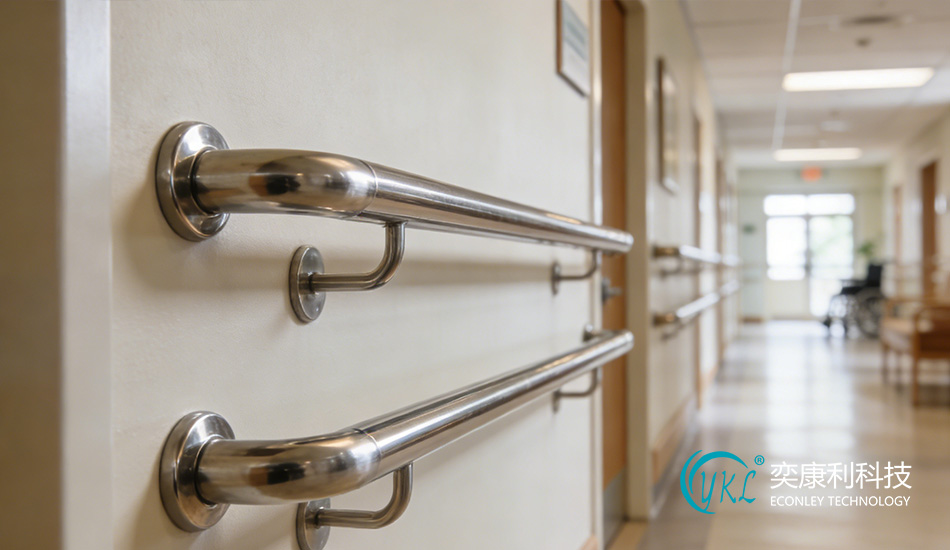
Several critical factors affect Nursing Home Handrail Wholesale Price, and understanding these factors helps procurement teams negotiate better terms. The first factor is procurement volume: larger order quantities typically lead to lower unit wholesale prices, as suppliers can reduce production and logistics costs through economies of scale. Nursing homes planning large-scale renovations or new construction should consolidate their handrail needs to maximize volume-based discounts.
Product uniformity and customization requirements also impact pricing. Standardized handrail models with consistent designs and materials are usually more cost-effective in wholesale, as they simplify the production process for suppliers. In contrast, personalized customization—such as special colors, adjustable structures, or integrated emergency call functions—will increase production complexity and thus raise the wholesale price. Additionally, the supplier’s production capacity, supply chain stability, and regional logistics costs play a role: suppliers with mature production lines and localized distribution networks can often offer more competitive wholesale prices by minimizing operational costs.
While pursuing favorable Nursing Home Handrail Wholesale Price, nursing homes must prioritize product quality to avoid safety risks. Opting for the lowest-priced wholesale handrails without considering quality may lead to issues such as poor structural stability, non-compliant materials, or insufficient anti-slip performance—endangering the safety of elderly residents and potentially increasing long-term maintenance and replacement costs.
A practical balance strategy is to focus on cost-effectiveness rather than absolute low prices. Procurement teams should evaluate the total lifecycle cost of handrails, including wholesale purchase price, installation cost, maintenance expenses, and replacement frequency. High-quality handrails with reasonable wholesale prices may have higher initial costs but lower long-term maintenance costs, proving more economical over time. Additionally, verifying that wholesale handrails comply with international and national elderly care safety standards (such as ISO 14122 and ADA Standards) ensures that cost savings do not come at the expense of safety.
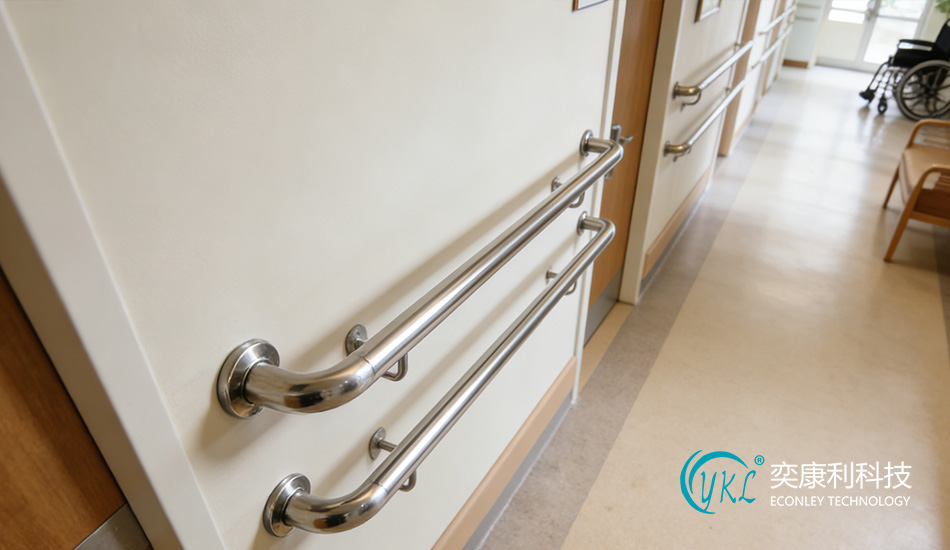
Choosing the right wholesale supplier is crucial for securing favorable Nursing Home Handrail Wholesale Price and reliable quality. Firstly, suppliers should have legitimate business qualifications, complete product quality certification documents, and a good industry reputation—avoiding unqualified suppliers that offer low prices but compromise on quality. Procurement teams can verify supplier credibility through industry reviews, case studies of cooperation with other nursing homes, and third-party quality audits.
Secondly, suppliers should provide comprehensive after-sales services, including on-site installation guidance, technical training for caregivers, and long-term maintenance support. Perfect after-sales service reduces the follow-up management costs of nursing homes and ensures the normal use of handrails. Additionally, suppliers with flexible wholesale policies—such as supporting small-batch trial orders, accepting customized adjustments within a reasonable range, and offering price adjustments for long-term cooperation—are more suitable for the dynamic needs of nursing homes.
To maximize the benefits of Nursing Home Handrail Wholesale Price, nursing homes can adopt practical bulk procurement strategies. Firstly, conduct a detailed demand assessment: survey the number, type, and scenario requirements of handrails needed across the facility to formulate an accurate procurement plan, avoiding over-purchase or insufficient supply.
Secondly, initiate multi-supplier comparisons: obtain wholesale quotes from multiple qualified suppliers, compare not only the unit price but also factors such as product quality, delivery time, and after-sales service to select the most cost-effective option. Finally, establish long-term cooperative relationships with reliable suppliers: long-term cooperation can enhance mutual trust, enable more favorable wholesale price negotiations, and ensure stable supply and consistent quality, which is particularly beneficial for nursing homes with phased renovation or expansion plans.
Nursing Home Handrail Wholesale Price is a key lever for nursing homes to optimize procurement costs and improve operational efficiency, but it must be balanced with product quality and safety. By understanding the factors influencing wholesale pricing, selecting reliable suppliers, and adopting scientific bulk procurement strategies, nursing homes can secure high-quality handrail solutions at reasonable wholesale prices, creating a safe and reassuring living environment for elderly residents while controlling operational costs. If you are a nursing home procurement team seeking favorable Nursing Home Handrail Wholesale Price and integrated elderly care safety facility solutions, contact us today. We will provide transparent wholesale pricing, complete quality certification documents, and professional one-stop services from procurement to after-sales, helping you achieve cost efficiency and safety assurance in handrail procurement.
 Tel :13510328459
 Email :493432861@qq.com
 Phone :0755-82154850/25907050
 Add:205-206, 2nd Floor, Building 2, Xiazao Village Industrial Zone, Gaofeng Community, Dalang Street, Longhua District, Shenzhen City

About

Products
Cases
News
Contact
 493432861@qq.com