Service Hotline:13510328459
 205-206, 2nd Floor, Building 2, Xiazao Village Industrial Zone, Gaofeng Community, Dalang Street, Longhua District, Shenzhen City
Service Hotline:13510328459
205-206, 2nd Floor, Building 2, Xiazao Village Industrial Zone, Gaofeng Community, Dalang Street, Longhua District, Shenzhen City



Time:2026-01-05 Preview:
Nursing homes serve a diverse group of elderly residents, many of whom face age-related challenges such as weakened balance, reduced muscle strength, osteoporosis, and even mild cognitive decline. These conditions make daily activities like walking, bathing, and getting in and out of bed high-risk for falls and injuries. Nursing Home Elderly Handrail, as a core safety facility tailored for the elderly, integrates ergonomic design, anti-slip protection, and care-scenario adaptation to provide reliable support for seniors. Unlike ordinary handrails or even special needs handrails for other groups, Nursing Home Elderly Handrail focuses on the unique physiological and psychological needs of the elderly, balancing safety protection with the maintenance of their living dignity. As a professional provider of elderly care safety solutions, we integrate Nursing Home Elderly Handrail with anti-slip flooring, emergency call systems, and elderly-friendly furniture to create a comprehensive safety net for nursing homes. This article explores the core care value, age-and-ability-adaptive designs, scenario-specific applications, and procurement criteria of Nursing Home Elderly Handrail, offering practical guidance for nursing home administrators and procurement teams.
The primary value of Nursing Home Elderly Handrail lies in targeted safety protection for the elderly. Seniors with weakened lower limb strength and poor balance are prone to falls during daily activities, and even minor falls can lead to serious injuries such as fractures due to osteoporosis. Nursing Home Elderly Handrail provides stable support to help seniors maintain balance when standing, walking, or transitioning between positions (such as from bed to wheelchair). Its anti-slip grip and rounded edge design further reduce the risk of scratches or falls, forming a critical safety barrier in the elderly care environment.
Another key value is safeguarding the elderly’s dignity and independence. Many seniors are reluctant to rely too much on caregivers for daily activities, and Nursing Home Elderly Handrail enables them to complete basic tasks independently—such as using the bathroom, washing hands, or walking in corridors. This independence enhances their sense of self-worth and reduces the psychological burden of aging. For nursing homes, high-quality Nursing Home Elderly Handrail also optimizes care efficiency, reducing the workload of caregivers who would otherwise need to assist with every movement, allowing them to focus on more professional care tasks such as medical monitoring and emotional support.
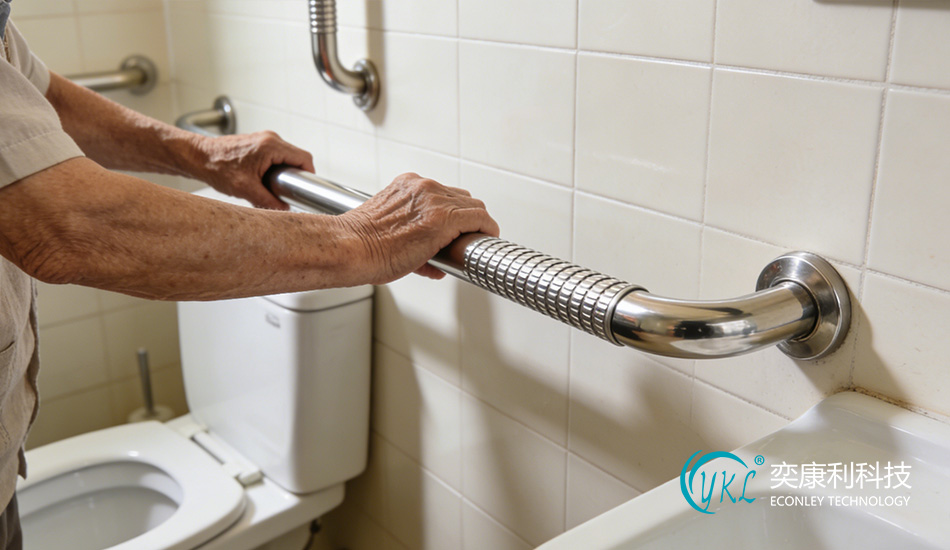
Nursing Home Elderly Handrail adopts personalized adaptive designs to meet the needs of seniors with different physical conditions. For semi-disabled seniors with limited mobility (such as those with hemiplegia or post-stroke sequelae), double-sided handrails are installed in key areas to accommodate the use of their functional hands. The grip surface is designed with a concave-convex anti-slip texture that requires minimal grip strength, making it easy for seniors with weak hand muscles to hold firmly.
For elderly residents with mild cognitive decline (such as early dementia), the handrail integrates simple and intuitive guidance elements—such as large, clear icons (toilet, bedroom, dining hall) printed on the surface or color-coded segments to help them recognize functional areas. For bedridden or fully disabled seniors who need to transfer between beds and wheelchairs, the handrail is designed with an adjustable angle and extended length to provide support during transfer, reducing the physical strain on both seniors and caregivers. Additionally, the height of the handrail is optimized to match the average height of elderly residents, ensuring they can grasp it without excessive bending or stretching.
Nursing Home Elderly Handrail provides targeted solutions for the core functional zones of nursing homes, ensuring full-scenario safety coverage. In bedrooms, handrails are installed beside beds and wardrobes: bed-side handrails are designed with a foldable structure to save space and facilitate caregivers’ work, while wardrobe-side handrails help seniors stabilize their bodies when taking clothes.
In bathrooms—the highest-risk area for falls—the Nursing Home Elderly Handrail is installed around toilets, sinks, and shower areas. It uses moisture-proof and corrosion-resistant materials to adapt to the humid environment, and the toilet-side handrail adopts a U-shaped design to provide support from multiple angles when seniors sit down and stand up. In corridors and staircases, continuous handrails are installed on both sides, extending beyond the top and bottom steps to provide support throughout the entire movement process. In rehabilitation areas, the handrail is combined with rehabilitation equipment, with adjustable height to match different stages of the elderly’s physical recovery, supporting walking training and muscle strength exercises.
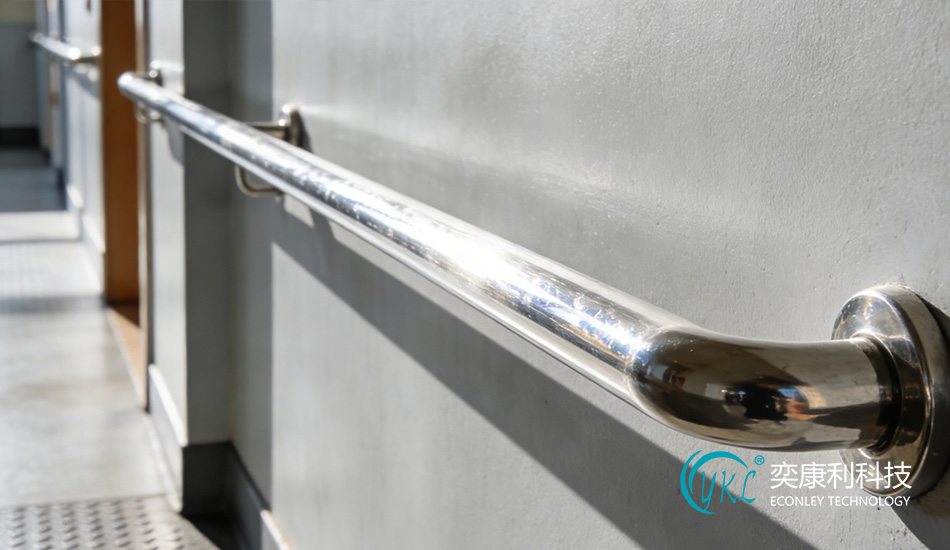
Professional Nursing Home Elderly Handrail is designed to synergize with daily nursing operations, optimizing care efficiency. In the layout design, handrails are installed in positions that align with the elderly’s daily activity routes and caregivers’ work processes, avoiding obstructing care operations such as bed making, medical examinations, and meal delivery.
Some advanced Nursing Home Elderly Handrail is integrated with emergency call systems—when seniors encounter difficulties (such as falling or feeling unwell) while using the handrail, they can press the built-in emergency button to call caregivers immediately, shortening the response time. Additionally, the handrail’s surface is treated with easy-to-clean and disinfectant-resistant coatings, adapting to the high-frequency hygiene management requirements of nursing homes, reducing the workload of cleaning staff and preventing cross-infection.
Professional Nursing Home Elderly Handrail strictly complies with international and national elderly care facility safety standards, such as ISO 14122 (Barrier-Free Design for Buildings), the ADA (Americans with Disabilities Act) Standards for Accessible Design, and local codes for barrier-free design of elderly care facilities. These standards specify strict requirements for the load-bearing capacity, anti-slip performance, material safety, and structural stability of the handrail, ensuring it meets the high safety needs of the elderly.
In material selection, medical-grade, non-toxic, and odorless materials are used, avoiding harmful substances such as formaldehyde and heavy metals that may affect the elderly’s health. The handrail undergoes rigorous tests including impact resistance, load-bearing, and corrosion resistance tests before leaving the factory. Reputable suppliers provide complete compliance documents, such as material safety test reports, safety certification, and barrier-free design compliance reports, facilitating nursing home safety audits and regulatory inspections.
When procuring Nursing Home Elderly Handrail, nursing home teams should focus on three core criteria: ability adaptability, scenario matching, and operational synergy. Firstly, prioritize products that can adapt to seniors with different physical conditions—such as adjustable-height handrails for rehabilitation areas and guided handrails for cognitively impaired seniors—to ensure inclusive protection.
Secondly, match the handrail’s performance to the scenario: choose moisture-proof and corrosion-resistant models for bathrooms, continuous-installation models for corridors, and foldable models for bedrooms. Finally, verify the supplier’s professional experience in elderly care projects, including relevant certifications and successful cases. Choose suppliers who can provide on-site installation guidance, caregiver training (on handrail use and daily inspection), and after-sales maintenance services to ensure the long-term safe use of the handrail.
Nursing Home Elderly Handrail is an indispensable facility for building a safe, respectful, and efficient elderly care environment, directly related to the safety and quality of life of elderly residents. By selecting professional, adaptive Nursing Home Elderly Handrail, nursing homes can enhance their care capabilities and create a more reassuring living space for seniors. If you are a nursing home administrator or procurement team seeking high-quality Nursing Home Elderly Handrail and integrated elderly care safety solutions, contact us today. We will provide personalized product recommendations, complete compliance documents, and professional technical support, helping you build a safer and more caring elderly care environment.
 Tel :13510328459
 Email :493432861@qq.com
 Phone :0755-82154850/25907050
 Add:205-206, 2nd Floor, Building 2, Xiazao Village Industrial Zone, Gaofeng Community, Dalang Street, Longhua District, Shenzhen City

About

Products
Cases
News
Contact
 493432861@qq.com