Service Hotline:13510328459
 205-206, 2nd Floor, Building 2, Xiazao Village Industrial Zone, Gaofeng Community, Dalang Street, Longhua District, Shenzhen City
Service Hotline:13510328459
205-206, 2nd Floor, Building 2, Xiazao Village Industrial Zone, Gaofeng Community, Dalang Street, Longhua District, Shenzhen City



Time:2025-12-30 Preview:
Special needs schools cater to students with diverse disabilities, including physical impairments, cognitive disorders, visual or hearing impairments, and autism spectrum disorders. These students face unique mobility and safety challenges in the learning environment, requiring tailored infrastructure to support their independent movement and participation in educational activities. The Special Needs School Handrail has emerged as a critical component of barrier-free campus construction, designed to align with the physical and cognitive characteristics of special needs students through humanized and scenario-adaptive designs. Unlike ordinary school handrails that only meet basic safety standards, the Special Needs School Handrail integrates adaptive functions for different disabilities, ensuring every student can navigate the campus safely, independently, and with dignity. As a professional provider of inclusive education facility solutions, we integrate Special Needs School Handrail with core barrier-free products such as anti-slip flooring, accessible desks, and sensory-friendly classroom equipment, delivering comprehensive safety and accessibility optimization for special needs schools. This article explores the core value, student-adaptive designs, campus scenario applications, and procurement criteria of Special Needs School Handrail, offering practical guidance for special needs school administrators and procurement teams.
The primary value of Special Needs School Handrail lies in safeguarding the physical safety of special needs students. Many special needs students have limited mobility—such as those with cerebral palsy or spinal cord injuries—or poor balance, making them prone to falls in campus environments like corridors, staircases, and bathrooms. The Special Needs School Handrail provides stable, targeted support, helping students maintain balance during walking, climbing stairs, and transitioning between spaces, effectively reducing the risk of injuries. Additionally, it serves as a reliable guide for students with visual impairments, helping them navigate the campus independently without relying heavily on caregivers or teachers.
Another key value is fostering students’ sense of independence and self-confidence. Being able to move freely around the campus using the Special Needs School Handrail reduces students’ dependence on others, enabling them to actively participate in classes, extracurricular activities, and daily routines (such as going to the bathroom or cafeteria on their own). This independence enhances their self-esteem and promotes their social and emotional development. For special needs schools, equipping with high-quality Special Needs School Handrail also reflects the school’s commitment to inclusive education, improves the quality of educational services, and helps build a positive campus reputation among parents and educational authorities.
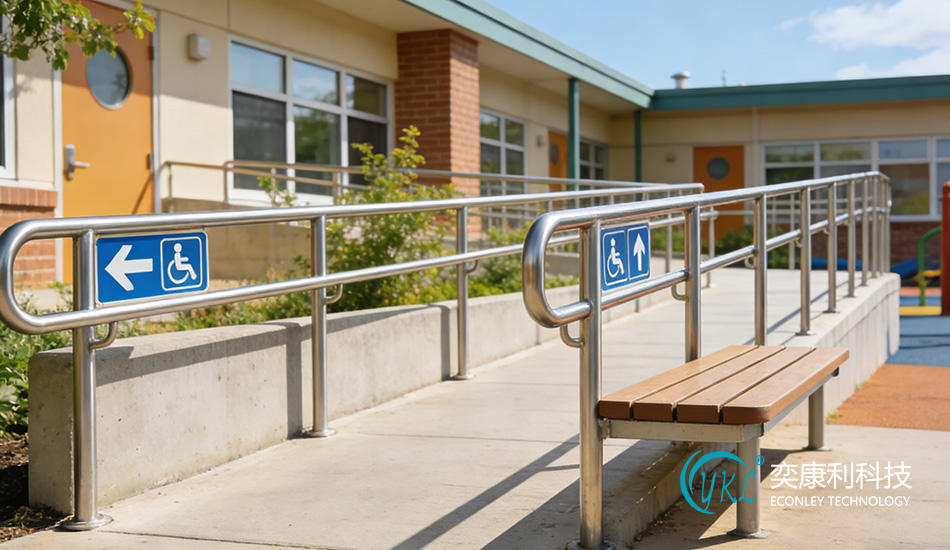
Special Needs School Handrail features personalized adaptive designs to meet the diverse needs of students with different disabilities. For students with cognitive disorders such as autism, the handrail adopts a simple, consistent design: the installation route is straight and unobstructed, avoiding complex turns or unnecessary decorations that may cause sensory overload. The surface is smooth and free of distracting patterns, and key locations (such as classroom entrances, restrooms) are marked with large, clear, and familiar symbols to guide students.
For students with physical impairments (such as hemiplegia or paraplegia), the Special Needs School Handrail is designed with ergonomic grips and adjustable heights. Double-sided handrails are installed in corridors and staircases to accommodate the use of functional hands, and the grip surface is designed with a non-slip texture to ensure a firm hold even when hands are sweaty. The height of the handrail can be adjusted to match the average height of students in different age groups, ensuring comfort and usability. For students with visual impairments, the handrail uses high-contrast color matching (such as bright yellow against light-colored walls) and integrates tactile prompts (such as raised dots or strips at intersections and stair landings) to help them perceive their location and avoid obstacles.
Special Needs School Handrail has strict application norms to adapt to the diverse functional zones of special needs schools. In corridors and staircases—high-traffic areas—continuous handrails are installed on both sides. For staircases, the handrail extends beyond the top and bottom steps to provide support during the entire climbing process, and the distance between the handrail and the wall is optimized to allow students to grip it comfortably. In classrooms, handrails are installed beside desks and chairs for students with mobility impairments, helping them sit down and stand up independently without disrupting class order.
In bathrooms—a high-risk area for falls—the Special Needs School Handrail is installed around toilets, sinks, and shower areas (for schools with boarding facilities). The toilet-side handrail adopts a foldable design to save space and facilitate wheelchair access, and the shower-side handrail is equipped with anti-corrosion and moisture-proof functions. In rehabilitation and physical therapy areas, the handrail is combined with rehabilitation equipment, with adjustable heights and angles to match different rehabilitation training needs, supporting students’ physical recovery. In sensory integration rooms, the handrail is made of soft, non-toxic materials to avoid sensory stimulation and ensure safety during sensory activities.
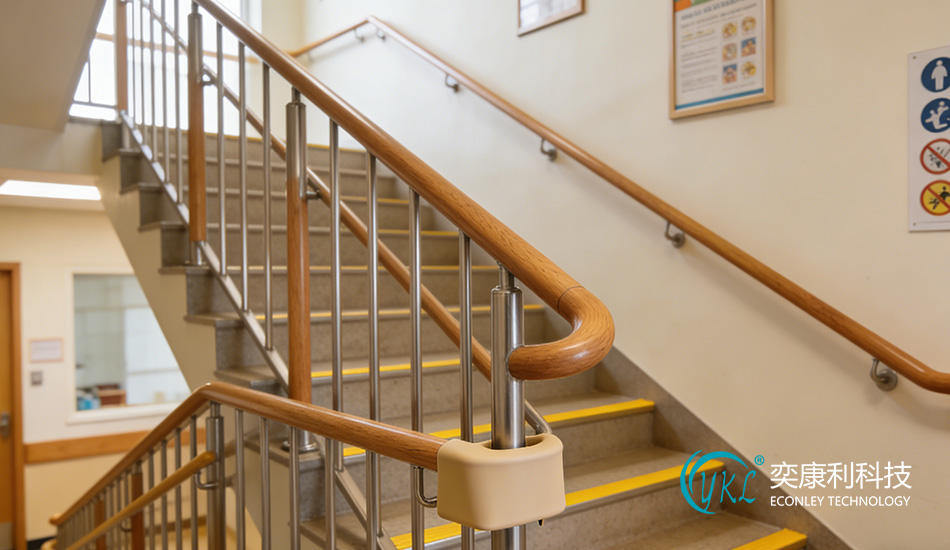
Professional Special Needs School Handrail strictly complies with international and national standards for inclusive education facilities, such as ISO 14122 (Barrier-Free Design for Buildings) and local codes for special education school construction. These standards specify requirements for the load-bearing capacity, anti-slip performance, adaptive functions, and material safety of handrails, ensuring they meet the high safety needs of special needs students.
In terms of safety guarantee, the handrail is made of medical-grade, non-toxic, and wear-resistant materials, suitable for long-term use by students with sensitive skin. All edges and corners are fully rounded to avoid scratches, and connection points are seamless to prevent dust accumulation and facilitate daily cleaning and disinfection. Complete compliance documents are provided, including product safety certification, adaptive function test reports, and material environmental protection certificates, facilitating school safety audits and inclusive education facility certification.
When procuring Special Needs School Handrail, special needs school teams should focus on three core criteria: student-adaptive capabilities, compliance certification, and supplier professionalism. Firstly, conduct a detailed survey of the types and proportions of students with special needs in the school to select handrails with corresponding adaptive functions—for example, choosing handrails with tactile prompts for visually impaired students and adjustable-height handrails for students with physical impairments.
Secondly, verify that the product has complete compliance certifications and test reports, ensuring it meets international and national standards for special education facilities. Finally, choose suppliers with rich experience in special needs school projects, who can provide personalized matching plans, on-site installation guidance, and post-sales maintenance services. Professional suppliers can also offer training for teachers and caregivers on how to guide students to use the handrails correctly and conduct daily safety inspections.
Special Needs School Handrail is a critical facility for building a safe, accessible, and inclusive learning environment, directly related to the safety, independence, and development of special needs students. By selecting targeted Special Needs School Handrail solutions, special needs schools can enhance their inclusive education capabilities and create a more supportive environment for students to grow and learn. If you are a special needs school administrator or procurement team seeking high-quality Special Needs School Handrail and integrated inclusive education facility solutions, contact us today. We will provide personalized product recommendations, complete compliance documents, and professional technical support, helping you build a truly safe, accessible, and inclusive campus.
 Tel :13510328459
 Email :493432861@qq.com
 Phone :0755-82154850/25907050
 Add:205-206, 2nd Floor, Building 2, Xiazao Village Industrial Zone, Gaofeng Community, Dalang Street, Longhua District, Shenzhen City

About

Products
Cases
News
Contact
 493432861@qq.com